
The Free State has recorded no new cases of Foot-and-Mouth Disease (FMD) during the past week, offering a positive development in the province’s ongoing efforts to control the outbreak. The cumulative number of confirmed cases remains at 804, according to the Free State Department of Agriculture, Rural Development and Environmental Affairs. Of these cases, 799 have been successfully resolved after affected properties completed the prescribed disease control measures and met the requirements for quarantine to be lifted. Five cases remain active and under quarantine. Although the latest update brings encouraging news, the Department continues to urge livestock owners to follow vaccination requirements, report suspected infections immediately and maintain strict biosecurity measures to prevent further spread.
The confirmed cases have affected 19 local municipalities across the Free State, demonstrating the wide geographical impact of the outbreak. The Department’s figures identify Kroonstad State Veterinary Area in Moqhaka Municipality as the area with the highest reported number, at 127 cases. Heilbron State Veterinary Area in Ngwathe Municipality has recorded 98 cases, while Frankfort in Mafube Municipality has recorded 81. Bethlehem, covering Dihlabeng and Nketoana municipalities, has reported 75 cases, followed by Sasolburg in Metsimaholo Municipality with 64. Other affected areas include Welkom, Boshof, Bultfontein, Ladybrand, Warden, Qwa-Qwa, Smithfield, Fauresmith and Bloemfontein and Thaba Nchu. The Department’s latest breakdown provides an overview of the outbreak across the provincial veterinary network and helps guide disease control planning.
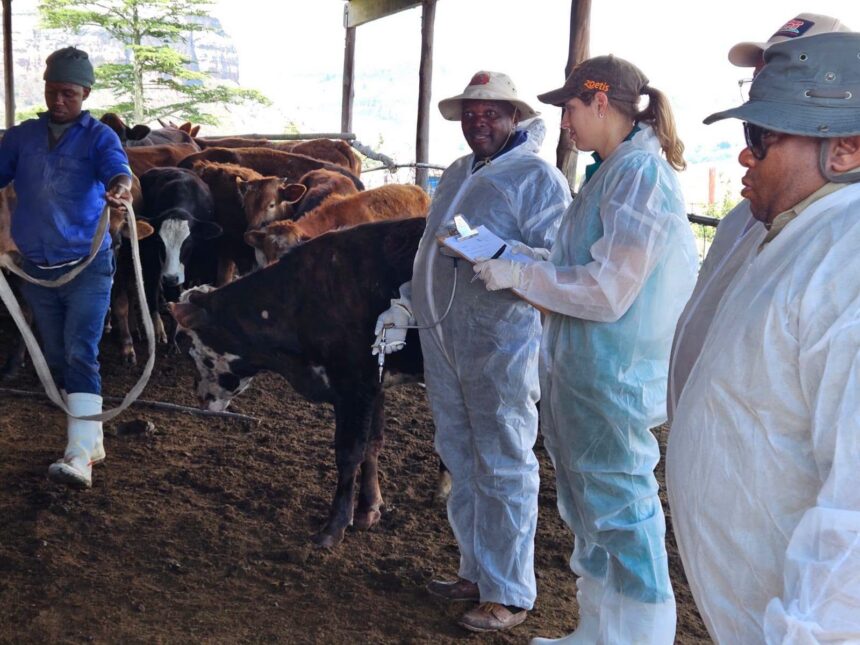
Vaccination remains one of the central measures in the Free State’s response to Foot-and-Mouth Disease. Under the national risk-based vaccination strategy, 1,734,519 cattle in the province have received their first vaccination using the Biogenesis Bago and Dollvet vaccines. Farmers have vaccinated a further 28,253 cattle, bringing the reported provincial total to 1,762,772. The programme prioritises properties with confirmed infections, neighbouring farms and other holdings linked to outbreaks through epidemiological assessments. Veterinary authorities also identify high-risk areas where vaccination can help reduce the likelihood of further transmission. This targeted approach allows available vaccine supplies to be directed towards areas where the risk of infection is considered greatest.
The Department continues to receive a high number of applications from farmers requesting FMD vaccination. However, not every application can be accommodated during the initial stages of the programme because vaccine supplies are limited and high-risk areas must receive priority. Farmers are encouraged to continue submitting applications even if they do not receive immediate access to vaccination. These requests help the Department assess demand and plan future vaccine allocations and vaccination campaigns. Keeping vaccination applications open also gives veterinary authorities a clearer picture of the needs across different farming communities. Farmers should maintain communication with their nearest State Veterinary Office to understand the process and any applicable requirements.
Livestock owners who want to vaccinate their own cattle can apply to become authorised persons through the National FMD Reporting System. Once approved, authorised farmers may procure vaccine, notify the Department of their intention to vaccinate and submit the required vaccination records. This process allows farmers to participate in the vaccination programme while ensuring that veterinary authorities receive the information needed to monitor disease control activities. Applications are submitted through the national reporting platform at https://fmd.nda.gov.za/. Farmers should follow the prescribed authorisation process before carrying out vaccinations under this arrangement. They must also ensure that every vaccination is properly recorded and reported within the required period.
The Department has placed particular emphasis on the legal obligation to report all cattle vaccinations within 14 days. This requirement forms part of the control measures published under Section 9 of the Animal Diseases Act, 1984, in Government Gazette No. 54969, Government Notice No. 7668, dated 8 July 2026. The Department remains concerned about low vaccination reporting levels among livestock owners. When vaccination records are missing or incomplete, authorities cannot accurately determine how many cattle have received vaccines across the province. This also affects their ability to assess herd immunity and plan further disease control measures. Farmers who have vaccinated their cattle but have not submitted their records are urged to do so without delay because reporting is both a legal requirement and an essential part of the provincial FMD response.
The National FMD Reporting System has also received 196 notifications from farmers indicating their intention to vaccinate their cattle. Kroonstad State Veterinary Area accounts for the largest share, with 62 notifications. Ladybrand has recorded 21, while Heilbron has received 17 and Bultfontein 16. Bloemfontein and Thaba Nchu have recorded 12 notifications, while Frankfort, Welkom and Smithfield have each received 11. Warden has recorded nine notifications, Bethlehem eight and Boshof seven. Fauresmith has received five, Qwa-Qwa four and Sasolburg two. These figures show continued interest in vaccination across the province, although the number of notifications does not necessarily indicate that vaccination has already taken place. Farmers must complete the required steps and submit vaccination records after their cattle have been vaccinated.
Reporting suspected Foot-and-Mouth Disease cases remains another major concern for the Department. The authorities have warned that some livestock owners continue to delay or fail to report suspected infections. Under the national control measures published on 8 July 2026, suspected FMD cases must be reported immediately on the same day they are identified. Early reporting allows veterinary officials to investigate the situation, assess the risk and introduce quarantine or other control measures where necessary. Delays can give the disease more time to spread between animals and properties. Livestock owners should therefore contact their nearest State Veterinary Office as soon as they suspect FMD, rather than waiting for symptoms to become more severe or seeking confirmation on their own.
The national control framework applies to livestock owners, auctioneers, feedlots, speculators and other participants in the livestock industry. It establishes consistent requirements for quarantine, animal movement control, vaccination, biosecurity, traceability and disease surveillance across South Africa. These measures are designed to reduce opportunities for the virus to move between farms, markets and other livestock facilities. They also help veterinary authorities trace animal movements and investigate possible links between confirmed or suspected cases. Every person involved in livestock production and trade has a responsibility to understand and follow the applicable rules. Compliance is particularly important because the movement of infected animals or contaminated materials can create new risks in areas where the disease has not been reported.
Farmers who suspect FMD must immediately isolate affected animals and prevent unnecessary movement from the property. They should avoid moving cloven-hoofed animals, animal products, vehicles, equipment or other materials that may have been contaminated. Access to livestock premises should be restricted, while visitor records should be maintained to support traceability. Vehicles, equipment, clothing and footwear entering or leaving farms should be cleaned and disinfected as part of strict biosecurity procedures. These precautions can reduce the risk of carrying the virus between livestock holdings. Farmers should also make sure that workers, visitors and service providers understand the farm’s biosecurity rules and follow them consistently.
Animal movement restrictions are especially important on properties under quarantine. Cloven-hoofed livestock may only be moved from quarantined premises with written permission from the State Veterinarian and the required Veterinary Red Cross Permit and other movement documentation. Livestock owners must continue to observe quarantine notices and movement restrictions until Veterinary Services officially withdraws them. They should also maintain accurate records of animal identification, vaccination history and movements. These records help officials investigate suspected outbreaks and establish where animals have travelled. Following the prescribed procedures protects neighbouring farms and supports efforts to contain the disease within affected areas.
The Department has thanked livestock owners, organised agriculture, private veterinarians, auctioneers, feedlots and industry partners for their continued cooperation. Their participation remains important because government veterinary teams cannot manage the outbreak without support from people working across the livestock value chain. Farmers are often the first to notice changes in their animals and play a direct role in reporting suspected infections. Auctioneers and feedlot operators also need to follow movement and biosecurity requirements to reduce the risk of spreading the disease through livestock trading and handling. Private veterinarians and industry organisations can help communicate control measures and encourage responsible practices. Strong cooperation makes it easier to identify risks early and apply consistent disease control measures.
The latest Free State FMD update brings some positive news, with no new cases reported during the past week and 799 of the 804 confirmed cases successfully resolved. However, the five active cases and the history of infections across 19 municipalities show that continued vigilance remains necessary. The vaccination of more than 1.76 million cattle represents an important part of the provincial response, but vaccination records must be submitted so authorities can measure coverage accurately. Farmers must also report suspected cases on the same day, observe quarantine restrictions and maintain strict biosecurity on their properties. Protecting the Free State livestock industry requires every stakeholder to take these responsibilities seriously. Consistent reporting, responsible vaccination and cooperation with Veterinary Services will remain essential to limiting the spread of Foot-and-Mouth Disease and supporting the recovery of affected farming communities.
Join 'Farmers Mag' WhatsApp Channel
Get the latest Farming news and tips delivered straight to your WhatsApp
CLICK HERE TO JOIN