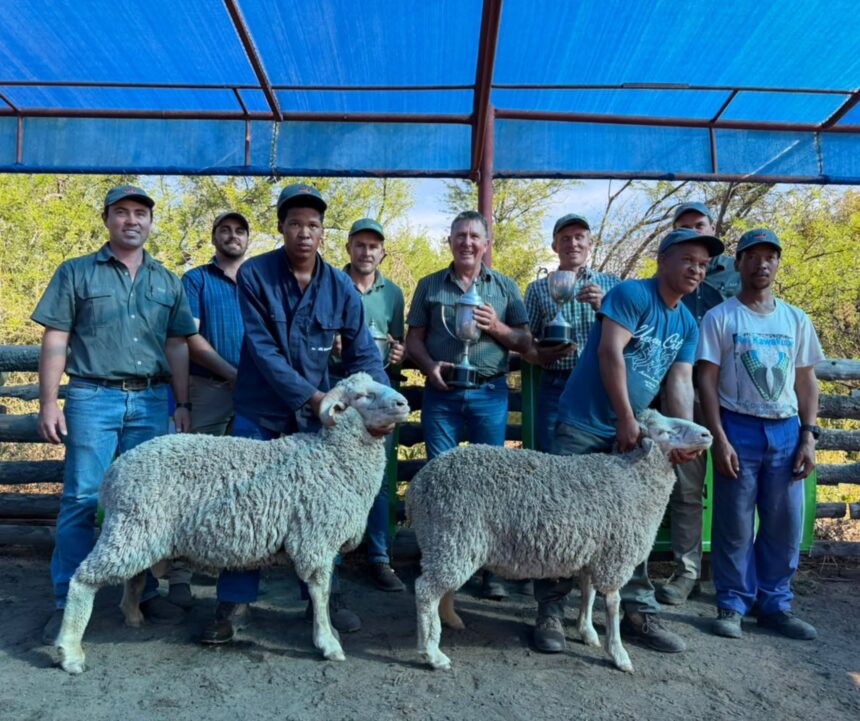
The Merino sheep industry remains an important part of South African livestock farming, combining generations of breeding experience with a continued focus on animal quality, wool production and sound farm management. This commitment was on display at this year’s Prince Albert Show, held in October, where BKB proudly organised the Merino Show and brought local farmers together to showcase their animals. With an impressive 111 sheep entered, the competition highlighted the quality of Merino sheep in the region and the dedication of the farmers who raise them. Favourable farming conditions following good rainfall were also reflected in the high standard of animals presented. The event provided an opportunity to recognise the hard work of Merino breeders while celebrating the role of agricultural shows in supporting livestock farming and strengthening rural farming communities.
The Prince Albert Show provided a platform for Merino farmers to present their sheep, compare breeding results and demonstrate the progress they have made through careful flock management. Livestock shows are valuable because they allow breeders to assess animals against established judging criteria and observe the characteristics that contribute to a strong breeding flock. These events also encourage the exchange of knowledge between farmers who may have different experiences, breeding approaches and production goals. For participating breeders, preparing sheep for a show requires planning, attention to animal health and an understanding of the qualities that define the Merino breed. The strong participation at this year’s event reflected the enthusiasm of farmers and the importance they place on maintaining high standards in Merino sheep production.
The entry of 111 sheep made for a competitive Merino Show, providing a broad display of the animals produced by farmers in the region. Strong competition gives breeders an opportunity to measure their animals against those presented by other producers and to learn from the qualities demonstrated in the show ring. Judging can draw attention to important characteristics such as conformation, wool quality and breed characteristics, depending on the class and applicable judging standards. These assessments can help farmers reflect on their breeding objectives and identify areas for continued improvement. Although show results provide a useful point of comparison, long-term breeding success also depends on performance, health, adaptability and suitability for the farm’s production environment.
The favourable farming conditions following good rainfall were another positive feature of this year’s show. Rainfall can influence grazing availability, pasture growth and the overall condition of livestock, although its effects vary according to timing, distribution and local conditions. Access to suitable grazing and adequate nutrition helps farmers maintain flock condition and support animal welfare. Good seasonal conditions can therefore create a more favourable environment for preparing sheep for agricultural shows. The high standard of animals presented at the Prince Albert Show reflected the positive conditions described by organisers and the ongoing work of farmers in managing and developing their flocks.
Merino sheep have an established place in South African agriculture because of their value in wool production. The breed is known for its fine wool, which serves a range of textile applications and contributes to the wider agricultural value chain. Producing quality wool requires consistent attention to genetics, nutrition, animal health and flock management. Farmers must balance breeding objectives with the practical demands of their farming environment, including seasonal changes and the availability of grazing. Agricultural shows help keep these priorities visible by giving breeders opportunities to present their animals and share their commitment to maintaining the quality of the breed.
Successful Merino farming involves decisions that extend well beyond the show ring. Breeders must select suitable animals, manage reproduction, maintain flock health and monitor the performance of their sheep over time. Wool production also requires careful management of shearing, handling and storage to preserve fibre quality and meet market requirements. Weather conditions and grazing availability can influence flock performance, making practical farm management essential throughout the year. By combining breeding knowledge with consistent attention to livestock care, farmers can work towards productive flocks that suit their individual farming systems.
BKB’s involvement in organising the Merino Show highlights the value of supporting livestock farmers at grassroots level. Direct engagement with producers helps strengthen relationships within the agricultural community and creates opportunities to recognise the work that takes place on farms throughout the year. Agricultural shows also provide a setting where farmers can connect with industry participants, exchange ideas and celebrate shared interests in livestock production. These interactions help maintain the social and professional connections that support rural agricultural communities. By helping bring Merino farmers together at the Prince Albert Show, BKB contributed to an event that celebrated both the animals on display and the people responsible for breeding and raising them.
Agricultural shows also play a role in passing knowledge between generations of farmers. Experienced breeders can share practical insights into animal selection, wool production and flock management, while younger participants can gain exposure to livestock evaluation and the standards expected within the industry. These opportunities help maintain interest in livestock farming and encourage the development of future breeders. They also demonstrate that agricultural progress depends on a combination of practical experience, careful observation and a willingness to learn. Events such as the Prince Albert Show therefore offer value beyond the competition itself by strengthening the knowledge and relationships that support the future of Merino farming.
The success of a livestock show depends on the commitment of the farmers who enter their animals and contribute to the event. Preparing sheep for competition takes time, care and an understanding of the breed’s characteristics. Participants also help create an environment where breeders can recognise one another’s efforts and celebrate the quality of livestock produced in their region. BKB expressed its appreciation to all the farmers who entered sheep and helped make this year’s Merino Show a success. Their participation demonstrated the continued enthusiasm for Merino breeding and the importance of maintaining opportunities for livestock farmers to come together.
The October Merino Show at the Prince Albert Show was an opportunity to celebrate quality livestock, favourable farming conditions and the dedication of South Africa’s Merino farming community. With 111 sheep entered, the event showcased the standard of animals in the region and reinforced the value of agricultural shows in promoting livestock breeding and knowledge-sharing. BKB’s role in organising the competition reflected its commitment to supporting farmers and recognising their contribution to the agricultural sector. The participation of local breeders helped make the event a meaningful celebration of their work, experience and passion for the Merino breed. As farmers continue to develop their flocks and respond to changing production conditions, events such as this remain important in encouraging excellence, strengthening industry relationships and supporting the future of Merino sheep farming in South Africa.
Join 'Farmers Mag' WhatsApp Channel
Get the latest Farming news and tips delivered straight to your WhatsApp
CLICK HERE TO JOIN