Climate change could reshape South Africa’s agricultural landscape as rising temperatures and unpredictable rainfall make some traditional farming areas less suitable for the crops they currently produce. New research by the Agricultural Research Council (ARC) suggests that gradually shifting a portion of crop production towards areas with more suitable future conditions could deliver significant economic, employment and food-security benefits. The study examined six important agricultural commodities, namely maize, wheat, sorghum, citrus, avocado and macadamia nuts. It found that the potential benefits of relocating production vary considerably depending on each crop’s climate requirements, water needs, establishment costs and market opportunities. The findings highlight the need for South African farmers, government and agricultural businesses to start planning for changing production conditions rather than relying only on historical farming patterns.
Agriculture depends heavily on climate conditions, making farmers particularly exposed to changes in temperature, rainfall and the frequency of extreme weather events. Areas that have supported profitable crop production for generations may experience conditions that reduce yields or increase production costs in the coming decades. Higher temperatures can place crops under heat stress, while changing rainfall patterns can make water supplies less reliable. Droughts and other extreme weather events add further pressure to farming operations and can affect both production and income. These challenges make it important to consider not only how farmers produce food, but also whether their current locations will remain suitable for specific crops.
A study conducted by ARC researchers Whitney Matli, Dr Walter Shiba and Harold Weepener examined whether shifting some agricultural production towards newly suitable areas could make economic sense over the long term. The research combined climate and crop-suitability modelling with a cost-benefit analysis. It considered the potential costs of establishing production in new areas and compared them with the wider economic and social benefits that adaptation could generate. The analysis included conditions centred on 2030, 2055 and 2080 under moderate- and high-emissions climate scenarios. This approach allowed researchers to assess how the economic case for shifting production could change as climate pressures intensify.
The researchers used a hypothetical scenario in which 10% of the current production area for each selected crop moves towards newly suitable agroecological zones. This figure represents a modelling assumption designed to test the possible benefits and costs of adaptation. It does not mean that the ARC recommends relocating exactly 10% of South Africa’s agricultural production. The study instead provides an indication of what a gradual shift could achieve under different future climate conditions. Any real decision would require detailed assessments of individual farms and the areas being considered for new production.
The modelling identified possible opportunities in cooler and higher-altitude areas, including parts of the Eastern Cape, KwaZulu-Natal, Limpopo and the Free State. These regions could become more suitable for certain crops as temperatures rise in established production areas. However, the results should not be treated as direct planting recommendations because conditions can differ significantly between farms. Soil quality, water availability, infrastructure, land-use conditions and access to markets would all need careful assessment before producers invest in new locations. A region may have suitable temperatures for a crop but still lack the resources required to support profitable commercial production.
Moving agricultural production also involves more than finding land with favourable climate conditions. New farming areas may need improved roads, reliable electricity, irrigation systems, storage facilities and processing infrastructure. Farmers may also require access to agricultural finance, technical advice, machinery and established supply chains. An increase in production could place additional pressure on local water resources and other services. Government and the private sector therefore need to consider the wider agricultural system when planning for climate adaptation. Without the necessary infrastructure and support, an area that appears suitable in climate models may not be commercially viable.
The ARC study used a benefit-cost ratio to assess the economic value of shifting production. This measure compares the expected benefits of an investment with the costs involved. A ratio above one indicates that the estimated benefits exceed the costs. For example, a benefit-cost ratio of 1.50 means that every rand invested is expected to generate approximately R1.50 in wider economic and social benefits. The analysis considered more than the direct income farmers could earn from production. It also included factors such as employment, food security and export earnings, providing a broader view of the value of agricultural adaptation.
Maize and citrus recorded some of the strongest results in the study, with central benefit-cost estimates of approximately 1.50. Sorghum also performed well, with a ratio of around 1.41. These findings are important because the three crops serve different roles in South Africa’s agricultural economy. Maize supports national food security and provides an important source of livestock feed and raw material for agricultural processing. Citrus contributes to export earnings and supports employment across farming, packing, transport and related activities. Improving the long-term climate resilience of these industries could therefore benefit farmers, workers, consumers and the wider economy.
The results also show why crop suitability and commercial value must be considered together. Avocado and macadamia production can offer attractive market opportunities, but establishing orchards requires substantial initial investment. Trees take several years to reach full production, which means farmers face a long period of expenditure before receiving their expected returns. During that time, producers remain exposed to changes in water availability, temperature, input prices and market conditions. A high-value crop does not automatically represent a low-risk investment. Farmers considering new orchards need to assess whether the location is likely to remain suitable throughout the productive life of the trees.
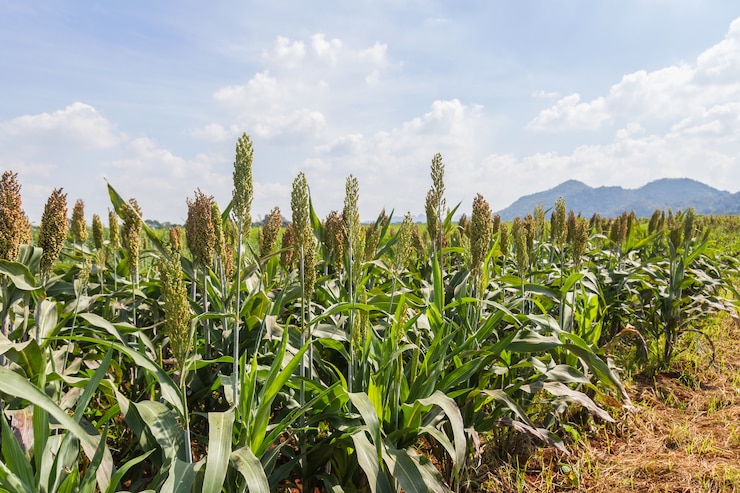
Sorghum stands out because of its ability to tolerate heat, drought and unreliable rainfall. The study found that it remained comparatively resilient under severe climate conditions, even as the outlook for several other crops weakened. This resilience could make sorghum an important option for farming systems in areas facing greater water constraints. However, its climate advantages do not guarantee strong profits for producers. The crop still faces challenges linked to limited markets, consumer demand and farm-level profitability. For sorghum to become a stronger commercial option, farmers need reliable buyers and functioning value chains.
Investment in sorghum seed systems, processing facilities and product development could help strengthen its position in the agricultural market. Greater demand for sorghum-based food products, beverages and animal feed could create additional opportunities for producers. Improved procurement arrangements would also help farmers gain more confidence in growing the crop commercially. Smallholder and emerging farmers in water-constrained areas could benefit from production systems that include crops with different climate requirements. Diversification may reduce dependence on a limited number of climate-sensitive commodities and help farmers manage changing conditions. The development of stronger markets will be essential if sorghum is to translate its climate resilience into sustainable farm income.
The research also warns that the economic outlook for several crops generally becomes more difficult as climate change intensifies towards the middle and end of the century. Under a high-emissions scenario, projected yields decline sharply for a number of commodities. Maize, citrus, avocado and macadamia are particularly exposed to combinations of heat and water stress. Long-lived orchards face an additional challenge because trees planted today may still be producing when future climate conditions have changed considerably. Farmers therefore need to consider the expected climate over the full production cycle rather than relying only on conditions experienced when they establish a crop.
Long-term agricultural investments make early planning especially important. Irrigation systems, packhouses, storage facilities and other farm infrastructure require significant capital and are expected to operate for many years. If these investments are made in areas that become increasingly unsuitable, farmers and government may face higher costs in the future. Relocating production can also be expensive because new areas may need infrastructure and services before commercial farming can expand. Farmers may experience further financial pressure during the establishment period, when they must cover costs before receiving income from production. These challenges show why climate adaptation requires coordination between producers, financial institutions, agricultural organisations and government.
One of the proposed priorities is the development of a crop-suitability early-warning system for South Africa. Such a system could combine updated climate, soil, water and agricultural production information to identify areas where crop risks are increasing. It could also highlight locations where new production opportunities may emerge. Farmers could use this information when deciding which crops to plant, whether to invest in irrigation or when to consider alternative production systems. Financial institutions and insurers could use improved climate information to assess agricultural investment risks. Government could also apply the information when planning infrastructure, agricultural support programmes and land use.
For this system to be useful, information must be detailed enough to support decisions at local level. Farmers need more than general warnings that temperatures are rising or rainfall is becoming unpredictable. They need to understand how changing conditions could affect a particular crop on their land and which adaptation options are financially realistic. Agricultural extension services will play an important role in helping producers interpret climate information and apply it to farm management. Research institutions will also need to keep crop-suitability assessments updated as new data becomes available. This would help ensure that decisions reflect changing conditions rather than relying on outdated production assumptions.
Policymakers must also avoid applying the same adaptation strategy to every agricultural commodity. Maize, sorghum, citrus and macadamia have different growing requirements, production cycles and market structures. Their water needs and investment risks also vary. Support for farmers should reflect these differences and consider the specific conditions of each production area. Some regions may benefit from changes in crop selection, while others may require improved water management, different cultivars or adjustments to farming practices. A combination of approaches will be needed to protect agricultural production and rural livelihoods.
South African farmers have adapted to difficult conditions in the past by changing planting dates, using improved cultivars, adjusting irrigation practices and exploring new markets. Climate change adds further pressure, but it also increases the value of research, reliable information and long-term planning. The ARC study suggests that shifting a portion of production towards more suitable areas could generate meaningful economic and social benefits, particularly for maize and citrus. It also highlights the potential role of sorghum in building more climate-resilient farming systems. The findings do not call for an immediate relocation of established agricultural regions, but they show why the country must prepare for gradual changes in where crops can be grown successfully.
The future of South African agriculture will depend on making informed decisions about both production methods and farming locations. Farmers will need to weigh climate suitability against water availability, infrastructure, finance and access to markets before investing in new areas. Government and industry will need to support this process through updated research, practical planning tools and investment in agricultural services. A carefully managed transition could help protect food supplies, support rural employment and maintain the competitiveness of important export industries. South Africa does not need to abandon its established farming regions, but it must begin preparing for a future in which the most suitable places to grow key crops may change significantly.
Join 'Farmers Mag' WhatsApp Channel
Get the latest Farming news and tips delivered straight to your WhatsApp
CLICK HERE TO JOIN