Successful farming requires more than access to land, equipment and financial resources. Farmers also need practical guidance, technical expertise and ongoing support to make informed decisions throughout the production cycle. From planting and crop management to monitoring crop development and preparing for harvest, every stage presents challenges that can affect productivity and profitability. Partnerships that bring agricultural funding and technical knowledge together can help farmers manage these challenges and protect their investments. A recent farm visit in the North West demonstrates how collaboration between agricultural development partners and industry specialists can provide practical support to farmers when they need it most.
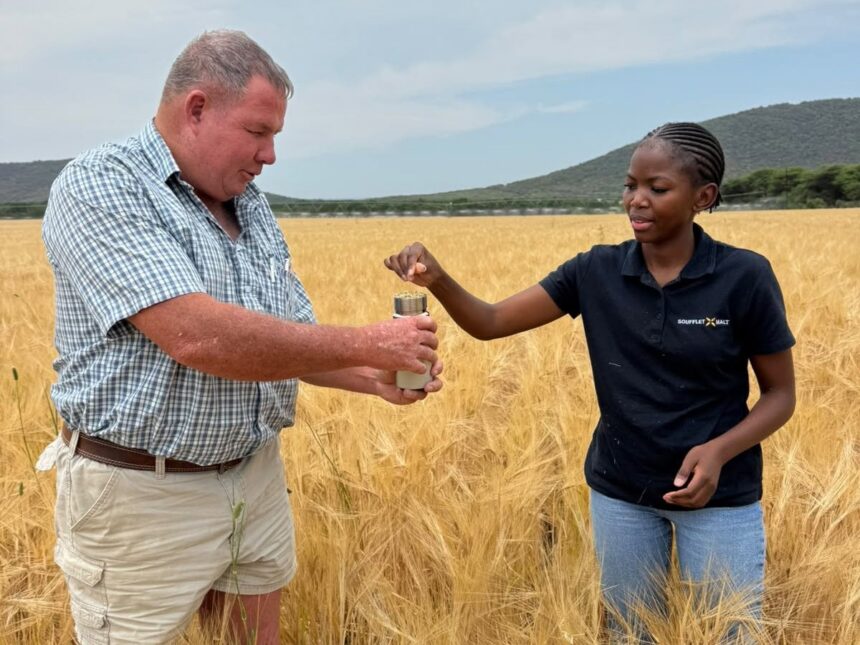
PGP North West Regional Coordinator Du Toit van der Westhuizen recently visited Mdu Khumalo at Buffelspoort Farm, together with Likhona from Soufflet Malt. During the visit, they assessed barley moisture levels to help Khumalo plan and prepare for the upcoming harvest. Monitoring grain moisture is an important part of barley production because it helps farmers assess crop readiness and make informed decisions about harvesting and post-harvest handling. Harvesting at the appropriate moisture level can help reduce the risk of grain quality problems and unnecessary losses. The visit provided an opportunity to combine practical agricultural knowledge with direct engagement on the farm, ensuring that the farmer received guidance relevant to his production requirements.
Barley moisture management is particularly important because grain quality can influence its suitability for storage, processing and commercial markets. Barley intended for malting has specific quality requirements, making careful crop management essential throughout the production process. Moisture levels can help farmers determine whether the crop is approaching the appropriate stage for harvesting, although other factors such as crop maturity, weather conditions and grain condition must also be considered. Harvesting too early or too late can create challenges for grain quality and handling. Regular monitoring allows farmers to make better-informed decisions and coordinate harvesting activities more effectively.
For farmers, preparing for harvest involves several important considerations beyond determining when the crop is ready. Machinery must be available and properly maintained, labour requirements need to be planned and suitable storage or delivery arrangements must be considered. Weather conditions can also influence harvesting schedules, particularly when rainfall or high humidity creates additional risks. Having access to technical advice during this period can help farmers identify potential problems and respond before they affect the value of their produce. Direct farm visits are valuable because they allow specialists to assess actual production conditions and provide guidance based on what they observe.
The visit to Buffelspoort Farm forms part of PGP’s post-investment support for beneficiaries of the Land and Agricultural Development Bank of South Africa’s blended finance programme. This support reflects an important principle in agricultural development: providing funding is only one part of helping farmers establish and grow sustainable businesses. Financial assistance can help producers access the resources needed to implement their production plans, but successful outcomes also depend on how effectively those resources are managed. Farmers may need ongoing technical guidance, production advice and access to relevant industry networks to turn financial support into productive agricultural activity. Post-investment support helps connect these different requirements throughout the farming season.
Blended finance plays an important role in agricultural development by combining different sources or forms of financing to support projects and businesses that may face barriers to accessing conventional funding. In South Africa, agricultural financing is particularly important for emerging and developing farmers who need capital to acquire inputs, improve infrastructure, purchase equipment or expand production. Access to appropriate finance can create opportunities for farmers to strengthen their operations and participate more effectively in agricultural value chains. However, financing arrangements must be supported by sound business planning and responsible financial management. Combining funding with technical assistance can help farmers make better use of available resources and improve their ability to manage production risks.
The involvement of industry partners such as Soufflet Malt adds another important dimension to this support. Agricultural businesses operating within the grain value chain have specialised knowledge of crop requirements, quality standards and market expectations. Their engagement with producers can help farmers better understand what buyers require and how production decisions influence the quality of their final product. In barley production, this knowledge is especially relevant where grain is intended for malting purposes. Regular communication between farmers and industry representatives can improve understanding of quality expectations and encourage better production and harvesting practices.
Collaboration between PGP, financial institutions and agricultural industry partners also helps strengthen the connections between different parts of the farming value chain. Financial institutions provide access to capital, agricultural development organisations can offer ongoing support and coordination, while industry specialists contribute technical knowledge and market-related expertise. When these partners work together, farmers benefit from a more connected support system. They are not left to manage every production challenge without assistance after receiving financial support. Instead, they can access guidance that helps them make informed decisions as their crops develop and their businesses progress.
For emerging farmers, this type of engagement can be particularly valuable. Building a successful agricultural business requires more than producing a crop for one season. Farmers must develop the skills and systems needed to manage finances, control input costs, maintain equipment, monitor production and meet market requirements. Access to experienced professionals can help them strengthen these capabilities over time. Practical farm visits also create opportunities to discuss specific challenges and identify solutions that are appropriate to the farmer’s circumstances. This ongoing engagement can contribute to greater confidence, improved decision-making and stronger agricultural businesses.
Agricultural support is most effective when it responds to the actual needs of farmers at different stages of production. Advice provided during planting may focus on soil preparation, input selection and crop establishment, while guidance later in the season may address crop health, moisture monitoring and harvest planning. Each stage requires different information and technical considerations. By maintaining contact with farmers throughout the production cycle, development partners can provide more relevant assistance and identify challenges before they become costly problems. This approach also reinforces the importance of viewing agricultural finance as part of a longer-term relationship rather than a once-off transaction.
The visit to Mdu Khumalo at Buffelspoort Farm illustrates how partnerships can translate financial support into practical assistance on the ground. Through the involvement of PGP North West Regional Coordinator Du Toit van der Westhuizen and Soufflet Malt representative Likhona, the farmer received direct support with assessing barley moisture levels and planning for harvest. This engagement demonstrates the value of combining agricultural expertise with access to finance, particularly when farmers need to make important production decisions. As South Africa continues to develop its agricultural sector, partnerships that connect funding, technical guidance and market knowledge will remain important in supporting farmers. By working together throughout the season, organisations can help producers protect their investments, improve production practices and build more sustainable farming businesses.
Join 'Farmers Mag' WhatsApp Channel
Get the latest Farming news and tips delivered straight to your WhatsApp
CLICK HERE TO JOIN