The Free State Province has recorded encouraging progress in its efforts to control Foot-and-Mouth Disease (FMD), with no new cases reported to the provincial Department of Agriculture, Rural Development and Environmental Affairs (DARDEA) during the past three weeks. This development offers some reassurance to livestock owners, farmers and agricultural communities as the province continues implementing measures to contain the disease. The cumulative number of confirmed Foot-and-Mouth Disease cases in the Free State remains unchanged at 804. Although the absence of new reported cases is a positive development, continued vigilance is essential to prevent further infections and protect livestock populations. Farmers and livestock owners are therefore encouraged to maintain strict biosecurity practices, follow vaccination requirements and cooperate with veterinary authorities to support ongoing disease control efforts.
Foot-and-Mouth Disease is a highly contagious viral disease that affects cloven-hoofed animals, including cattle, sheep, goats and pigs. The disease can spread rapidly between animals and create serious challenges for livestock production and agricultural trade. Infected animals may develop fever, blisters or lesions in the mouth and around the feet, excessive salivation, lameness and reduced appetite. These symptoms can affect animal welfare and interfere with normal farming activities. Although the disease does not pose a significant public health risk to humans, its economic consequences for livestock farmers and the broader agricultural industry can be substantial.
The Free State Department’s announcement that no additional cases have been reported over the past three weeks represents an important development in the province’s ongoing FMD response. The confirmed case total remains at 804, indicating that the cumulative number has not increased during this reporting period. However, the absence of newly reported cases does not automatically mean that the disease has been completely eliminated. Foot-and-Mouth Disease can spread through direct contact between infected and susceptible animals, contaminated equipment, vehicles, clothing and other materials. Continued surveillance and responsible livestock management remain necessary to identify potential infections and prevent the disease from spreading to unaffected areas.
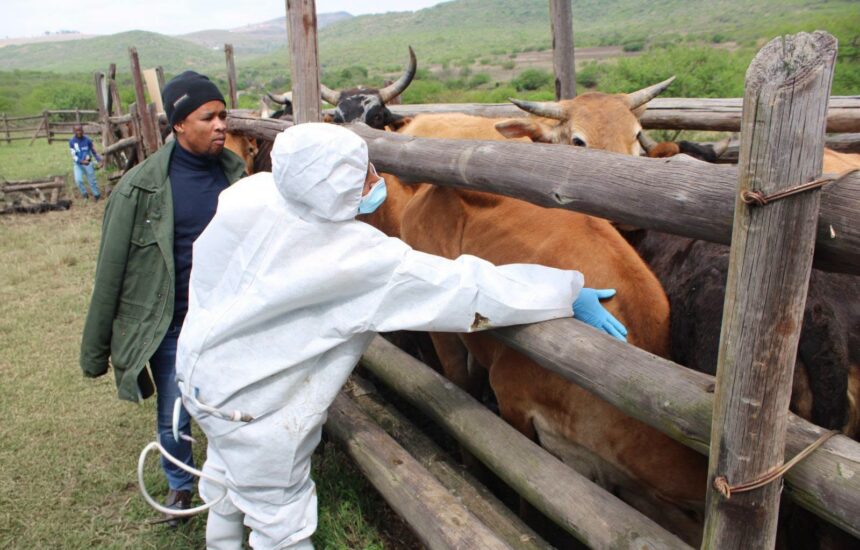
Biosecurity remains one of the most important tools available to farmers in managing Foot-and-Mouth Disease. Effective biosecurity involves implementing measures that reduce the risk of introducing infectious diseases onto farms and limit their spread if an outbreak occurs. Livestock owners should monitor their animals regularly and look for unusual symptoms such as excessive salivation, mouth lesions, lameness and changes in feeding behaviour. Any suspected cases should be reported promptly to the relevant veterinary authorities so that appropriate investigations and control measures can follow. Farmers should also manage access to their properties carefully and avoid unnecessary contact between livestock from different farms.
Vaccination is another important component of the Foot-and-Mouth Disease control strategy. Where vaccination forms part of the official control programme, livestock owners must follow the guidance provided by veterinary authorities regarding vaccine availability, timing and administration. Vaccination programmes require careful coordination to ensure that the correct animals receive appropriate protection. Farmers should keep accurate vaccination records and work with authorised animal health professionals to understand the requirements applicable to their areas. Vaccination must also form part of a wider disease management approach that includes inspections, surveillance and movement controls.
Regular livestock inspections are equally important because early identification of possible infections can help limit further transmission. Farmers who work with cattle and other susceptible animals should pay close attention to changes in animal behaviour and physical condition. Animals showing possible signs of FMD should be managed according to veterinary instructions, with unnecessary movement and contact avoided while the situation is assessed. Good recordkeeping can also assist with disease investigations by helping authorities establish where animals have moved and which farms may have been exposed. These practices strengthen disease monitoring and support faster responses when suspected infections arise.
Movement control measures will continue to play an important role in the Free State’s efforts to contain Foot-and-Mouth Disease. Restrictions on the movement of livestock help reduce opportunities for the virus to spread between farms, communities and agricultural production areas. Such controls may affect livestock sales, auctions, transportation and other farming activities, creating financial and operational challenges for producers. However, compliance is essential because uncontrolled animal movement can undermine disease control efforts and increase the risk of new outbreaks. Livestock owners should confirm the applicable movement requirements with veterinary authorities before transporting animals or arranging livestock transactions.
The Department has indicated that movement controls will remain in place until affected areas are officially declared FMD-free zones. This means that farmers must continue observing the relevant restrictions even as the province reports no new cases during the latest three-week period. The process of establishing disease-free status requires appropriate surveillance, verification and compliance with applicable animal health requirements. Farmers should avoid assuming that an area is free from restrictions simply because no recent cases have been reported. Official communication from the responsible authorities remains the appropriate basis for determining when movement rules change.
The impact of Foot-and-Mouth Disease extends beyond individual livestock farms. Outbreaks can disrupt agricultural supply chains, affect livestock markets and create uncertainty for businesses involved in animal production, transportation and processing. Farmers may experience difficulties selling or moving animals, while additional biosecurity and veterinary expenses can place pressure on already demanding farm budgets. The wider agricultural economy can also face challenges when disease restrictions affect trade and market access. Effective disease control therefore benefits not only individual producers but also the broader livestock industry and communities that depend on agriculture for their livelihoods.
Cooperation between government departments, veterinary professionals, livestock organisations and farming communities remains essential to managing the disease. Government authorities provide disease monitoring, technical guidance and regulatory oversight, while farmers play a direct role in implementing biosecurity measures on their properties. Consistent communication helps ensure that livestock owners understand current restrictions and know how to report suspected cases. Sharing accurate information also helps prevent confusion and encourages responsible action within farming communities. Disease control is most effective when all stakeholders understand their responsibilities and work towards the same objective.
The Free State’s report of three weeks without newly reported Foot-and-Mouth Disease cases is encouraging, but it should not lead to complacency. The cumulative total of 804 confirmed cases highlights the importance of maintaining strong disease prevention and monitoring measures. Livestock owners must continue following vaccination guidance, conducting regular inspections, practising effective farm biosecurity and complying with movement restrictions. Continued cooperation will help protect animal health, reduce the risk of further transmission and support the recovery of affected agricultural areas. Protecting the province’s livestock sector requires consistent effort from everyone involved, and maintaining these precautions will remain essential until the affected areas meet the requirements for official FMD-free status.
Join 'Farmers Mag' WhatsApp Channel
Get the latest Farming news and tips delivered straight to your WhatsApp
CLICK HERE TO JOIN