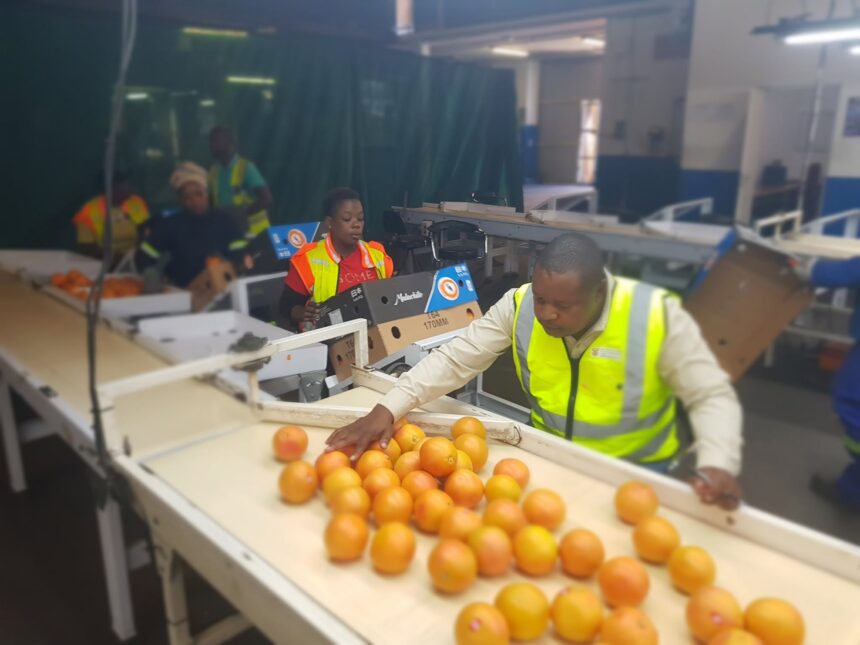
South Africa’s citrus industry continues to face important challenges in international markets, with trade policy, crop protection regulations and export competitiveness shaping the outlook for growers. Access to the United States market remains a strategic priority, particularly for citrus producers in the Western Cape and Northern Cape, where Citrus Black Spot-free production regions are permitted to export to the US. At the same time, proposed changes to European Union food and feed legislation have raised concerns about the future use of crop protection products and the rules governing pesticide residues on imported fruit. These developments come as the industry manages substantial citrus volumes, with the latest figures at the end of week 43 showing 201 million 15 kg cartons packed in 2026. The Citrus Growers’ Association of Southern Africa and its associated organisations continue to support growers through industry representation, technical services, research, cultivar development and grower development initiatives.
Access to the US market is a major concern for South African citrus growers because changes to trade arrangements could affect the cost of exporting fruit. The African Growth and Opportunity Act, commonly known as AGOA, provides eligible African countries with preferential access to the US market for qualifying products. The possible loss of these benefits is a concern for citrus exporters because South African fruit could become subject to the applicable US import duties. These duties generally range from 1.5 to 2.5 US cents per kilogram, depending on the product and season, while an additional 12.5% Section 301 tariff presents a further challenge under the conditions outlined by the industry. The potential combined costs could weaken the competitiveness of South African citrus in a market where exporters must already manage long shipping distances and logistics expenses.
The US market is particularly important for citrus growers in the Western Cape and Northern Cape, whose production areas meet the requirements for exporting citrus to the country. South African citrus complements domestic US production by helping maintain consumer supply during the US off-season. This seasonal relationship gives South African exporters an important role in the market, but continued access depends on trade conditions that allow the business to remain commercially viable. Chilean and Peruvian exporters face the same Section 301 tariff described in the industry update, but their free trade agreements with the US provide duty-free access under the normal tariff schedule. South African exporters could therefore face a disadvantage if AGOA preferences fall away and the applicable import duty is added to the tariff burden.
The current exemption of imported oranges from Section 301 tariffs globally highlights the importance of maintaining reliable supply for US consumers. However, the exemption does not remove the concern over ordinary import duties that could apply to South African oranges if AGOA benefits are lost. For citrus growers, even relatively small additional costs per kilogram can matter when large export volumes are involved. Exporters must account for production expenses, packing, cold storage, transport and shipping when deciding whether a market offers sufficient returns. The industry’s engagement with government on AGOA reflects the need to protect access to important export destinations and maintain conditions that allow South African citrus to compete internationally.
Trade concerns also extend to the European Union, where proposed changes under the EU Omnibus initiative could affect agricultural exports. The European Commission proposal aims to simplify food and feed legislation while strengthening the competitiveness and resilience of the EU agri-food system. However, the proposed changes have raised concerns about the rules used to set maximum residue levels, or MRLs, for crop protection substances on imported food. Under the approach described by the citrus industry, residue limits for certain active substances could be reduced to technically zero when those substances are not authorised for use in the EU. This raises questions about whether residue limits will continue to be based primarily on scientific assessments of consumer health risks or will increasingly depend on the authorisation status of a substance in Europe.
The proposal matters to South African citrus growers because crop protection requirements differ across production regions. Pests, diseases, climate conditions and available agricultural practices are not the same in every country, so growers need effective tools to protect crops while meeting the requirements of their export markets. The Citrus Growers’ Association is working with the South African government to argue that maximum residue levels should continue to be based on consumer health risk assessments. The industry’s position is that a substance’s lack of authorisation for use within the EU should not automatically be treated as proof that imported food containing measurable residues is unsafe. Any changes to the rules could affect producers in Africa and other exporting regions, particularly where growers cannot readily replace existing crop protection products with alternatives.
The proposed EU measures remain subject to the legislative process. EU governments have largely supported the European Commission’s plan to restrict measurable residues of certain active substances in imported food, subject to an impact assessment. The European Parliament had yet to settle its position in the industry update dated 30 October 2026, with voting tentatively scheduled for December 2026. A reported economic assessment warned of a possible worst-case decline of 41% in total agricultural imports into Europe and a 92% fall in citrus imports if growers could not adapt to alternative crop protection products. These figures represent a projected worst-case scenario rather than a confirmed outcome, but they illustrate why exporters are closely watching the proposal.
Alongside trade negotiations and regulatory developments, industry research and technical support remain important to the long-term performance of South African citrus production. The CGA group of companies includes River Bioscience, XSIT, CGA Cultivar Company, CGA Grower Development Company and Citrus Academy. These organisations provide support in areas connected to pest management, cultivar development, grower development and skills training. Citrus Research International also provides research and technical services to citrus growers across Southern Africa. Together, these organisations form part of the support system available to growers as they respond to production challenges, changing market requirements and the need to maintain fruit quality for export.
The industry is also seeking better information about biological products used in agriculture. SABO is conducting a market survey to understand growers’ experiences, needs and challenges when using these products. The feedback is intended to help identify gaps in the market and support the development of solutions that suit growers’ requirements and farming conditions. Growers were invited to complete a 10-minute multiple-choice questionnaire, with a deadline of 30 November 2026. This type of industry feedback can help clarify the practical issues farmers face when considering biological products and can contribute to a better understanding of what support or solutions may be needed.
The latest packed and shipped volume figures provide another view of the industry’s position during the 2026 season. By the end of week 43, South Africa had packed approximately 201 million 15 kg cartons of citrus, compared with 203.5 million cartons at the same reporting point in 2025. The 2026 total also remained below the original estimate of 209.4 million cartons, while the latest prediction stood at 201 million cartons. These figures cover grapefruit, lemons, mandarins, navels and Valencia oranges, with different trends across the categories. The overall numbers show the scale of the industry’s export and packing operations, while also highlighting why accurate forecasts and regular monitoring are important for growers, packhouses and exporters.
Lemons recorded 51 million packed cartons in 2026, up from 41.4 million in 2025, while mandarins reached 50.7 million cartons compared with 53.5 million the previous year. Navel orange volumes stood at 25.2 million cartons, down from 31.5 million in 2025, while Valencia oranges reached 58.8 million cartons compared with 61.8 million in the previous year. Grapefruit volumes remained at 15.3 million cartons, broadly unchanged from 2025. Within the grapefruit category, Class 1 and Class 2 volumes totalled 12.5 million cartons in 2026, compared with 13.4 million in 2025 and 13 million in 2024. Processing and other product volumes increased to 2.8 million cartons, from 1.8 million in 2025 and 1.4 million in 2024.
The industry’s next major gathering will be the 2027 CGA Citrus Summit, scheduled for 9 to 11 March 2027, with registration open to interested participants. The summit provides an opportunity for people involved in citrus production and the wider value chain to engage with industry issues and developments. Sponsorship opportunities are also available for organisations interested in supporting the event. Such industry platforms are important when growers face multiple pressures, including international trade uncertainty, changing regulatory requirements and the need to improve production systems. They also create opportunities to discuss shared challenges and consider approaches that can support the future of South African citrus.
South Africa’s citrus industry depends on strong production, reliable export markets and rules that allow growers to compete while meeting food safety requirements. The future of AGOA preferences and the proposed EU residue rules are important issues because they could affect the cost and conditions of accessing major international markets. At the same time, the latest packing figures show the significant scale of the sector and the need for accurate planning across the supply chain. Continued cooperation between growers, industry organisations and government will be essential as these issues develop. By combining effective trade engagement with research, technical support and practical solutions for growers, the South African citrus industry can work to protect its export opportunities and maintain its position in global citrus markets.
Join 'Farmers Mag' WhatsApp Channel
Get the latest Farming news and tips delivered straight to your WhatsApp
CLICK HERE TO JOIN