The United States will exclude South Africa and Rwanda from the African Growth and Opportunity Act (AGOA) from 1 January. US Trade Representative Jamieson Greer announced it on Monday, citing practices “inconsistent” with the deal’s eligibility criteria. He pointed to trade and investment barriers and to practices he said threaten US national security and foreign policy interests in the region.
AGOA gives eligible sub-Saharan countries preferential access to the American market. It has been renewed until the end of 2028 but is reviewed every year. South Africa is its biggest beneficiary, and for the country’s agricultural exporters the decision is a serious blow.
Why farmers are the most exposed
Agriculture is one of the sectors that gains most from the programme. A 2023 US Department of Agriculture report found that two-thirds of South Africa’s agricultural exports to the US enter tariff-free under AGOA, with citrus, wine and fruit juice among the top beneficiaries. More broadly, AGOA let R68 billion worth of goods, led by vehicles, citrus, nuts, wine and steel, enter the US duty-free in 2024, supporting an estimated 70,000 direct and indirect jobs.
Citrus is the clearest case. Citrus Growers’ Association chairperson Gerrit van der Merwe has said AGOA is probably responsible for around 35,000 jobs in the industry. The US is not the industry’s biggest market, since North American exports make up around 9% of South Africa’s total citrus exports. But those fruit mostly come from specific regions. Industry leaders have warned that thousands of rural jobs and over a billion rand in export revenue could be lost, and that only citrus from the Western and Northern Cape is currently shipped to the US. A producer in Citrusdal can’t easily swap American buyers for someone else.
The real problem is competitiveness
Losing AGOA doesn’t mean losing the US market overnight. It means losing the edge. The Bureau for Food and Agricultural Policy’s Dr Mmatlou Kalaba has explained that without AGOA, South Africa would probably still export to the US, but at the same tariffs as its competitors, with higher tariffs and tougher inspections eventually meaning less fruit sent and thinner farm profits.
Competitors such as Peru and Spain are ready to take the space. For farms already dealing with higher input costs, weather risk and port delays, a tariff on top of that could decide whether a block of trees stays profitable.
Some perspective
The picture isn’t uniformly bleak. Agricultural economists have noted that the national impact may be limited. One analyst said South Africa exports less than 8% of its total goods to the US, and AGOA-covered products account for less than 4%. Another warned the impact might not be significant across the economy as a whole, but could be devastating for individual companies and communities that depend on exports to the US. Farm towns that rely on a single export season fall into that second group.
Not every farmer loses. The South African Poultry Association has argued that poultry farmers struggling to compete with dumping of subsidised US chicken would benefit.
What the government says
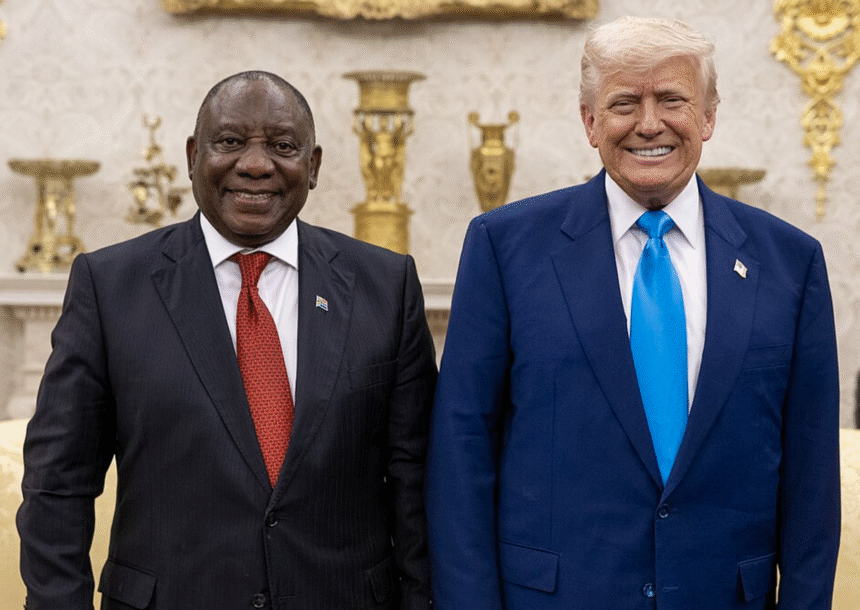
Trade Minister Parks Tau told reporters last week that, whatever the US decided, the economy would stay stable as South Africa looks to other international markets. President Cyril Ramaphosa had earlier said the country should “prepare” for an adverse decision. On its part, Pretoria rejects Washington’s allegations of discrimination against white Afrikaners, which it calls false.
The exclusion also needs 60 days’ notice to Congress and the country concerned, and the 1 January start date leaves little room. Labour federation Cosatu has called for targeted assistance, such as tax relief, for companies and workers most affected, particularly in the Western Cape and Northern Cape agriculture sectors.
What farmers can do now
- Talk to your packhouse or exporter about contracts and pricing for shipments landing after 1 January.
- Cost your US volumes at full tariff to see which blocks and varieties still make money.
- Look at other markets such as the EU, the Middle East and Asia, and work through your industry body, since collective market access is stronger than going alone.
- Watch for relief measures from government and your commodity association.
The bottom line
South Africa’s farmers didn’t write the trade policy behind this decision, but they carry much of the risk. For producers already shipping to the US, the next few weeks are about protecting margins and finding new buyers.
Join 'Farmers Mag' WhatsApp Channel
Get the latest Farming news and tips delivered straight to your WhatsApp
CLICK HERE TO JOIN