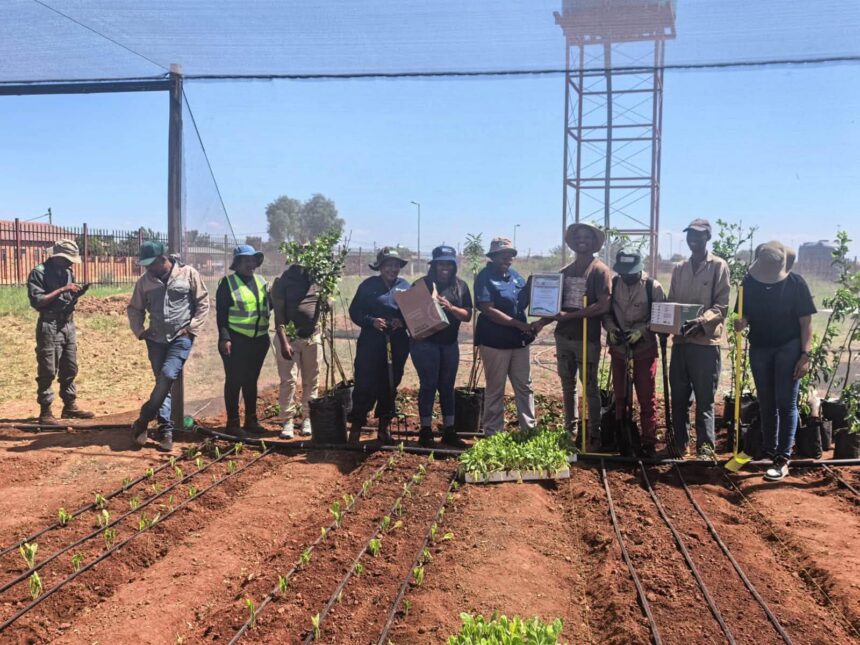
The Provincial Thuntsha Lerole programme continues to support agricultural development, empower local farmers and strengthen food security in communities across the North West province. Through targeted agricultural assistance, the programme is helping community-based farming initiatives access essential resources, develop practical skills and improve their ability to produce food. One of the beneficiaries is the Ithuseng Agroecology Training and Skills Development Cooperative, which received a 30 m × 30 m shade-net structure, agricultural tools, seeds and fruit trees to support its farming activities. The intervention aims to promote agroecology, strengthen agricultural production and create opportunities for skills development within the cooperative. In addition, 10 subsistence farmers from Wards 3 and 4 received supplementary animal feed to help them care for their livestock. These initiatives highlight the importance of practical agricultural support in building stronger rural livelihoods and improving access to food.
The support provided to the Ithuseng Agroecology Training and Skills Development Cooperative offers an opportunity to strengthen community-based food production while developing agricultural knowledge and practical experience. The cooperative consists of four members, including two young people, one adult male and one adult female. This membership reflects the importance of involving people from different age groups in agricultural development and creating opportunities for youth participation in farming. Access to agricultural equipment, seeds and fruit trees can help members establish and manage production activities more effectively. The resources also provide a foundation for developing practical skills that may support future agricultural projects and community food production. With appropriate planning, training and continued care, the cooperative can use this assistance to build its production capacity and strengthen its contribution to local food security.
The 30 m × 30 m shade-net structure is a key component of the support provided to the cooperative. Shade-net structures can help create a more controlled growing environment by reducing direct sunlight and protecting suitable crops from some environmental stresses. Depending on the crops selected and the structure’s design, they can support activities such as seedling production, vegetable cultivation and the propagation of certain plants. Their effectiveness depends on factors such as ventilation, irrigation, soil conditions and appropriate crop management. Careful planning is therefore important to ensure that the structure is used efficiently and that the selected crops suit local growing conditions. With suitable agricultural guidance, the facility can help the cooperative develop practical production skills and make better use of the resources available to it.
The provision of agricultural tools and seeds further supports the cooperative’s ability to carry out essential farming activities. Suitable tools help farmers prepare growing areas, plant crops, maintain beds and manage routine production tasks. Seeds provide the starting point for crop production, although successful harvests also depend on seed quality, planting methods, water availability and ongoing crop care. Members can benefit from training in planting schedules, soil preparation, pest management and the responsible use of available resources. Keeping basic production records can also help the cooperative track planting dates, input costs, crop performance and harvest volumes. These practices can improve planning and provide useful information when deciding how to expand or adjust future farming activities.
The fruit trees supplied to the cooperative add another dimension to its agricultural development activities. Fruit production can contribute to household nutrition by increasing access to fresh produce when trees reach maturity and produce harvests. However, fruit trees require appropriate planting locations, suitable soil conditions, sufficient water and ongoing maintenance. Young trees may also need protection from livestock, pests and other factors that could damage their growth. The time required before trees begin producing fruit varies according to the species, growing conditions and management practices. By combining fruit tree cultivation with other suitable farming activities, the cooperative may be able to develop a more diverse production system over time. This approach can support agricultural learning while creating opportunities for future food production.
The programme’s focus on agroecology is also relevant to sustainable agricultural development in rural communities. Agroecology applies ecological principles to farming and considers how soil health, biodiversity, water use and farming practices interact within an agricultural system. Depending on local conditions, agroecological methods may include composting, crop diversification, soil cover, responsible water management and practices that support beneficial organisms. These methods can help farmers make better use of available resources and manage some production risks. However, their suitability depends on the crops being grown, local environmental conditions and the resources available to farmers. Training and practical experience can help cooperative members identify methods that work for their specific production environment. By supporting agroecology and skills development together, the initiative creates an opportunity to build agricultural knowledge alongside practical production capacity.
The involvement of young people in the Ithuseng cooperative is another important feature of the initiative. Youth participation in agriculture can create opportunities to develop technical skills, gain experience in farm management and explore agricultural enterprise development. Farming offers a range of potential activities beyond growing crops, including seedling production, fruit cultivation, processing, storage and marketing. However, young farmers may need access to land, equipment, training, finance and suitable markets to turn agricultural skills into sustainable livelihoods. Community cooperatives can provide a setting where members share responsibilities, exchange knowledge and learn how to manage production collectively. The support provided through the Thuntsha Lerole programme can help create a practical starting point for further learning and agricultural participation. Continued access to relevant training and resources will be important in helping young members build on this opportunity.
Alongside the cooperative support, 10 subsistence farmers from Wards 3 and 4 received supplementary animal feed to assist with livestock care. Feed support can be particularly useful when grazing or other feed resources are insufficient to meet animals’ nutritional needs. The benefits depend on the condition of the livestock, the availability of grazing, the quality of the feed and the way it is incorporated into the animals’ diets. Farmers should follow appropriate feeding guidance to ensure that animals receive suitable nutrition without sudden changes that could affect their health. Livestock owners must also continue to provide access to clean water, monitor animal condition and seek veterinary advice when animals show signs of illness. Supplementary feed is one part of livestock management and works best alongside sound animal health practices and careful planning. For subsistence farmers, assistance with feed can help address an immediate production challenge while supporting the wider goal of maintaining healthy livestock.
Livestock farming contributes to rural livelihoods by providing food, income and assets that households may rely on during difficult periods. For subsistence farmers, maintaining healthy animals can be important to household resilience, particularly when livestock sales or animal products contribute to daily needs. Feed shortages can place pressure on farmers because animals require adequate nutrition to maintain their condition and productivity. Support that helps address these shortages can provide relief, although long-term livestock management also requires planning for seasonal changes in grazing and feed availability. Farmers can strengthen preparedness by assessing available grazing, storing suitable feed where possible and monitoring livestock condition throughout the year. Access to agricultural advice can help producers make informed decisions about feeding, breeding and animal health. The assistance provided to farmers in Wards 3 and 4 highlights the role of targeted interventions in addressing practical challenges faced by small-scale livestock producers.
Food security remains closely connected to the ability of communities to produce, obtain and afford nutritious food. Community farming initiatives can contribute to local food supplies while giving participants opportunities to develop agricultural skills and improve the use of available land and resources. However, successful food production depends on more than receiving equipment or inputs. Farmers and cooperatives also need suitable production plans, access to water, technical knowledge and ways to manage costs and distribute or sell their produce. Training can help beneficiaries understand how to maintain equipment, care for crops and trees, manage livestock and reduce avoidable production losses. Continued monitoring can also help identify challenges early and determine whether additional support is needed. By combining agricultural resources with skills development and practical guidance, programmes such as Thuntsha Lerole can help communities build a stronger foundation for sustainable food production.
The Provincial Thuntsha Lerole programme demonstrates how targeted support can address different needs within the agricultural sector. The Ithuseng Agroecology Training and Skills Development Cooperative received resources intended to strengthen crop production, fruit cultivation and agricultural training. Meanwhile, the 10 subsistence farmers in Wards 3 and 4 received supplementary animal feed to support livestock care. These interventions serve different purposes, but both contribute to the wider objectives of strengthening farming activities and supporting rural livelihoods. Their long-term value will depend on how effectively the resources are used, whether beneficiaries receive suitable technical guidance and how well the activities respond to local conditions. Continued cooperation between farmers, agricultural officials and community structures can help identify opportunities to improve production and address emerging challenges. Practical support that combines resources, knowledge and follow-up can contribute to more sustainable agricultural development.
The Thuntsha Lerole programme’s support for the Ithuseng Agroecology Training and Skills Development Cooperative and subsistence farmers in Wards 3 and 4 highlights the importance of investing in local agriculture. The provision of a shade-net structure, agricultural tools, seeds and fruit trees creates opportunities for crop production, agroecology and practical skills development, while supplementary animal feed helps farmers care for their livestock. The cooperative’s inclusion of two youth members also highlights the value of encouraging young people to participate in agriculture and develop skills that may support future livelihoods. These initiatives can contribute to food security when beneficiaries combine the resources provided with sound farming practices, appropriate training and consistent management. Sustained support will remain important in helping community farmers address production challenges and make effective use of agricultural opportunities. By strengthening local farming capacity and promoting sustainable practices, the programme supports the broader goal of building resilient rural communities and improving access to nutritious food across the North West.
Join 'Farmers Mag' WhatsApp Channel
Get the latest Farming news and tips delivered straight to your WhatsApp
CLICK HERE TO JOIN