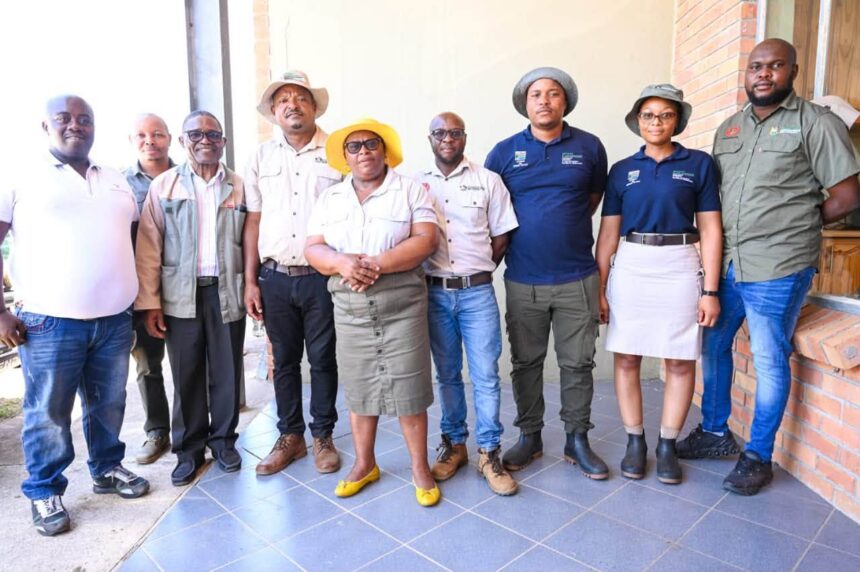
The reopening of the Ndlondlweni auction sale facility in Mhlabuyalingana marks an important step towards strengthening livestock farming and rural economic development in KwaZulu-Natal. The facility was officially opened by the province’s MEC for Agriculture and Rural Development, Mrs Thembeni kaMadlopha-Mthethwa, creating renewed opportunities for livestock farmers to participate in commercial markets. Although the facility was completed in 2006, it remained non-operational for approximately 20 years, limiting its potential to support local agricultural activity. Its opening signals a renewed focus on making agricultural infrastructure work for farmers and the communities that depend on livestock production. The facility is expected to play a significant role in promoting the commercialisation of livestock, helping farmers connect their animals to organised markets and explore opportunities to improve their farming businesses.
Livestock farming is an important part of rural agriculture in KwaZulu-Natal, where cattle and other livestock can contribute to household livelihoods, local trade and food production. For many farmers, livestock also represents a valuable asset that can provide income when animals are sold for suitable purposes. However, turning livestock ownership into a sustainable commercial enterprise requires access to reliable markets, appropriate infrastructure, animal health services and information about market requirements. Auction facilities can help address some of these needs by providing a designated place where farmers and buyers can meet and conduct livestock transactions. By opening the Ndlondlweni facility, the provincial Department of Agriculture and Rural Development is creating an opportunity to strengthen the link between local livestock producers and the broader agricultural economy.
The long period during which the Ndlondlweni auction facility remained inactive highlights the importance of maintaining and using public agricultural infrastructure effectively. Although the facility was completed in 2006, it did not operate for the following two decades, leaving its intended role in livestock marketing unrealised. Agricultural infrastructure can deliver meaningful benefits only when it is functional, accessible and supported by suitable management arrangements. Facilities that remain unused may represent missed opportunities for farmers who need practical ways to reach markets and improve the value of their production. The reopening therefore brings attention not only to the importance of investing in agricultural facilities but also to ensuring that completed projects remain operational and serve their intended communities.
MEC Thembeni kaMadlopha-Mthethwa emphasised the importance of the facility in promoting the commercialisation of livestock. Commercialisation involves moving beyond livestock production primarily for household use or informal transactions towards more structured participation in markets. This process can help farmers make better-informed decisions about breeding, feeding, animal health and the timing of sales. Access to organised auctions may also help producers connect with a wider pool of potential buyers and gain a clearer understanding of market demand. For these benefits to be realised, farmers need appropriate support, reliable information and the capacity to meet buyers’ expectations regarding animal condition and quality.
A functioning livestock auction facility can offer practical advantages for both farmers and buyers. It provides a central location for presenting animals, assessing their suitability and negotiating sales under organised conditions. When properly managed, an auction can help make transactions more transparent and provide farmers with useful information about prevailing prices and buyer demand. Such information can support better planning and help producers evaluate the costs and potential returns associated with raising livestock. The actual benefits will depend on factors such as farmer participation, buyer interest, operating arrangements and the consistency of auction activities over time.
The Ndlondlweni facility also has the potential to support rural economic development in Mhlabuyalingana. Livestock marketing can generate activity for businesses and service providers involved in animal transport, feed, veterinary care and other agricultural services. Increased trading opportunities may create demand for additional support services while encouraging farmers to invest in improving their livestock operations. More active agricultural markets can also strengthen connections between rural producers and buyers operating in wider regional economies. However, the scale of these benefits will depend on the facility’s continued operation and its ability to attract regular participation from farmers and livestock buyers.
For emerging and small-scale livestock farmers, access to a reliable auction facility may be especially valuable. Smaller producers can face challenges when trying to find buyers, arrange transportation or obtain sufficient information to negotiate suitable prices for their animals. A local facility can help reduce some of these barriers by bringing market participants together in a more accessible setting. Farmers may also benefit from learning more about animal selection, preparation for sale, record keeping and the costs associated with commercial livestock production. Combining access to the auction facility with agricultural extension services and farmer training could help producers build the skills needed to participate more effectively in livestock markets.
The long-term success of the Ndlondlweni auction sale facility will depend on effective management and the continued involvement of local agricultural stakeholders. Regular maintenance, clear operating procedures and suitable arrangements for handling livestock will be important in keeping the facility functional. Animal welfare, biosecurity and compliance with relevant livestock movement and health requirements must also remain priorities during auction activities. Cooperation among the provincial department, farmers, buyers and other service providers can help address operational challenges and build confidence in the facility. Sustained engagement will be essential to ensure that the reopening leads to ongoing market access rather than a short-lived improvement in agricultural infrastructure.
The opening of the Ndlondlweni auction sale facility represents an opportunity to strengthen livestock commercialisation and support farming communities in Mhlabuyalingana. After approximately 20 years of inactivity, the facility can once again serve as a potential link between livestock producers and organised markets. Its contribution will depend on how effectively it is managed, how regularly it is used and whether farmers receive the support needed to benefit from commercial trading. With continued attention to infrastructure, farmer development and market access, the facility could become a valuable part of the local agricultural economy. The reopening under MEC Thembeni kaMadlopha-Mthethwa reinforces the importance of turning agricultural infrastructure into practical opportunities that support rural livelihoods and the growth of livestock farming in KwaZulu-Natal.
Join 'Farmers Mag' WhatsApp Channel
Get the latest Farming news and tips delivered straight to your WhatsApp
CLICK HERE TO JOIN