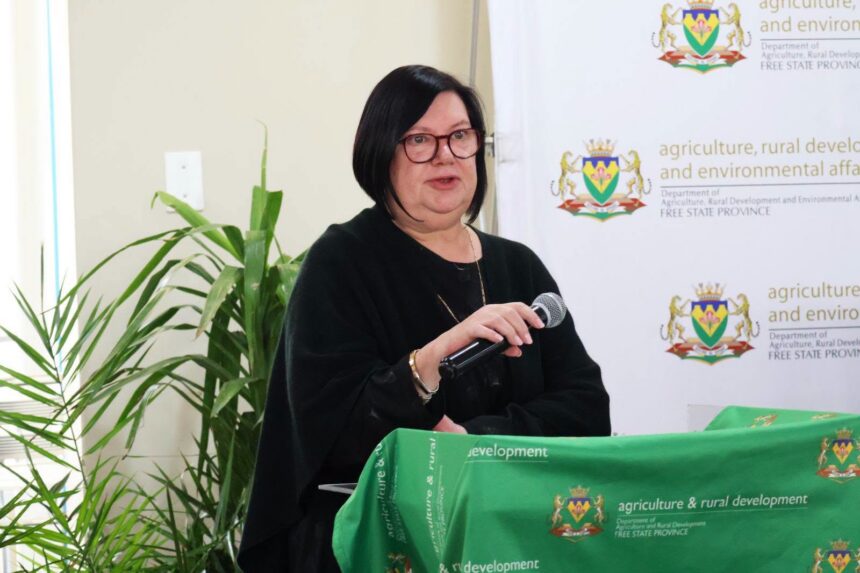
The MEC for Agriculture, Rural Development and Environmental Affairs, Ms Elzabe Rockman, together with the Head of Department, Mr Tshepo Mabilo, convened an engagement session with farmers affected by the Land Bank Blended Finance Scheme. The meeting focused on understanding the difficulties experienced by farmers under the scheme and identifying practical ways to address the challenges. Farmers were given an opportunity to explain how the situation has affected their agricultural enterprises, livelihoods and production activities. The engagement also provided space for the Department and Land Bank representatives to clarify aspects of the scheme and its implementation. The meeting demonstrated the importance of direct communication between farmers, government and financial institutions when challenges threaten the sustainability of agricultural businesses.
In his welcoming remarks, HoD Mabilo thanked the farmers for attending the engagement despite the short notice. He explained that the Department was still analysing possible interventions to respond to the crisis affecting farmers under the scheme. His remarks emphasised that the meeting was intended to create an open space where farmers could provide information based on their experiences. HoD Mabilo said the Department wanted to hear directly from producers and work with them to identify possible solutions. He described the spirit of the engagement as an effort to gather farmers’ inputs and develop solutions together.
The engagement focused on the practical challenges faced by farmers participating in the Land Bank Blended Finance Scheme. Financial support plays an important role in agricultural enterprises because farmers need access to capital to maintain production, invest in infrastructure and manage operational requirements. When funding arrangements encounter difficulties, the effects can extend beyond financial administration and affect the day-to-day running of farming businesses. Farmers may face pressure when they cannot access expected funding or when financial arrangements do not operate as anticipated. Addressing these concerns requires clear communication between the affected producers, government departments and the financial institution involved.
Mr Nthako Thaele, the Land Bank Provincial Head, also addressed the gathering and explained how funds are distributed from the national level to the province. He further explained the circumstances that resulted in the available funds being depleted. His presentation provided farmers with information about the movement and availability of funding within the scheme. Thaele also acknowledged the importance of communicating with producers when such challenges arise and expressed appreciation for the MEC’s quick response in convening the engagement. Bringing Land Bank and affected farmers into the same discussion created an opportunity to address questions directly and improve understanding of the situation.
MEC Rockman welcomed farmers from different formations, including AFASA, YARD and WARD, and acknowledged the concerns raised by producers. She said that when the Department became aware of the crisis, it immediately considered the potential impact on farmers, food security and livelihoods. Her remarks highlighted the importance of ensuring that agricultural producers receive appropriate support when they face difficulties linked to funding intended to support their enterprises. The MEC stressed that the Department would work closely with affected farmers, Land Bank and other relevant stakeholders. She also assured farmers that their concerns were being taken seriously during the process of identifying possible solutions.
The participation of farmers was a central part of the engagement because the producers directly affected by the scheme were able to provide information about their individual experiences. Farmers shared their challenges and explained the difficulties they have encountered under the Blended Finance Scheme. They were also given an opportunity to ask questions where they required clarity about the implementation and funding processes. In addition to raising concerns, farmers were able to propose possible solutions based on their experiences and the circumstances of their agricultural enterprises. This direct exchange allowed the meeting to move beyond general discussions and focus on issues affecting individual producers.
The Department committed to assessing each affected case individually as part of its response to the situation. Individual assessments can help stakeholders understand the specific circumstances facing different farmers rather than treating every enterprise as having identical challenges. The Department also committed to facilitating further engagements with Land Bank as discussions continue. Continued communication will be important for clarifying outstanding issues and identifying practical interventions that can support affected agricultural enterprises. The commitment to engage with farmers on an individual basis also reflects the need to understand the different financial and operational circumstances of producers under the scheme.
The sustainability of agricultural enterprises was a key concern throughout the engagement. Farmers depend on functioning financial arrangements to maintain production and manage the costs associated with running agricultural businesses. Any disruption can place additional pressure on enterprises, particularly where farmers have already made commitments based on expected financial support. Finding workable solutions therefore requires consideration of both immediate challenges and the longer-term sustainability of affected farming operations. Collaboration between farmers, the Department, Land Bank and other relevant stakeholders can provide a structured way to examine these issues and consider possible interventions.
The meeting also highlighted the connection between agricultural finance, food production and rural livelihoods. Farmers who operate sustainable enterprises contribute to agricultural production and play a role in supporting food supply chains and economic activity in farming communities. Financial challenges affecting producers can therefore have consequences that extend beyond individual businesses. This makes effective communication and timely engagement important when agricultural funding programmes encounter difficulties. The Department’s decision to bring affected farmers and Land Bank representatives together created a forum for discussing these concerns and considering the way forward.
The engagement between the Department, affected farmers and Land Bank represents an important step in understanding the challenges surrounding the Blended Finance Scheme. Farmers were given a platform to raise concerns, seek clarity and contribute possible solutions, while officials provided information about the funding process and the challenges being experienced. The Department’s commitment to assess cases individually and continue discussions with Land Bank provides a basis for further engagement. The focus remains on identifying workable interventions that can help protect the sustainability of affected agricultural enterprises. Continued cooperation among all stakeholders will be important as the Department works with farmers and Land Bank to address the challenges and support agricultural production and livelihoods.
Join 'Farmers Mag' WhatsApp Channel
Get the latest Farming news and tips delivered straight to your WhatsApp
CLICK HERE TO JOIN