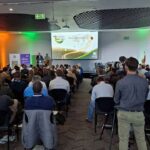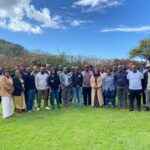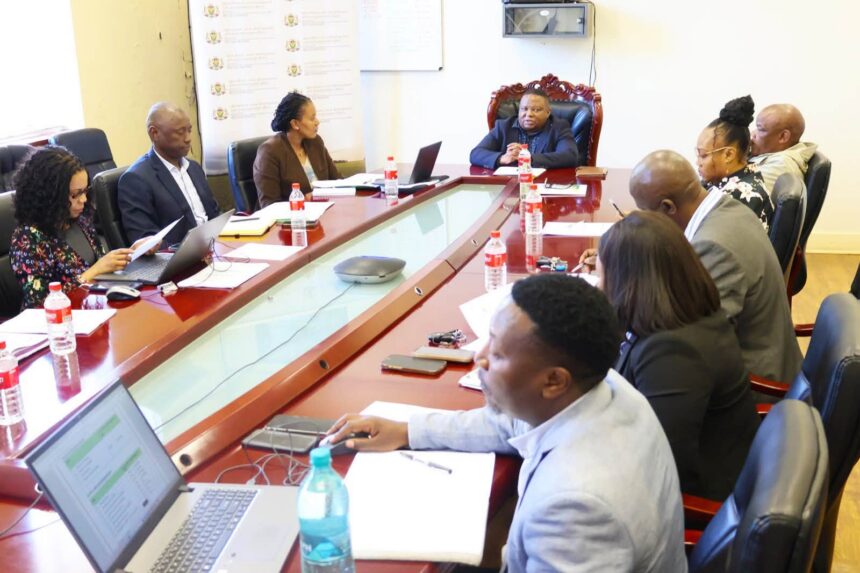
The Department of Agriculture and Rural Development in the Free State hosted a delegation from the Gauteng Department of Agriculture and Rural Development to exchange ideas on strategic priorities and improve support to farmers and rural communities. The Free State delegation was led by Head of Department Tshepo Mabilo and his management team, while the Gauteng delegation was led by Head of Department Andiswa Jass. The meeting provided an opportunity for the two provincial departments to compare approaches, discuss challenges and identify areas where lessons from one department could benefit the other. The discussions focused on practical issues affecting agricultural development, including farmer support, financial management, monitoring and evaluation, agro-processing and market access. The engagement also highlighted the importance of stronger systems and better internal processes in ensuring that public resources deliver meaningful benefits to farmers and communities.
Opening the session, Mabilo welcomed the Gauteng delegation and stressed the importance of learning from best practices within government. He acknowledged that the Free State department has the technical knowledge required to deliver its agricultural programmes but said there is still room to improve internal controls, develop effective frameworks and strengthen records management. These areas are important because strong administrative systems help departments track resources, monitor programmes and improve the quality of services provided to beneficiaries. Mabilo said the department is working towards achieving a clean audit and is addressing outstanding issues as part of that process. He also emphasised that improving governance and administration should ultimately support better outcomes for farmers and rural communities.
The issue of support for commonage farmers was another important concern raised during the meeting. Commonage farming can provide opportunities for farmers to access land and develop agricultural activities, but disagreements among beneficiaries can affect the implementation of funded projects. Mabilo explained that some commonage farmers begin experiencing conflict after receiving funding, creating challenges for the department and the intended beneficiaries. The department is therefore considering options to ensure that disputes do not prevent the original funding objectives from being achieved. This highlights the need for clear agreements, effective oversight and appropriate support mechanisms when public funding is provided to farmer groups.
Jass welcomed the opportunity for the Gauteng delegation to engage with the Free State department and described the province as performing well in areas from which Gauteng could learn. She said the purpose of the visit was not only to share information but also to understand how both departments could improve their approaches. Benchmarking between provincial departments can provide practical insight into how different teams respond to similar administrative and agricultural challenges. It can also help identify systems that can be adapted to suit different provincial circumstances. The engagement therefore created space for both departments to learn from their respective experiences rather than treating agricultural development as a one-size-fits-all process.
Farmer Support and Development formed a major part of the discussions between the two departments. The presentations covered historic funding models and the way departments structure and manage financial support provided to farmers. Transfer payment agreements were also discussed, with attention given to the responsibilities that come with public funding and the need to ensure that financial resources are used for their intended purposes. Monthly expenditure reports and the follow-the-money process were examined as important tools for tracking the movement and use of funds. These processes can help departments identify problems earlier and strengthen accountability across agricultural programmes.
Monitoring and Evaluation was highlighted as an important component of effective farmer support and agricultural programme management. Without regular monitoring, departments can struggle to determine whether funded projects are progressing according to their plans and whether beneficiaries are receiving the intended support. Evaluation can also provide information about what is working, where implementation challenges exist and what changes may be needed. Strong monitoring systems can support better decision-making because managers have access to information about programme performance and expenditure. For farmer support programmes, this can help ensure that funding is linked to measurable activities and meaningful outcomes.
The departments also discussed ways to strengthen agro-processing as part of broader agricultural development. Agro-processing can create opportunities to add value to agricultural products and support economic activity beyond primary production. The discussions also covered systems and technology, reflecting the growing importance of efficient information and management systems in government agricultural programmes. Technology can help departments manage information, monitor projects and improve communication with beneficiaries when appropriate systems are in place. Farmer-to-market support was another area of focus, recognising that successful agricultural development depends not only on production but also on farmers being able to reach suitable markets for their products.
The emphasis on business plans was also significant during the engagement. Mabilo stressed the importance of business plans as a foundation for agricultural projects and funding decisions. A properly prepared business plan can help clarify the objectives of a farming enterprise, its production activities, financial requirements and expected outcomes. It can also provide a useful framework for monitoring progress after funding has been provided. Strengthening the quality of business plans can therefore contribute to better planning and help ensure that agricultural support is connected to realistic business objectives.
The discussions also opened the door for further engagement on blended finance and other agricultural financing mechanisms. Blended finance can involve combining different forms of funding to help make finance more accessible for qualifying agricultural businesses and farmers. Mabilo called for more discussions on this area as part of the broader effort to strengthen agricultural support. Further engagement could allow officials to examine different approaches to financing, the requirements attached to funding and ways of improving support for farmers. The emphasis on continued discussion also reflects the need for government departments to keep adapting their programmes as the needs of farmers and agricultural enterprises change.
The meeting between the Free State and Gauteng agriculture departments demonstrated the value of cooperation and knowledge sharing between provincial institutions. Both departments brought their own experiences, systems and challenges to the discussion while looking for practical lessons that could improve their work. The focus on internal controls, records management, farmer funding, monitoring and evaluation, agro-processing, technology and market access showed that effective agricultural development depends on more than providing financial support alone. Strong administration and accountability are also necessary to ensure that public resources translate into sustainable benefits for farmers. The engagement provides a basis for continued collaboration as both departments work to strengthen farmer support and improve the quality of agricultural services delivered to their respective communities.
Join 'Farmers Mag' WhatsApp Channel
Get the latest Farming news and tips delivered straight to your WhatsApp
CLICK HERE TO JOIN