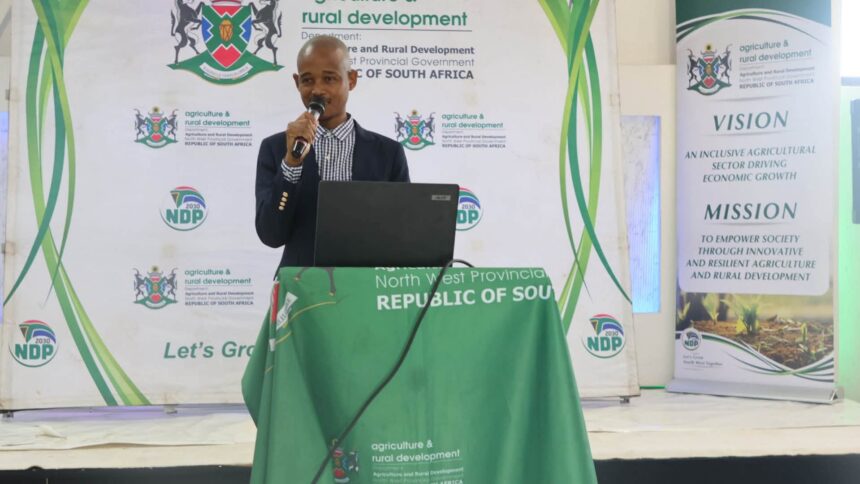
The symposium continued with a strong focus on the practical challenges and opportunities shaping agriculture in the Ngaka Modiri Molema District. Presentations examined how reliable water resources, effective rangeland management, farmer support and knowledge-sharing can contribute to stronger agricultural productivity. Livestock farming featured prominently because healthy animals and productive grazing systems depend on careful management of natural resources. The discussions also highlighted the value of farmer success stories in demonstrating how resilience, innovation and appropriate agricultural support can influence farming businesses and livelihoods. Together, the presentations provided a broader view of the measures needed to strengthen sustainable farming and support food security in the North West.
Water remains a fundamental requirement for successful livestock production, making reliable water resources an important part of agricultural development. Livestock require sufficient water for drinking, digestion, temperature regulation and overall health, while farmers also need dependable supplies to maintain their operations during different production periods. Water availability can become particularly important during dry conditions when natural water sources and grazing resources may be under pressure. A reliable water supply can help farmers manage their herds more consistently and reduce some of the risks associated with changing environmental conditions. The focus on water as a catalyst for livestock development therefore underlines the close relationship between natural resource management, animal health and sustainable farming enterprises.
Good water management involves more than simply having access to a water source. Farmers need infrastructure that can deliver water to livestock safely and consistently, while also considering the location of water points in relation to grazing areas. The distribution of water can influence how animals use available rangeland because livestock tend to concentrate around accessible water points. Poorly planned water infrastructure can contribute to uneven grazing pressure in certain areas, while appropriately managed systems can support more effective use of available grazing land. This makes water planning an important consideration when farmers develop long-term livestock management strategies.
Animal health is closely connected to access to adequate water, particularly in livestock systems where animals depend on natural grazing and seasonal resources. Water requirements can vary according to factors such as animal type, body size, diet, weather conditions and production stage. Farmers therefore need to monitor their animals and ensure that available water supplies remain suitable for the herd. Reliable access can also make routine livestock management more practical by reducing the distance animals need to travel to reach water. Strengthening water resources can consequently support both livestock welfare and the day-to-day management of farming operations.
The symposium also examined the effects of bush encroachment control on grazing capacity and livestock productivity in Ramotshere Moiloa Local Municipality within the Ngaka Modiri Molema District. Bush encroachment refers to the increase or thickening of woody vegetation in areas where excessive woody growth can reduce the availability or accessibility of grass for grazing. The extent and causes of bush encroachment can vary according to local environmental conditions and land management practices. Where woody vegetation becomes sufficiently dense, it can reduce usable grazing space and affect the productivity of rangelands. Managing this challenge requires an understanding of local conditions and careful consideration of appropriate rangeland management practices.
Effective bush encroachment control can form part of a broader approach to improving grazing capacity. When excessive woody vegetation is managed appropriately, more space and resources may become available for desirable grasses and other forage. This can help farmers make better use of grazing land while supporting the nutritional needs of livestock. However, rangeland management needs to consider the ecological role of woody vegetation as well as the needs of livestock production. Sustainable management therefore requires farmers and agricultural practitioners to assess the condition of the rangeland and select approaches that are appropriate for the local environment.
Grazing capacity is an important consideration for livestock farmers because it influences how many animals a particular area can support without causing long-term degradation. If livestock numbers consistently exceed the productive capacity of the land, grazing pressure can increase and vegetation may struggle to recover. This can contribute to declining pasture quality and reduced livestock performance over time. Effective rangeland management seeks to maintain a balance between livestock numbers, available forage and the ability of vegetation to recover. The discussion of bush encroachment control therefore connects directly with the wider objective of maintaining productive grazing systems for current and future livestock production.
Improving livestock productivity also requires attention to how animals use available grazing resources. Farmers can benefit from monitoring pasture conditions and adjusting grazing management when environmental or seasonal conditions change. The effectiveness of any intervention depends on factors such as the condition of the land, the type and density of woody vegetation and the management practices used after control measures are implemented. Bush control should therefore form part of an integrated rangeland strategy rather than being considered in isolation. Combining appropriate vegetation management with responsible grazing practices can support the longer-term productivity and resilience of livestock farming systems.
The symposium’s inclusion of the success story of farmer Koko Molatudi added a practical dimension to the discussions. The story showcased the journey and achievements of a farmer and illustrated how agricultural support, resilience and innovation can contribute to sustainable farming and improved livelihoods. Individual farmer experiences can provide useful insight into the realities of developing and maintaining an agricultural enterprise. They can also demonstrate the importance of adapting to challenges while making effective use of available opportunities and support. Such examples can encourage knowledge-sharing and show how agricultural development can have practical benefits at the farm and household level.
Farmer success stories are valuable because agricultural development does not depend solely on technical information. Farmers also need access to support systems that can help them apply knowledge, manage risks and respond to changing circumstances. Extension and advisory services can play an important role by connecting producers with practical information and guidance relevant to their farming activities. Innovation can also help farmers improve the way they use resources, provided that new approaches are suitable for their circumstances and supported by appropriate knowledge. The experience highlighted through Koko Molatudi’s story therefore forms part of a wider discussion about the conditions that can help farmers build sustainable enterprises.
Collaboration emerged as another important theme throughout the presentations. Agricultural challenges often involve several interconnected issues, including water availability, livestock health, grazing management, access to knowledge and farm business development. Addressing these issues effectively can require cooperation between farmers, agricultural professionals, communities and other stakeholders involved in the sector. Knowledge-sharing allows participants to learn from technical expertise as well as from practical farming experience. Strong collaboration can also help ensure that agricultural support responds to the conditions and challenges experienced by farmers on the ground.
Effective extension and advisory services are particularly important because farmers need information that they can apply to their own production systems. Extension support can help producers understand agricultural practices, assess challenges and make decisions based on relevant technical knowledge. In livestock farming, this can include guidance on animal management, grazing systems, water resources and rangeland conditions. Advisory services can also help farmers connect technical production decisions with broader farm management objectives. Strengthening these services can therefore contribute to more informed agricultural decision-making and improve the flow of useful knowledge between specialists and farming communities.
The focus on sustainable farming practices also reflects the need to protect the natural resources on which agricultural production depends. Water resources, grazing land and healthy ecosystems all play important roles in supporting livestock and crop production. Farmers must balance current production needs with the long-term condition of their land and other resources. Sustainable agriculture does not mean applying one approach to every farm, because production conditions differ between locations and farming systems. Instead, it requires informed management decisions that consider productivity, resource conservation and the specific circumstances of each agricultural enterprise.
The presentations also have wider relevance for food security in the North West. Productive livestock enterprises can contribute to food supplies and provide income and livelihoods for farming households and communities. Strengthening the systems that support livestock production can therefore form part of broader efforts to build resilient agricultural economies. Reliable water, productive grazing land, effective farmer support and access to practical knowledge all contribute to the capacity of farmers to maintain production. Continued collaboration among agricultural stakeholders can help ensure that these areas receive attention as the sector works to improve productivity and strengthen food security.
The symposium’s discussions on water, bush encroachment control and farmer development demonstrate that agricultural productivity depends on several connected factors. Reliable water resources can support livestock health and improve the management of farming enterprises, while appropriate rangeland management can help protect grazing capacity and support livestock productivity. The experience of Koko Molatudi provides a farmer-centred example of how support, resilience and innovation can contribute to sustainable agricultural development. At the same time, effective extension and advisory services can help farmers turn technical knowledge into practical action. By strengthening collaboration and sharing knowledge across the agricultural sector, initiatives of this nature can contribute to more productive, resilient and sustainable farming in the Ngaka Modiri Molema District and support the broader goal of food security in the North West.
Join 'Farmers Mag' WhatsApp Channel
Get the latest Farming news and tips delivered straight to your WhatsApp
CLICK HERE TO JOIN