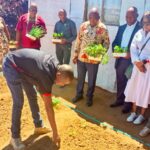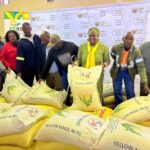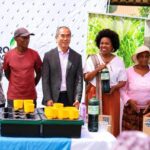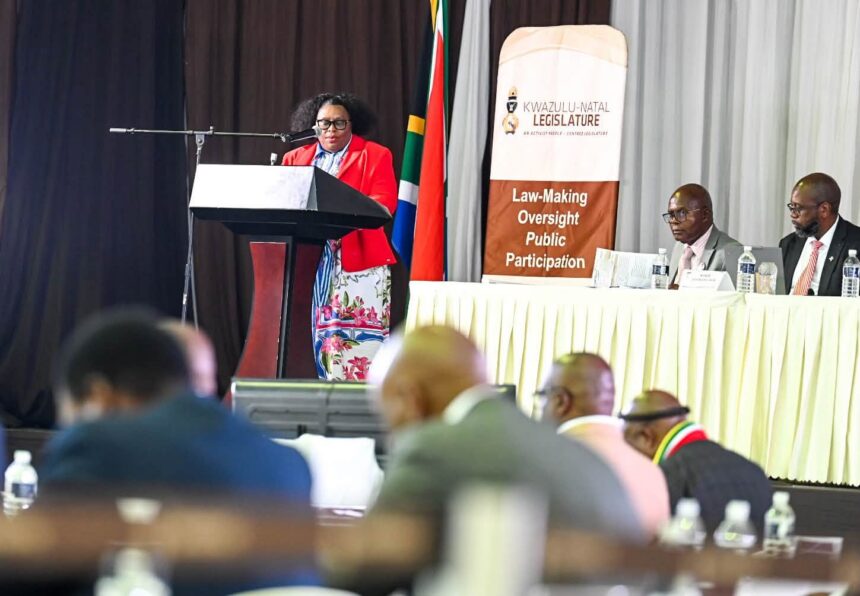
The two-day Taking Parliament to the People programme at Osizweni Community Hall in Newcastle has brought farmers, community members and Members of the KwaZulu-Natal Legislature together to address issues affecting agriculture and rural development in Amajuba District. The engagement has provided a platform for communities to raise concerns directly and receive feedback on matters discussed during the previous Multi-Party Oversight session. Agriculture has featured strongly in these discussions, with farmers highlighting challenges related to access to agricultural land, farming implements, water, veterinary services and extension support. These challenges affect the ability of farmers to establish productive enterprises, maintain existing operations and contribute to local food production. The latest engagement has therefore placed practical agricultural needs at the centre of discussions about rural development and service delivery in the district.
During the opening of the programme, MEC for Agriculture and Rural Development Thembeni kaMadlopha-Mthethwa provided feedback on concerns raised by farmers during the previous session. The feedback addressed several interventions intended to improve agricultural support in communities across Amajuba District. Farmers and community members had previously raised concerns about limited access to agricultural land and agricultural implements, as well as shortages of water for crop production. They also highlighted the need for accessible veterinary and agricultural extension services. Addressing these issues is important because farmers need a combination of land, equipment, water, technical knowledge and support services to maintain productive agricultural enterprises.
Access to agricultural land remains a significant consideration for farmers seeking to expand food production and establish sustainable agricultural businesses. Land provides the foundation for crop cultivation, livestock production and other agricultural activities, but access alone does not guarantee successful production. Farmers also require infrastructure, machinery, water, production inputs, technical advice and appropriate markets. Where several of these resources are unavailable, agricultural land can remain under-utilised even when there is demand from farmers who want to produce. The concerns raised in Amajuba therefore highlight the need for agricultural development programmes to address multiple constraints at the same time.
Water is another essential requirement for productive agriculture, particularly for farmers growing crops. Reliable water supplies can help farmers plan production more effectively and reduce their dependence on uncertain rainfall patterns. Water shortages can affect planting decisions, crop development and the ability of farmers to maintain production during dry periods. Investment in suitable water infrastructure can therefore play an important role in strengthening agricultural productivity in rural communities. Farmers also need appropriate systems for managing available water so that resources are used efficiently and agricultural production remains sustainable.
The availability of agricultural implements and mechanisation is equally important for farmers who need to prepare land and plant crops within the appropriate growing season. Many small-scale farmers cannot afford to purchase and maintain tractors and other machinery individually, making access to mechanisation services an important form of agricultural support. According to the feedback provided during the engagement, 60 hectares had been planted in Mossdale during the winter season, while an additional 130 hectares were planned for 26 farmers. These figures indicate the scale of cultivation being supported through tractor services in the area. Continued access to mechanisation can help farmers bring more land into production when it is combined with suitable seeds, inputs, water and technical support.
Agricultural extension services also play an important role in helping farmers improve their production practices. Extension practitioners can provide practical guidance on crop production, livestock management, soil management, pest control and other farming activities. The MEC said the department is working to ensure that every ward has a dedicated Extension Practitioner, which could improve access to technical support at community level. Regular interaction with extension practitioners can help farmers identify production problems and make decisions based on relevant agricultural information. Strong extension services can also help connect farmers with government programmes and other forms of agricultural assistance.
Veterinary services are particularly important for communities involved in livestock farming. Healthy animals are essential for productive cattle, sheep, goats and other livestock enterprises, while disease outbreaks can create serious challenges for farmers and their livelihoods. Accessible veterinary support can help farmers obtain advice on animal health, disease prevention and appropriate livestock management. Farmers in rural areas can face additional difficulties when professional services are located far from their communities. Improving access to veterinary services can therefore contribute to stronger livestock production and better agricultural outcomes.
The Multi-Planting Season initiative is another important component of the agricultural support outlined during the engagement. The MEC indicated that seeds and agricultural inputs will be provided through the programme, which is expected to be launched with Premier Thamsanqa Ntuli and the provincial Cabinet in early October. A total of 314 farmers in Dannhauser are expected to benefit from the initiative. Access to seeds and production inputs can help farmers move from having land available to actively cultivating it. Successful crop production will still depend on factors such as planting conditions, soil quality, water availability, farm management and access to markets.
Several specific interventions in Dannhauser were also discussed during the programme. A 150-hectare farm in Ward 9 had previously been fenced and supported with tractor services, but the project stalled because of community conflict. One of the farmers, Zanele Mbatha, is now receiving support with vegetable production and 100 mushroom packs. Nomshado Hadebe in Ward 7 and Sylvia Kubheka have been assessed and prioritised for fencing, water tanks and garden support during the 2027/28 period. Dooringkop farm is also expected to benefit from the Multi-Planting Season initiative, providing another opportunity to support agricultural production in the area.
These examples show that agricultural development often requires different forms of support depending on the circumstances of individual farmers and farming projects. Fencing can help establish clearer production areas, while water tanks can improve access to water for agricultural activities where suitable supplies are available. Seeds, mushroom packs and garden support can assist farmers involved in different forms of food production. Mechanisation can help prepare larger areas of land for cultivation and reduce some of the physical barriers associated with farming. Combining these interventions with technical advice and appropriate farm management can help improve the chances of maintaining productive agricultural enterprises.
Community members in Madlangeni also raised concerns about the uncompleted Agri-Hub, the slow pace of land restitution and challenges involving grazing permits. The MEC explained that the Agri-Village concept began in 2012 and involved several areas of government working together, including land restitution and rural development, human settlements and agriculture. The intended approach involved land acquisition, the development of housing and agricultural support for the community. According to the explanation provided during the engagement, the project stalled because the land had not been acquired, which affected the ability of the other departments to proceed with their respective responsibilities. This situation illustrates how rural development projects often depend on coordination between different government functions.
Land restitution and grazing permits are important issues for communities that depend on agriculture and livestock production. Farmers need secure access to agricultural land to make long-term decisions about production and infrastructure. Livestock farmers also require suitable grazing areas that can support their animals without placing excessive pressure on available resources. Delays in land-related processes can affect farmers’ ability to plan their operations and invest in agricultural activities. Resolving these challenges requires coordination, clear processes and continued engagement with affected communities.
The department has also indicated that more than 7,000 hectares will be worked through its Mechanisation Programme as part of the Multi-Planting Season initiative known as “Lethwas’ ihlobo”. Amajuba District has been prioritised for youth and women-led cooperatives under the programme. Supporting youth and women in agriculture can create opportunities for broader participation in farming and agricultural value chains. Mechanisation support can also help cooperatives access production capacity that may otherwise be difficult to achieve because of the cost of agricultural machinery. The success of these initiatives will depend on effective implementation as well as farmers’ access to land, inputs, water, markets and ongoing technical support.
Under-utilised agricultural land is another area receiving attention through the Phez’komkhono Food Security Programme. The department said that under-utilised land will be assessed and brought back into production through the programme. Increasing the productive use of suitable agricultural land can contribute to food production and create opportunities for farming communities. However, each piece of land needs to be assessed according to factors such as its condition, water availability, infrastructure and suitability for different forms of agriculture. Bringing under-utilised land back into production therefore requires proper planning, farmer support and ongoing management.
The Taking Parliament to the People programme also highlights the importance of direct engagement between communities and public representatives. Farmers often have detailed knowledge of the challenges affecting agricultural production in their areas because they experience these challenges directly through their daily activities. Providing an opportunity for farmers to raise concerns can help bring practical issues into broader discussions about government programmes and rural development. Feedback from officials can also help communities understand which interventions are planned, which projects are already receiving support and where delays remain. Continued engagement is important because agricultural development requires sustained attention rather than one-time interventions.
The agricultural issues raised in Amajuba demonstrate that rural development depends on several interconnected factors. Farmers need access to land and productive resources, but they also need water, mechanisation, seeds, inputs, veterinary services and extension support. They need infrastructure that enables production and clear processes that allow them to plan their agricultural activities with greater certainty. Government programmes can assist by providing targeted support, but effective implementation and continued communication with farming communities remain important. Strengthening these areas can help create better conditions for farmers to increase production and contribute to local food security.
The two-day Taking Parliament to the People programme at Osizweni Community Hall has brought important agricultural and rural development concerns in Amajuba District into direct discussion. The feedback provided by the MEC outlines several interventions covering mechanisation, planting inputs, extension services, water infrastructure, fencing, garden support and the use of under-utilised land. The planned work across more than 7,000 hectares and the focus on youth and women-led cooperatives also point to efforts to expand participation in agricultural production. At the same time, concerns around land access, the stalled Agri-Village project, grazing permits and community conflict show that some challenges require continued attention and coordination. Sustained implementation of agricultural support, combined with meaningful engagement with farmers and communities, can help strengthen farming activity, improve rural livelihoods and support food production across Amajuba District.
Join 'Farmers Mag' WhatsApp Channel
Get the latest Farming news and tips delivered straight to your WhatsApp
CLICK HERE TO JOIN