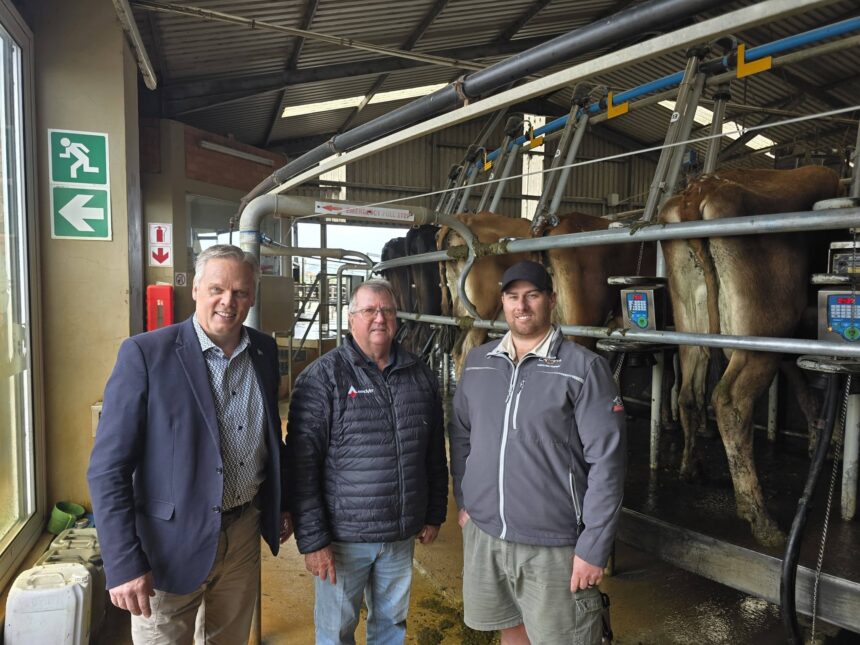
Agriculture Minister Willie Aucamp has highlighted the growing importance of technology and precision farming during a visit to a dairy farm near Humansdorp in the Eastern Cape. Aucamp said he visited the dairy operation of farmer Daan Landman and described the experience as a reminder of how technology is becoming increasingly important in modern agriculture. His comments come as South African farmers continue to operate in an environment where productivity, efficient resource use and informed decision-making are becoming increasingly important. Precision farming can help producers collect and use information about their operations to improve how they manage crops, livestock, inputs and infrastructure. For the dairy sector in particular, technology can support better monitoring of animals, production performance and farm resources.
The visit to Landman’s dairy farm also provided an opportunity to see how modern farming practices can be applied at farm level. Precision agriculture is based on using data, technology and accurate information to make decisions rather than relying only on traditional methods or broad estimates. On a dairy farm, this approach can involve technologies that monitor animal health, milk production, feeding patterns and other indicators of herd performance. Farmers can use this information to identify problems earlier and make more targeted management decisions. These systems can also help producers understand where resources are being used efficiently and where changes could improve productivity.
Technology has become increasingly relevant as farmers face pressure to produce more efficiently while managing rising input costs and changing environmental conditions. Dairy farmers must carefully manage feed, water, electricity, labour, animal health and equipment to maintain productive operations. Small improvements in any of these areas can have an effect on the overall performance of a farm. Precision farming technologies can provide farmers with more detailed information that allows them to respond to changes within their operations. This can support more informed decisions about herd management and resource allocation while helping farmers monitor performance over time.
The importance of technology extends beyond individual farms because agricultural productivity affects the wider food value chain. Dairy farms supply milk that moves through processing, packaging, distribution and retail systems before reaching consumers. Efficient production at farm level can therefore contribute to the reliability and competitiveness of the broader dairy industry. Farmers who adopt suitable technologies can potentially improve their ability to track production and identify inefficiencies. However, technology also requires investment, technical knowledge and reliable infrastructure, which means that access to appropriate financing and support remains important for agricultural producers.
Aucamp’s visit also comes as he continues his work as Minister of Agriculture. The South African government lists Aucamp as the current Minister of Agriculture, a position he assumed on 1 July 2026. His responsibilities include engaging with the agricultural sector on issues affecting farmers, food production and agricultural markets. The minister has also recently highlighted challenges facing the sector, including administrative delays, outdated systems, rural safety and market access. Against this background, his emphasis on technology during a farm visit connects with the wider need for agricultural systems that can respond more efficiently to the pressures facing producers.
The Humansdorp visit was not limited to agricultural production. Aucamp also addressed a packed hall of members of the Jeffreys Bay community, where he discussed the Rural National Executive, referred to as the RNE in his remarks, general agricultural matters and the upcoming municipal elections. The 2026 Local Government Elections are scheduled for 4 November, with the Electoral Commission having launched its election campaign earlier this year.The election will determine representatives in municipalities across South Africa, making local government issues relevant to communities in both urban and rural areas. For agricultural communities, municipal governance can have practical implications because farmers and rural businesses depend on services such as roads, water infrastructure, electricity and other local government functions.
The connection between agriculture and local government is particularly important in rural towns such as Jeffreys Bay and the surrounding areas. Agricultural producers operate within communities where municipal infrastructure and services can influence the cost and reliability of doing business. Roads affect the movement of livestock, milk, crops, machinery and other agricultural products, while water and electricity infrastructure can influence production and processing activities. Local economic development can also create opportunities for agricultural businesses, service providers and workers. Discussions that bring agricultural issues into community conversations can therefore provide an opportunity to consider how farming contributes to the wider rural economy.
Aucamp’s comments about the turnout in Jeffreys Bay also reflected his observation that political gatherings are taking place beyond major metropolitan centres. He said the DA does not only fill halls in Pretoria but also attracts audiences in rural towns such as Jeffreys Bay. That statement was made in the context of his own political party and its activities ahead of the municipal elections. The Electoral Commission has confirmed that the 2026 local government elections will take place on 4 November and has certified 136,790 candidates to contest seats across the country. The political aspects of the visit therefore took place alongside discussions about agriculture and the concerns affecting the local community.
For farmers, one of the key issues emerging from the visit is the need to make technology practical and accessible. Precision farming does not necessarily mean that every producer must immediately invest in expensive and highly sophisticated systems. Different farms have different requirements, budgets and levels of technological readiness. Farmers can begin with tools that address specific challenges, such as monitoring herd performance, improving feed management or tracking farm inputs. The important consideration is whether a technology provides useful information that can improve decision-making and generate value for the farming operation.
Technology adoption also requires skills and reliable support. Farmers need to understand how to interpret the information produced by digital systems and how to turn that information into practical management decisions. Connectivity, electricity and technical support can also affect whether farmers are able to use digital technologies consistently. This means that the expansion of precision farming cannot depend entirely on individual farmers. Agricultural institutions, technology providers, financial institutions and government agencies all have roles to play in creating an environment where appropriate technology can be adopted and used effectively.
The dairy sector illustrates why this matters. Dairy farming requires constant attention to herd health, reproduction, nutrition, milk quality and production performance. Technology can help farmers monitor these areas more closely and identify changes that may require intervention. Better information can also help farmers understand the relationship between inputs and outputs, which is important when margins are under pressure. When used correctly, precision farming can therefore become part of a broader management system focused on improving productivity and maintaining the long-term sustainability of the farm.
Aucamp’s visit to Daan Landman’s dairy farm near Humansdorp has placed the role of technology in agriculture firmly back in focus. The visit also showed how agricultural discussions can extend beyond the farm gate to include rural communities, local development and broader national issues. For South African farmers, the growing use of precision farming offers opportunities to improve decision-making and manage resources more carefully, although access to finance, infrastructure and skills remains important. The future of farming will increasingly depend on the ability to combine practical agricultural knowledge with accurate information and suitable technology. As the sector continues to face changing production costs, market pressures and resource constraints, investment in useful technology could become an increasingly important part of building productive and resilient farming operations.
Join 'Farmers Mag' WhatsApp Channel
Get the latest Farming news and tips delivered straight to your WhatsApp
CLICK HERE TO JOIN