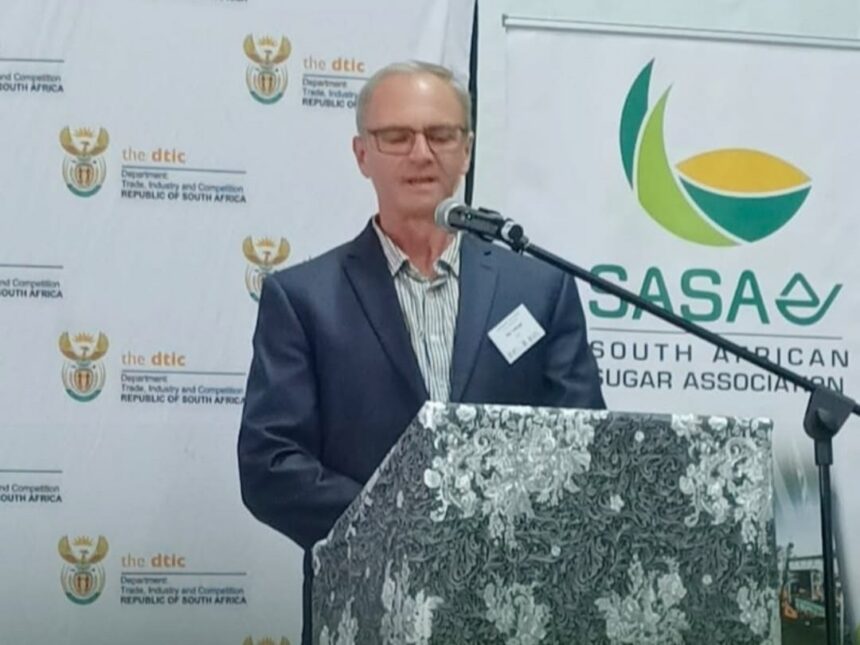
Sugarcane growers, government representatives and industry stakeholders gathered in Sezela, KwaZulu-Natal, for a Grower Imbizo focused on the future of South Africa’s sugarcane industry. The engagement created an opportunity for growers to raise concerns affecting their farming businesses and discuss the conditions needed to strengthen the sugarcane value chain. SA Canegrowers Chairman Higgins Mdluli and Board Member and SASA Vice-Chairman Rex Talmage represented growers during the discussions. Their participation placed the experiences and priorities of sugarcane producers at the centre of conversations about the industry’s future. The meeting also provided a platform to consider how stakeholders can work together to advance the Sugarcane Value Chain Master Plan.
The Sezela Grower Imbizo brought together different parts of the sugar industry at a time when growers continue to deal with challenges that can affect production, profitability and the sustainability of farming operations. Sugarcane production requires long-term investment and careful management because growers must maintain land, equipment, labour and other resources throughout the production cycle. Challenges affecting one part of the value chain can also have consequences for other participants in the industry. This makes communication between growers, government and industry stakeholders important when identifying practical solutions. Forums such as the Grower Imbizo give producers an opportunity to explain the realities they face while also engaging with stakeholders responsible for broader industry decisions.
For sugarcane farmers, having their concerns represented in these discussions is important because decisions affecting the value chain can directly influence their livelihoods. Growers need an environment that allows them to maintain productive farms while dealing with changing economic and operational pressures. Issues affecting agricultural inputs, infrastructure, market conditions and the wider sugar industry can all influence the viability of sugarcane farming. The ability to raise these matters collectively can help ensure that challenges experienced at farm level form part of wider industry discussions. Strong grower representation also creates an avenue for producers to contribute their practical experience to conversations about the sector.
Mdluli and Talmage used the engagement to participate in discussions about what is needed to move the Sugarcane Value Chain Master Plan forward. The plan provides a framework for stakeholders to work towards a stronger and more sustainable sugar industry. Progress depends on cooperation between the various participants involved in producing, processing and marketing sugarcane and its related products. Growers are a central part of this system because the performance of the wider value chain ultimately depends on a productive and sustainable supply of sugarcane. Continued engagement can help stakeholders identify areas where implementation needs to be strengthened and where growers require greater support.
The Sugarcane Value Chain Master Plan also places the future of the industry within a broader discussion about sustainability and economic participation. A strong sugarcane sector can support farming communities and businesses that depend on agricultural production and processing. However, maintaining that contribution requires attention to the conditions under which growers operate. Farmers need to be able to plan for the long term and make decisions about production with a reasonable understanding of the market and operating environment. Industry collaboration can help identify constraints and develop measures that address them across the value chain rather than focusing only on individual stages of production.
KwaZulu-Natal remains an important area for sugarcane production, making Sezela a relevant location for a grower-focused engagement. Sugarcane farming forms part of the economic activity in many rural communities across the province. The industry supports more than the growers who cultivate the crop, with various businesses and workers connected to agricultural production, transportation, processing and other activities. Challenges affecting sugarcane farms can therefore have wider consequences for rural economies. Ensuring that growers have a meaningful voice in industry discussions is relevant not only to individual farming enterprises but also to communities that rely on the sugar value chain.
The Grower Imbizo also highlights the importance of direct engagement between farmers and government. Agricultural producers often experience challenges first-hand and can provide practical information about how policies and industry interventions affect their operations. Government and industry stakeholders, meanwhile, have responsibilities that can influence the operating environment for farmers. Bringing these groups together creates an opportunity to discuss concerns directly rather than relying only on formal communication channels. Regular engagement can help build a clearer understanding of growers’ priorities and the practical steps needed to support the industry’s development.
SA Canegrowers has reiterated its commitment to representing sugarcane growers and ensuring that their priorities remain part of conversations affecting their livelihoods and the future of the industry. Representation is particularly important in a sector where growers operate within a complex value chain involving multiple stakeholders. Farmers need their concerns about production and sustainability to be considered alongside broader industry objectives. Grower organisations can provide a collective platform through which producers can communicate common concerns and participate in industry discussions. This role can help ensure that the farmer perspective remains part of conversations about the direction of the sugarcane sector.
The engagement in Sezela also demonstrates the value of creating spaces where growers can discuss both immediate challenges and longer-term industry priorities. Farming businesses must deal with day-to-day production requirements while also making decisions that affect their future viability. Discussions about the Sugarcane Value Chain Master Plan therefore need to connect strategic objectives with the practical realities faced by farmers. Growers can contribute valuable insight into the barriers that affect production and the types of support that could make a difference at farm level. Continued dialogue can help stakeholders develop a more grounded understanding of what is required to strengthen the value chain.
The future of South Africa’s sugarcane industry will depend on sustained cooperation between growers, government and industry stakeholders. The Sezela Grower Imbizo provided a platform for these groups to engage directly on the challenges facing producers and the steps needed to advance the Sugarcane Value Chain Master Plan. The participation of Higgins Mdluli and Rex Talmage ensured that grower perspectives formed part of those discussions. For sugarcane farmers, continued representation and engagement remain important as the industry works through the challenges affecting its long-term sustainability. Keeping growers at the centre of these conversations can help ensure that efforts to strengthen the sugarcane value chain remain connected to the realities of farming and the livelihoods that depend on it.
Join 'Farmers Mag' WhatsApp Channel
Get the latest Farming news and tips delivered straight to your WhatsApp
CLICK HERE TO JOIN