

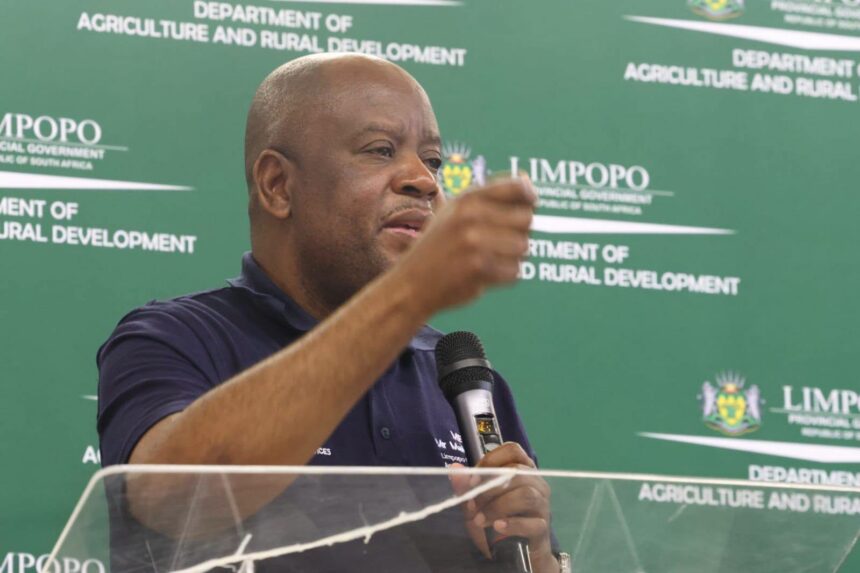
The return of Basikopo Makamu as Limpopo MEC for Agriculture has brought renewed attention to the role of agricultural officials who work directly with farmers across the province. Officials from Madzivhandila College of Agriculture and the Limpopo Department of Agriculture and Rural Development (LDARD) in Vhembe District gathered at the college to welcome Makamu following his reappointment to the department. The engagement formed part of the MEC’s programme to meet departmental officials across Limpopo and discuss the work taking place in the province. Vhembe was the fifth and final district to host the MEC during these engagements. For farmers, the visit highlighted the importance of strong agricultural support services and the role that Agricultural Advisors play in helping producers improve their farming operations.
The gathering brought together departmental officials and academic teams from the district to align their vision and strengthen agricultural initiatives in Vhembe. The engagement also focused on accelerating service delivery, which remains important for farmers who rely on government agricultural services for technical advice and other forms of support. Agricultural programmes are more effective when officials understand the practical challenges faced by producers in their areas. Bringing departmental and academic teams together can also create opportunities to strengthen the connection between agricultural training, research and farming practice. For farmers, stronger coordination between these institutions can contribute to more responsive support and better implementation of agricultural initiatives.
Head of Department Mpho Mashamba used the occasion to recognise the work being done by officials in the Vhembe District. She particularly commended the district for its hard work and dedication after it achieved an unqualified or clean audit outcome in the fourth quarter. The outcome reflects the importance of sound administrative practices within an agricultural department that has to manage programmes and resources intended to support farmers. Effective administration matters because farmers depend on departments to deliver services, implement support programmes and manage agricultural resources responsibly. Strong performance within district structures can help create a more stable foundation for delivering these services to farming communities.
Mashamba also highlighted the commitment of Agricultural Advisors working in the district. She noted that some advisors had sacrificed their annual leave to ensure that departmental work was completed. Agricultural Advisors are often among the officials with the most direct contact with farmers and play an important role in providing technical guidance at farm level. Their work can include helping farmers understand production practices, identifying challenges and connecting producers with relevant agricultural programmes. The recognition of their efforts underlines how important these frontline services are to farmers who may need ongoing technical support rather than one-time assistance.
MEC Makamu also recognised the contribution of Agricultural Advisors to the agricultural sector in Limpopo. He pointed out that some farmers in the province have never received formal agricultural education but have relied on Agricultural Advisors to develop and sustain their farming activities. This highlights the practical role that agricultural extension services can play in transferring knowledge to producers. Farmers can face challenges involving livestock management, crop production, animal health, soil management, pests, production planning and other technical areas. Having access to an advisor who understands local farming conditions can help producers make more informed decisions and improve their approach to these challenges.
The value of agricultural advice is particularly important for smallholder and emerging farmers who may have limited access to private consultants or specialised agricultural services. A farmer does not necessarily need a formal agricultural qualification to develop a productive farming enterprise, but access to reliable technical information can make a significant difference. Agricultural Advisors can help bridge that knowledge gap by bringing practical information and technical guidance closer to farming communities. Their support can also help farmers understand recommended production practices and identify problems before they become more difficult or expensive to address. This makes extension services an important part of the agricultural support system in rural areas.
Makamu’s comments also point to the broader relationship between agricultural education and practical farming knowledge. Madzivhandila College of Agriculture has a role in developing agricultural skills and preparing people for work within the sector. Departmental Agricultural Advisors, meanwhile, work directly with farmers and apply agricultural knowledge in real production environments. Bringing academic teams and departmental officials together can strengthen the link between training, extension and farming. This connection can help ensure that agricultural knowledge remains relevant to the conditions farmers face on the ground.
The Vhembe engagement also provided an opportunity for the MEC to acknowledge the warm reception he received from district officials. Makamu said, “The best is served for the last. Today, I was received like royalty,” reflecting his appreciation of the welcome from the district. While the gathering had an element of celebration following his reappointment, its broader purpose centred on departmental alignment and agricultural service delivery. The engagement brought together officials who have responsibilities across different parts of the agricultural support system. Maintaining this type of engagement can help establish common priorities and improve coordination between provincial, district and agricultural education structures.
Following the engagement at Madzivhandila College of Agriculture, the delegation proceeded to the Nemabaka Poultry Project in Malamulele for an oversight visit. The visit provided an opportunity to move from discussions about agricultural services to observing a farming enterprise on the ground. The Nemabaka Poultry Project is owned by Khumbudzo Nemabaka, an Animal Science graduate from the University of Limpopo who developed her farming enterprise with support from LDARD. The project produces eggs for local outlets and has received infrastructure and production support through agricultural programmes. An oversight visit allows officials to assess progress, understand the farmer’s needs and consider how continued support can contribute to the development of the enterprise.
For farmers across Vhembe, the engagement highlights the importance of maintaining a strong link between government agricultural services and producers. Agricultural development depends on more than funding and infrastructure, as farmers also need practical knowledge, regular technical guidance and access to institutions that understand their production challenges. Agricultural Advisors remain an important part of this system because they work directly with producers and can provide support that is specific to local conditions. The engagement at Madzivhandila College of Agriculture also demonstrated the value of bringing different agricultural stakeholders together around common objectives. Stronger coordination can help ensure that support reaches farmers in ways that are practical and relevant to their operations.
The visit to Vhembe therefore placed farmer support, agricultural knowledge and service delivery at the centre of the Limpopo Department of Agriculture and Rural Development’s engagement with the district. Makamu’s recognition of Agricultural Advisors highlights the role these officials play in helping farmers who may not have formal agricultural training but still have the potential to build productive enterprises. The district’s reported clean audit outcome and the commitment of its officials also point to the importance of effective administration behind agricultural support programmes. The follow-up visit to the Nemabaka Poultry Project further connected departmental planning with a working farming enterprise. For farmers in Limpopo, continued cooperation between Agricultural Advisors, agricultural institutions, departmental officials and producers can help strengthen farming knowledge, improve support services and contribute to more productive agricultural communities.
Join 'Farmers Mag' WhatsApp Channel
Get the latest Farming news and tips delivered straight to your WhatsApp
CLICK HERE TO JOIN




