

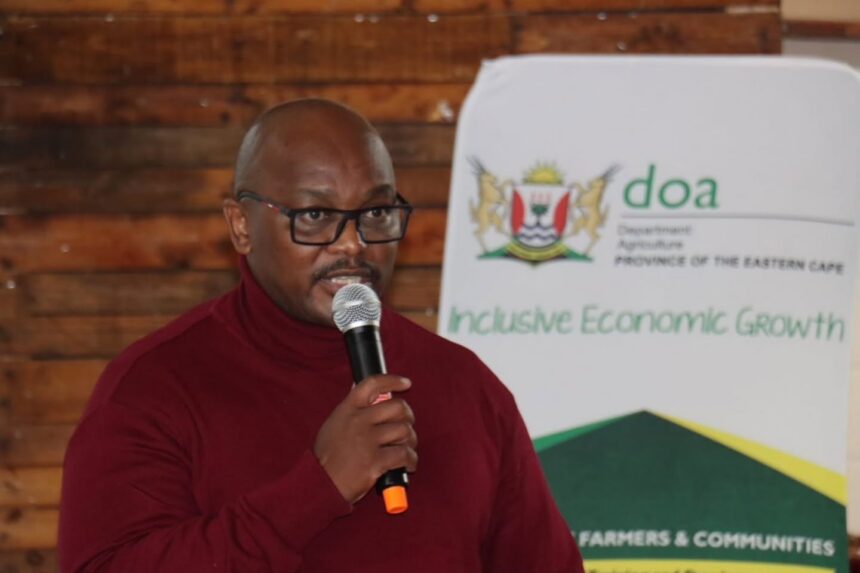
The Eastern Cape Agriculture Investment Plan workshop has entered its third day as stakeholders continue working on practical plans to strengthen agricultural enterprises across the province. The workshop, spearheaded by the Department of Agriculture, is taking place at the Summit Lifestyle Facility in Ku-Gompo City. Discussions are focused on developing tangible and implementable plans following an investment from the World Bank. The investment plan is intended to provide clearer direction on how farmers can receive the support they need to expand their enterprises, increase production and unlock their full potential. The process places agricultural development and the broader value chain at the centre of efforts to strengthen the province’s rural economy.
The workshop is focused on turning investment into practical interventions that can have a direct impact on agricultural enterprises. Farmers need more than financial resources to grow their operations, as they also require access to infrastructure, markets, water, land, technical support and suitable production inputs. A clear investment plan can help identify these needs and establish how different institutions can contribute to addressing them. It can also provide a framework for directing resources towards areas where they can support sustainable agricultural growth. The emphasis on tangible and implementable plans is therefore important because farmers need support that can translate into measurable improvements on the ground.
The World Bank investment provides an opportunity for the province to strengthen agricultural enterprises across different parts of the value chain. Investment can help address constraints that prevent farmers from expanding production or participating more effectively in formal markets. However, the impact of investment will depend on how resources are planned, coordinated and implemented. Stakeholders participating in the workshop are therefore considering the different elements that need to be included in the provincial investment plan. Their discussions are aimed at creating a structure that can guide agricultural development while taking into account the needs of farmers and other participants in the value chain.
For farmers, the investment plan could provide a clearer pathway towards enterprise development. Many agricultural producers face challenges when trying to move from small-scale or developing operations into larger and more commercially sustainable businesses. These challenges can involve access to finance, infrastructure, irrigation, markets, skills and reliable services. A coordinated investment plan can help bring these needs together rather than addressing them through isolated interventions. Providing direction on how farmers can grow their enterprises can also help ensure that agricultural support is linked to specific production and business objectives.
The workshop also reflects the importance of looking at agriculture as a complete value chain. Agricultural development does not end when a farmer produces a crop or raises livestock. Farmers need systems that allow them to store, process, transport and market their products efficiently. Opportunities for agro-processing and value addition can also create additional income streams and support employment within rural communities. Planning across the agricultural value chain can therefore help identify opportunities to strengthen both primary production and the businesses that depend on it.
Several key institutions are participating in the discussions, bringing different areas of expertise and responsibility to the investment planning process. The Eastern Cape Rural Development Agency is among the stakeholders involved, alongside the World Bank. National and provincial departments responsible for Treasury, Agriculture, Land Reform and Rural Development, and Water and Sanitation are also taking part. Land Bank is participating as a financial institution with a role connected to agricultural development. The involvement of these institutions creates an opportunity to consider agriculture from financial, infrastructure, land, water, policy and development perspectives.
Water is particularly important to agricultural development in the Eastern Cape because reliable water resources are essential for many farming enterprises. Crop production, livestock farming and other agricultural activities depend on appropriate water infrastructure and sustainable access to water. Including the Department of Water and Sanitation in the planning process allows water-related considerations to form part of broader agricultural investment discussions. Farmers require clarity about water availability and infrastructure when planning expansions and making long-term investments. Coordinating water planning with agricultural development can therefore help ensure that proposed investments are realistic and sustainable.
Land access and land development are also important elements of agricultural enterprise growth. Farmers need suitable land and the infrastructure required to make productive use of it. The participation of the Department of Land Reform and Rural Development means that land-related considerations can be included in discussions about agricultural development. Access to land alone does not guarantee a productive farming enterprise, which makes it important to consider land alongside finance, infrastructure, skills and markets. A comprehensive investment plan can help address these factors together and provide a clearer framework for supporting farmers after they gain access to productive resources.
Financial support will also remain an important part of the plan. Agricultural enterprises require capital for production inputs, equipment, infrastructure and expansion, while farmers often face long production cycles before they generate returns. Land Bank’s participation provides an opportunity for financial considerations to be incorporated into discussions about how agricultural enterprises can access appropriate funding. Treasury involvement can also contribute to discussions about public financing and the sustainability of proposed interventions. Bringing financial institutions and government departments into the same planning process can help create greater alignment between agricultural development objectives and available financial mechanisms.
The workshop’s focus on implementable plans also highlights the importance of monitoring progress after the investment plan has been completed. A plan needs clear objectives and practical actions if farmers are to see meaningful changes in their operations. It should also provide a basis for stakeholders to track whether interventions are reaching their intended beneficiaries and whether they are contributing to enterprise growth. Regular monitoring can help identify challenges early and allow adjustments where necessary. For farmers, this can make the difference between a plan that exists on paper and one that delivers practical support.
The investment plan is scheduled to be submitted in October, marking an important step in the process. Before submission, stakeholders have the opportunity to examine the challenges facing the agricultural sector and consider how investment can be directed towards practical solutions. The discussions in Ku-Gompo City provide a platform for different institutions to bring their knowledge and responsibilities into one planning process. Continued engagement will be important to ensure that the final plan reflects the needs of farmers as well as the broader requirements of the agricultural value chain. The October submission will therefore represent the outcome of the work being done to develop a coordinated approach to agricultural investment in the province.
The Eastern Cape Agriculture Investment Plan workshop comes at an important time for farmers seeking opportunities to grow their enterprises and participate more effectively in agricultural value chains. The involvement of the World Bank and a broad group of government and financial stakeholders creates an opportunity to align investment, infrastructure, finance, land, water and agricultural support. The central focus on tangible and implementable plans is particularly relevant because farmers need practical interventions that can help them increase production and develop sustainable businesses. If the investment plan successfully provides clear direction and effective coordination, it can help create stronger pathways for agricultural enterprise development across the Eastern Cape. The continued participation of farmers and sector stakeholders will remain important as the province moves from planning towards implementation.
Join 'Farmers Mag' WhatsApp Channel
Get the latest Farming news and tips delivered straight to your WhatsApp
CLICK HERE TO JOIN




