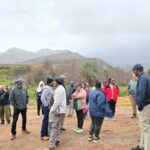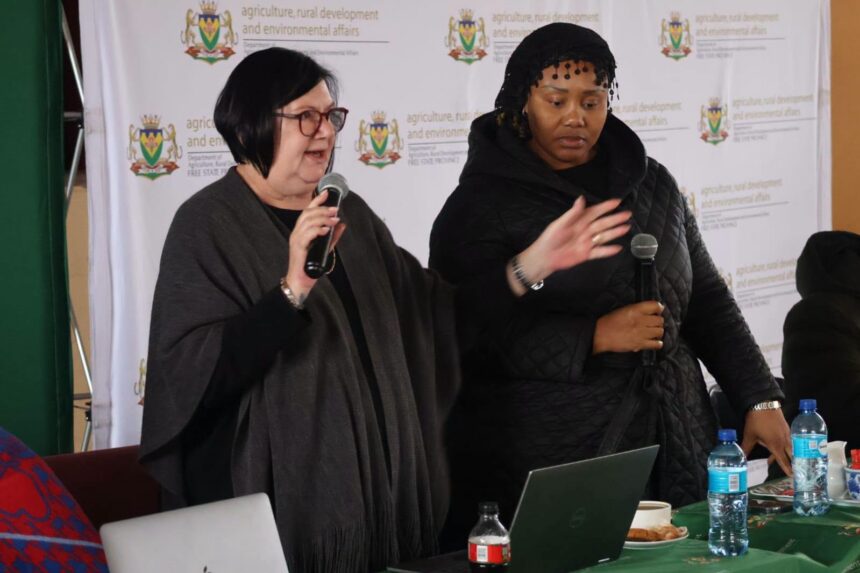
Women farmers in the Lejweleputswa District have raised several challenges affecting agricultural production during the second District Women in Agriculture Imbizo held in Kutlwanong, Odendaalsrus. The event was hosted by DARDEA MEC Elzabe “Mmabatho” Rockman together with Lejweleputswa District Executive Mayor Cllr Phindiwe Maseko at JC Motumi Secondary School. The gathering brought women farmers together with government departments, agricultural organisations, financial institutions and academic representatives to discuss issues affecting their farming enterprises. Discussions focused on access to land, skills development, agricultural research, funding and other factors that influence the ability of women to grow sustainable farming businesses. The Imbizo also provided a platform for farmers to share their experiences, practical knowledge and approaches that have contributed to their progress.
The participation of stakeholders from different areas of agriculture provided farmers with access to a broad range of information. Presentations covered women in agriculture, horticulture, animal husbandry, crop production and commonage management, giving participants an opportunity to engage with issues affecting different types of farming enterprises. Representatives also provided information on youth development, rural land matters, animal health, financing and agricultural research. These areas are closely connected because farmers need more than land to build productive businesses. Access to suitable land must be supported by skills, finance, infrastructure, technical advice, research and appropriate markets if agricultural enterprises are to become sustainable.
The discussions around women in agriculture highlighted the important contribution women make to farming and rural economies. Women farmers operate across different parts of the agricultural value chain, including crop production, livestock, horticulture and other agricultural activities. Their experiences can provide useful information about the specific barriers that affect production at farm level. The Imbizo created space for these farmers to raise those concerns directly with stakeholders who can potentially contribute to addressing them. It also allowed women to learn from one another and exchange practical ideas about how they manage their farming operations.
Access to land emerged as one of the key issues discussed during the gathering. Farmers need suitable and adequately sized land to establish or expand agricultural enterprises, particularly when their operations involve livestock or other activities that require additional space. The women also raised the need for bigger commonage land, which can provide farmers with additional areas for agricultural activities where appropriate. Commonage management can be particularly important for livestock producers who require access to grazing resources. The discussion showed that land access remains closely linked to farmers’ ability to increase production and develop their enterprises over time.
Infrastructure was another major concern raised by the women farmers, particularly the condition of roads leading to farms. Farm roads play an important role in moving agricultural inputs and products between farms and markets. Poor road conditions can make transportation more difficult and increase the challenges faced by producers when delivering produce or accessing services. Reliable access routes are also important for agricultural officials, veterinarians and other service providers who need to reach farming areas. Addressing road challenges can therefore support both farm productivity and the ability of farmers to participate effectively in local agricultural value chains.
Animal health services were also highlighted, with farmers calling for the allocation of more state veterinarians to their areas. Veterinary services are important for livestock farmers because animal health problems can affect productivity, income and the sustainability of farming operations. Farmers need access to appropriate veterinary advice and services when dealing with disease prevention, diagnosis and animal health management. The request for additional state veterinarians reflects the importance of ensuring that rural producers have access to animal health support when they need it. Stronger veterinary capacity can also contribute to broader livestock health and help farmers manage risks that could affect their herds.
Skills development and access to agricultural information were also central to the discussions. Farmers require practical knowledge to manage production, finances, animal health, crops and other aspects of their businesses. The women acknowledged the support they have received through study groups, information sessions and advisory services provided by the department. They said these sessions have been important to their development and have helped them grow as farmers. This feedback highlights the value of ongoing extension and advisory services, particularly for producers who may need continuous guidance as their farming enterprises develop.
The event also created an opportunity for farmers to discuss funding options available to them. Access to finance remains important for agricultural producers who need resources to purchase inputs, improve infrastructure, acquire equipment or expand production. Different farming enterprises have different financial requirements, which makes it important for farmers to understand the funding options that may be relevant to their operations. The participation of the Industrial Development Corporation added a financial development perspective to the discussions. Providing farmers with clear information about funding can help them make better decisions when planning investments and developing their businesses.
Agricultural research was another important part of the Imbizo, with the University of the Free State represented during the stakeholder engagement. Research can support farmers by generating knowledge that helps improve production methods and address challenges affecting agriculture. Linking research institutions with farmers can also help ensure that research responds to practical problems experienced in farming communities. Farmers bring valuable knowledge from their own experiences, while researchers can contribute technical expertise and evidence-based approaches. Stronger interaction between the two can help improve the relevance and application of agricultural research at farm level.
Animal health was also represented through the participation of Dr Thabo Lerothodi on behalf of the FMD sector. For livestock farmers, disease management remains an important part of protecting their animals and maintaining productive enterprises. Farmers need access to accurate information about disease prevention, animal health practices and the responsibilities involved in protecting livestock. Bringing these issues into a women-focused agricultural forum allows producers to raise concerns and receive information directly from relevant stakeholders. It also reinforces the need for farmers to remain informed and engaged with animal health services within their areas.
The Imbizo included representatives from several organisations and programmes, including Women in Agriculture, Women in Horticulture, Women in Animal Husbandry, Women in Crop Production and Women Empowerment in Commonage Management. Regional WARD Representative Realeboga Mokhethi, Blessing Lebona, Tracy Marobobo, Dieketseng Mahlelehlele and Mantsho Pule contributed to discussions in their respective areas. YARD Representative Thulo, DLRRD representative Sylvester Matlakala, FMD representative Dr Thabo Lerothodi, IDC representative Lebogang Molebatsi and UFS representative Dr Pascalina Pilane also formed part of the stakeholder programme. The range of participants reflected the need for farmers to engage with different institutions when addressing the challenges affecting their enterprises. It also gave women farmers an opportunity to access information from stakeholders with different areas of expertise.
In her closing remarks, MEC Elzabe Rockman emphasised that the Imbizo should lead to practical outcomes rather than becoming a discussion without follow-up. She explained that the district event forms part of a build-up towards a provincial Imbizo where women from across the province will gather to share their success stories and practices that have contributed to their progress. The provincial engagement will focus on three pillars, namely socio-economic issues, stakeholders and skills development. These areas reflect many of the challenges raised during the district gathering, including access to resources, infrastructure, knowledge and institutional support. The approach places emphasis on continuing the conversations while creating opportunities to identify practical areas for action.
Rockman also thanked Executive Mayor Phindiwe Maseko for her contribution towards making the event successful. Her closing message encouraged women farmers to continue having conversations with one another and to support each other as they develop their agricultural enterprises. Peer support can be valuable because farmers can learn from the experiences of others who have faced similar challenges and developed practical solutions. The sharing of successful farming practices can also help spread knowledge within agricultural communities. The District Women in Agriculture Imbizo therefore served not only as a platform for raising challenges but also as an opportunity to strengthen networks among women farmers and the institutions supporting them.
The discussions in Kutlwanong showed that women farmers are focused on practical issues that directly affect their ability to produce and grow their businesses. Land, farm roads, veterinary services, commonage, funding, skills development, research and agricultural advice all form part of the wider support system needed to build sustainable farming enterprises. The willingness of farmers to raise these issues and share their experiences provides useful information for government and other stakeholders involved in agricultural development. The planned provincial Imbizo can build on these discussions by bringing more women together to exchange knowledge, highlight achievements and identify areas requiring further attention. Continued engagement and practical support can help strengthen the role of women in agriculture while contributing to more productive and resilient farming communities in the Free State.
Join 'Farmers Mag' WhatsApp Channel
Get the latest Farming news and tips delivered straight to your WhatsApp
CLICK HERE TO JOIN