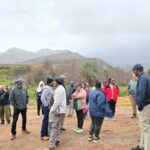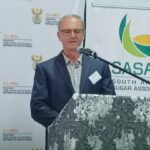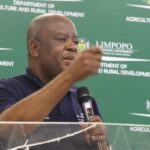
The Limpopo Department of Agriculture and Rural Development (LDARD) hosted a LandCare Awareness event yesterday at the Lesedi Tshukudu Thusong Centre in Steenbokpan, within the Lephalale Municipality in the Waterberg District. The event brought farmers and stakeholders together to raise awareness about responsible management, conservation and preservation of natural resources. The programme focused on the need to protect the resources that support agricultural production while ensuring that farming remains productive and sustainable over the long term. LandCare awareness plays an important role in helping agricultural communities understand how their daily farming practices can affect soil, water, vegetation and biodiversity. The event therefore provided an opportunity for knowledge sharing while encouraging farmers to consider environmental sustainability alongside agricultural production.
The central message of the awareness day was the importance of responsible natural resource management in agriculture. Land, water, forests and biodiversity all contribute to productive farming systems and require careful management to remain available for future generations. Poor management of these resources can affect soil health, water availability, vegetation and the overall productivity of agricultural land. Sustainable farming practices can help farmers protect the natural resources on which their livelihoods depend while continuing to produce food and other agricultural products. Through programmes such as LandCare, farmers can gain practical knowledge about conservation and learn how environmental responsibility can form part of everyday agricultural activities.
The knowledge-sharing programme commenced with a presentation by Professor Mapotso Kena from the University of Limpopo, who focused on plant health and its importance in sustainable agricultural production. Healthy plants are essential to productive farming because crop health can influence yields, quality and the resilience of agricultural systems. Understanding plant health can also help farmers identify problems early and take appropriate steps to protect their crops. The presentation highlighted the connection between plant health and broader sustainable production objectives. By strengthening farmers’ understanding of plant health, awareness programmes can support agricultural practices that protect productivity while reducing avoidable pressures on natural resources.
The programme also included a presentation by Mr. Nimrod Mathivha from the National Department of Agriculture, who addressed the Conservation of Agricultural Resources Act. The legislation provides an important framework for the conservation of agricultural resources and highlights the responsibilities associated with protecting resources used for farming. Understanding the requirements of agricultural resource conservation can help farmers make informed decisions about how they manage their land and agricultural activities. Knowledge of relevant legislation is also important because sustainable farming involves both practical conservation measures and compliance with applicable requirements. The session gave participants an opportunity to learn more about the regulatory framework connected to the responsible management of agricultural resources.
LDARD’s Mr. Peter Malemela further contributed to the programme with insights into Conservation Agriculture and sustainable farming practices. Conservation Agriculture promotes approaches that seek to maintain and improve the condition of agricultural land while supporting continued production. Such practices are particularly relevant to farmers who need to balance productivity with the long-term protection of soil and other natural resources. Applying sustainable farming methods can contribute to healthier agricultural systems and help reduce the negative effects that poor land management can have over time. The presentation reinforced the importance of making conservation part of the farming process rather than treating it as a separate environmental concern.
Another important contribution came from Mr. Masilo Mafako from the Department of Forestry, Fisheries and the Environment, who presented on the National Forest Act. His presentation emphasised the importance of protecting forest resources and increasing awareness of the role these resources play within the broader environment. Forests support biodiversity and contribute to ecological systems that are connected to agricultural landscapes and surrounding communities. Responsible management and protection of forest resources therefore form part of the wider goal of maintaining healthy natural environments. The session helped broaden the LandCare discussion by showing that sustainable resource management extends beyond cultivated fields to include forests and other important natural resources.
The awareness programme also addressed EPWP funding requirements and compliance, with LDARD’s Ms. Shirley Digashu leading the presentation on the subject. Understanding funding requirements and compliance processes is important for programmes that support environmental and agricultural initiatives within communities. Participants were given an opportunity to gain greater awareness of the requirements that may apply when accessing or implementing EPWP-supported activities. Compliance can help ensure that available resources are managed responsibly and that funded programmes meet the required standards. Including this topic in the LandCare programme also demonstrated the connection between environmental projects, community development and responsible programme management.
The LandCare Awareness event in Steenbokpan provided a platform for farmers and agricultural stakeholders to engage with information covering plant health, agricultural resource conservation, Conservation Agriculture, forest protection and programme compliance. Bringing these areas together demonstrated how agricultural production and environmental management are closely connected. Farmers depend directly on natural resources, making the protection of soil, water, vegetation and biodiversity important to the sustainability of their livelihoods. Knowledge-sharing initiatives can help translate conservation principles into practical decisions made on farms and within agricultural communities. The event also reinforced the value of collaboration between provincial departments, national government, academic institutions and farmers in promoting sustainable agriculture.
As agricultural communities face the ongoing need to maintain productivity while protecting natural resources, LandCare awareness remains an important part of sustainable development. Encouraging farmers to adopt responsible practices can help safeguard the resources required for agriculture today and in the future. Sustainable farming is not only about producing crops and supporting livelihoods in the present, but also about maintaining the productive capacity of land and protecting the environment for future generations. The knowledge shared at the Lesedi Tshukudu Thusong Centre gave participants practical and regulatory perspectives that can support more responsible agricultural practices. The event ultimately highlighted a simple but important principle: caring for the land, water, forests and biodiversity that support agriculture today helps create stronger foundations for farming and livelihoods tomorrow.
Join 'Farmers Mag' WhatsApp Channel
Get the latest Farming news and tips delivered straight to your WhatsApp
CLICK HERE TO JOIN