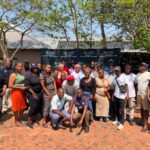
The Extension and Advisory Services under the Department of Agriculture, Rural Development and Environmental Affairs (DARDEA), with support from the National Department of Agriculture (DoA), is hosting a three-day Smallholder Horticulture Empowerment and Promotion (SHEP) Approach Training of Trainers workshop in Bloemfontein. The workshop is taking place from 16 to 18 September 2026 and focuses on strengthening the ability of extension personnel and key agricultural stakeholders to support smallholder farmers. The programme aims to help farmers move away from a traditional “grow and sell” approach towards a market-driven “grow to sell” strategy. This shift places market information and buyer requirements at the centre of production decisions. The training is designed to provide officials with practical tools that they can use to help farmers build more sustainable and commercially focused horticultural businesses.
The SHEP approach places strong emphasis on farmers understanding the market before making production decisions. Instead of planting crops first and searching for buyers afterwards, farmers are encouraged to investigate market demand and use that information to determine what they should produce. This approach can help address challenges linked to producing crops without sufficient knowledge of buyer preferences, expected volumes, quality standards and prevailing prices. Extension personnel play an important role in helping farmers develop the skills and confidence needed to apply this approach in their own operations. The three-day workshop therefore focuses not only on introducing the SHEP framework but also on preparing trainers to support its practical implementation at local level.
The training is structured around four progressive pillars that form the foundation of the SHEP approach. The first pillar, Share the Goal, focuses on establishing a common vision between facilitators and farmers and helping farmers understand the economic value of becoming market-oriented. The second pillar, Farmer Empowerment, focuses on targeted capacity building so that smallholder farmers can develop the knowledge, technical skills and confidence required to operate their farms as businesses. The third pillar, Farmer-Led Market Survey, encourages farmers to conduct direct research by engaging buyers, wholesalers and retailers in local markets. The fourth pillar, Farmer Crop Production Plan, requires farmers to use the information gathered from the market to determine what to grow, when to plant and how much to produce.
The Share the Goal pillar is important because changing farming practices requires farmers to understand the purpose behind the approach. Extension officials and farmers work towards developing a shared understanding of why market orientation matters for agricultural businesses. This can help farmers connect production decisions with income opportunities and customer demand. Rather than treating farming only as an activity focused on producing crops, the approach encourages smallholders to consider the commercial side of their operations. Establishing this shared vision provides a foundation for the other stages of the SHEP process.
Farmer Empowerment then focuses on giving smallholder producers the practical capabilities needed to act on market information. Farmers require more than access to buyers if they are to build sustainable businesses, as they also need appropriate technical and operational skills. Capacity building can help farmers understand production requirements, improve their planning and develop greater confidence when engaging with market participants. Extension personnel are expected to play a key role in delivering this support within farming communities. The workshop is therefore equipping trainers with approaches that can help translate the SHEP principles into practical support for farmers.
The Farmer-Led Market Survey pillar places farmers directly in contact with the people who purchase and distribute agricultural products. Farmers can visit local markets and engage with buyers, wholesalers and retailers to gather information about what customers require. These interactions can provide practical insights into product quality, pricing fluctuations and the volumes that different markets may need. Such information can help farmers identify gaps between what they currently produce and what buyers are seeking. By involving farmers directly in the information-gathering process, the approach encourages producers to take greater responsibility for understanding their target markets.
The information gathered through market surveys feeds directly into the Farmer Crop Production Plan. Farmers use their findings to develop a crop calendar and determine what they should produce, when production should take place and how much should be cultivated. This creates a direct link between market research and farm planning. Instead of making production decisions based mainly on assumptions or previous planting patterns, farmers can use information gathered from buyers to guide their plans. The approach is intended to improve the alignment between production and market demand while supporting more deliberate decisions about the use of land, inputs and other farming resources.
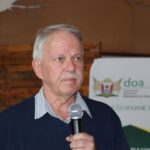
Mr Takahiro Saeki, a specialist from the Japan International Cooperation Agency (JICA), delivered a foundational briefing on the SHEP framework during the workshop. His presentation covered the development and application of the approach and its use in supporting smallholder farmers in different African contexts. Saeki emphasised the principle that farmers should understand their market before they plant. This message reinforces the central idea that production should respond to identified market opportunities rather than precede market research. His contribution provided trainers with important context as they prepare to support farmers through the four pillars of the approach.
Ms Mpho Mudau, representing the National Department of Agriculture, also contributed to the workshop by addressing the strategic selection of locations and the coordination of farmer groups. Her session focused on how officials and farmers can work together to identify appropriate areas and organise cohesive groups to maximise the impact of local agricultural projects. Effective coordination can help ensure that training, resources and support reach farmers in a structured way. Group organisation can also create opportunities for farmers to share information and work collectively around common production and market objectives. This forms part of the broader effort to ensure that the SHEP approach is implemented according to the needs and circumstances of different farming communities.
Regional SHEP district coordinators are also leading technical presentations during the three-day programme. Their sessions focus on the practical steps required to roll out the approach at district level and include experiences from local implementation. Sharing these experiences can help trainers understand how the framework can be adapted to different agricultural environments while maintaining its core principles. The district-level perspective is important because smallholder farmers operate under different production conditions and have access to different markets. Practical lessons from regional coordinators can therefore help strengthen the ability of extension personnel to provide relevant and locally focused support.
The SHEP Training of Trainers workshop represents an effort to strengthen the support system around smallholder horticultural farmers. By training extension personnel and key stakeholders, the programme aims to create a wider pool of officials who can help farmers apply market-oriented farming principles. The focus on market research, farmer empowerment and production planning gives farmers a structured process for connecting their agricultural activities with market requirements. It also encourages producers to take a more active role in gathering information and making business decisions. Continued implementation of these principles can support efforts to build more commercially aware and sustainable smallholder farming enterprises.
The three-day workshop in Bloemfontein ultimately places market knowledge at the centre of smallholder horticultural development. Its focus on the four SHEP pillars gives extension personnel a practical framework for helping farmers understand markets, build their capabilities, conduct market research and develop production plans based on demand. The participation of DARDEA, the National Department of Agriculture, JICA specialists and regional SHEP coordinators brings together experience from different levels of agricultural development. The training also reinforces the importance of farmers making production decisions with clear information about their intended markets. By strengthening the capacity of those who work directly with smallholder producers, the programme seeks to support a more market-oriented approach to horticultural farming.
Join 'Farmers Mag' WhatsApp Channel
Get the latest Farming news and tips delivered straight to your WhatsApp
CLICK HERE TO JOIN