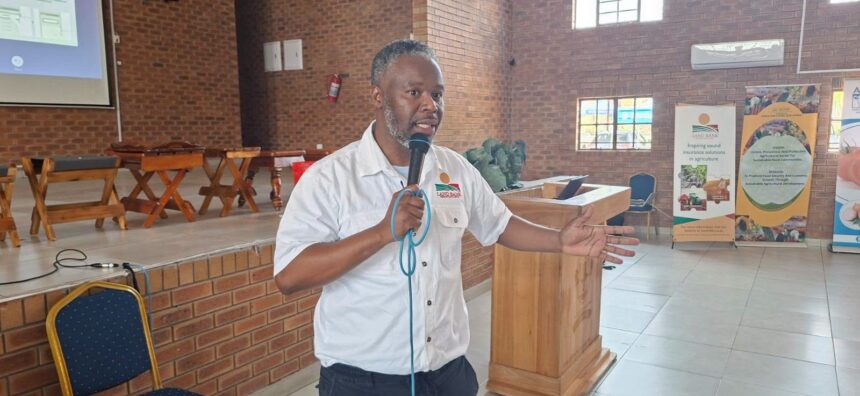
Small-scale farmers in Limpopo are receiving practical support to better understand formal agricultural markets and improve their participation in the province’s growing agricultural economy. The Limpopo Department of Agriculture and Rural Development (LDARD), in collaboration with Joburg Market, African Farming and Collins Chabane Local Municipality, recently strengthened efforts to equip farmers with the knowledge needed to become market-ready. The capacity-building session was held at Malamulele Community Hall in Vhembe and focused on the requirements farmers must meet when supplying formal markets. The programme addressed important areas including compliance, market principles and the development of a sustainable fresh produce value chain. By giving farmers access to information from key agricultural institutions, the initiative aims to help them make better decisions about production, quality, finance and market participation.
Accessing formal markets can create important opportunities for small-scale farmers, but supplying these markets requires more than producing agricultural goods. Farmers need to understand buyer expectations, quality standards, regulatory requirements, pricing structures and the processes involved in getting produce to market. These requirements can sometimes create challenges for emerging farmers who have limited access to technical information or established market networks. The Malamulele session provided an opportunity for farmers to learn directly from organisations involved in different parts of the agricultural value chain. This type of engagement can help farmers identify gaps in their businesses and take practical steps towards meeting the standards expected by formal buyers.
The focus on market requirements and compliance was particularly important because formal agricultural markets operate according to specific standards and procedures. Farmers who want to supply larger buyers need to understand how their produce is assessed and what documentation or regulatory requirements may apply to their businesses. Compliance can influence whether farmers are able to access particular markets and maintain relationships with buyers over time. Understanding market principles can also help farmers make more informed decisions about production volumes, quality and timing. The capacity-building programme therefore placed market knowledge at the centre of efforts to strengthen small-scale agricultural enterprises.
The Agricultural Produce Agents Council (APAC) was among the stakeholders that provided farmers with important information during the session. APAC explained its regulatory role in the agricultural produce market, including responsibilities related to compliance among produce agents. Farmers also received information about stock audits and reporting requirements that form part of the regulatory environment surrounding agricultural produce agents. Understanding these processes can help farmers better navigate relationships with market intermediaries and understand the responsibilities involved when agricultural products enter formal trading channels. The information also gives farmers greater insight into the regulatory structures that support transparency and accountability within the produce market.
Financial support was another key area addressed during the programme, with Land Bank presenting a range of solutions available to farmers. Access to suitable finance can be important for farmers who need to invest in production inputs, infrastructure, equipment, livestock or other resources required to expand their businesses. Land Bank highlighted options including agricultural insurance, blended finance and infrastructure finance, as well as livestock and crop insurance. These financial products can address different needs depending on the scale and nature of a farming operation. Understanding the options available can help farmers assess their financial requirements and consider appropriate ways to manage investment and agricultural risks.
Agricultural insurance can also play an important role in helping farmers manage risks associated with farming activities. Crop and livestock producers face different challenges that can affect their income and ability to maintain production. Events that affect crops, livestock or farm infrastructure can have significant financial consequences, particularly for small-scale producers with limited resources. Information about insurance and other financial solutions can therefore help farmers understand the tools available to protect their enterprises. The session gave participants an opportunity to learn about these options as part of a broader approach to building financially sustainable agricultural businesses.
The Perishable Products Export Control Board (PPECB) also contributed to the capacity-building session by providing information on quality standards and compliance requirements. These standards are particularly relevant for farmers seeking to access formal markets where buyers require produce to meet specific quality and handling conditions. Farmers interested in export markets also need to understand the additional requirements involved in preparing agricultural products for international trade. Knowledge of quality control, handling and compliance can help producers reduce the risk of their produce failing to meet market expectations. The PPECB contribution therefore added an important dimension to the discussion around market readiness and opportunities beyond local trading channels.
Building a sustainable fresh produce value chain requires cooperation between farmers, municipalities, regulators, financial institutions, market operators and other agricultural stakeholders. Farmers form an essential part of this chain, but they need reliable information and support to connect production with appropriate markets. Collaboration between LDARD, Joburg Market, African Farming, Collins Chabane Local Municipality and participating agricultural organisations creates a platform for sharing knowledge across different areas of the sector. Such collaboration can help address some of the practical barriers that prevent small-scale farmers from participating more fully in formal agricultural markets. It can also encourage farmers to view their operations as businesses that require planning, compliance, financial management and consistent production.
The session at Malamulele Community Hall demonstrates the importance of practical capacity building for small-scale farmers in Vhembe and across Limpopo. Market access depends on farmers understanding what buyers require and having the systems, resources and knowledge needed to meet those expectations. Information from organisations such as APAC, Land Bank and PPECB can help farmers better understand regulation, finance, quality standards and market processes. These areas are closely connected, because producing quality agricultural goods alone does not guarantee successful participation in formal markets. Farmers also need to understand the commercial and regulatory environment surrounding their products.
Strengthening market readiness among small-scale farmers can contribute to broader agricultural development by creating stronger links between local producers and formal markets. When farmers understand compliance requirements, financial options and quality standards, they can make more informed decisions about how they produce and market their goods. The continued involvement of agricultural institutions and local government can provide farmers with access to knowledge that may otherwise be difficult to obtain. For producers in Vhembe, initiatives of this nature can support efforts to build more structured and sustainable farming enterprises. Continued collaboration and practical training will remain important as Limpopo works to strengthen participation by small-scale farmers across the agricultural value chain.
Join 'Farmers Mag' WhatsApp Channel
Get the latest Farming news and tips delivered straight to your WhatsApp
CLICK HERE TO JOIN