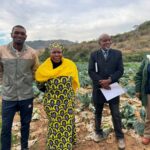
On 4 June, the National Department of Agriculture hosted a Provincial Consultation and Awareness Workshop focused on the new Plant Health Regulations under the Plant Health (Phytosanitary) Act No.35 of 2024. The session brought together provincial officials, extension officers, growers, and key industry stakeholders from across the agricultural sector. The main goal was to strengthen understanding of the updated regulatory framework that governs plant health management in South Africa. The workshop formed part of a broader national effort to improve biosecurity and protect agricultural productivity. It also aimed to ensure that all stakeholders apply consistent standards when dealing with plant health risks. The timing of the consultation reflects growing pressure on agricultural systems from pests, diseases, and trade demands. It positioned plant health as a shared responsibility across government and industry.
The workshop focused on building practical awareness of how the new regulations will be implemented at provincial and operational levels. Officials explained how the regulatory framework will guide daily inspection, monitoring, and enforcement activities. Extension officers received updated guidance on how to support farmers in complying with phytosanitary requirements. Industry stakeholders were encouraged to engage with the rules early to avoid disruptions in production and trade activities. The discussions highlighted the need for coordinated action between government departments, research institutions, and farming communities. Participants also reviewed how data sharing and reporting systems will improve early detection of plant health threats. The session reinforced that effective implementation depends on communication and consistent interpretation of the regulations.
A major focus of the discussions was control measures designed to prevent the spread of regulated pests from infested areas into pest free production zones. These measures include stricter surveillance, movement controls, and improved inspection protocols at key agricultural points. Import regulations were also examined in detail, especially rules designed to prevent harmful pests from entering the country through plant products and other regulated materials. Officials stressed the importance of phytosanitary certification and compliance checks for all imported agricultural goods. Export requirements formed another key area, with emphasis on ensuring that South African plant products meet international standards and trading partner expectations. These requirements help maintain market access and protect the country’s reputation in global trade. Stronger enforcement of these measures aims to reduce crop losses and improve long term agricultural resilience.
The workshop highlighted several benefits of strengthening plant health systems across the agricultural value chain. Improved regulations support food security by reducing the impact of pests and plant diseases on crop yields. They also protect farmer incomes by lowering the risk of large scale production losses. Better compliance systems help build trust between South African producers and international buyers. The measures also support sustainable farming by encouraging responsible movement and management of plant materials. Participants noted that early detection and rapid response systems are essential for reducing the spread of invasive species. The overall approach aligns plant health management with national economic and environmental priorities.
The Provincial Consultation and Awareness Workshop marked an important step in aligning stakeholders with the updated phytosanitary framework. It reinforced the importance of cooperation between government, farmers, and industry players in protecting agricultural resources. The new regulations under the Plant Health (Phytosanitary) Act No.35 of 2024 provide a structured approach to managing risks that threaten crop production and trade. Continued engagement and training will be necessary to ensure smooth implementation across all provinces. Strong plant health systems will help safeguard agricultural output, strengthen export competitiveness, and support rural livelihoods. With consistent enforcement and awareness, South Africa’s agricultural sector can remain resilient against emerging biological threats.
Join 'Farmers Mag' WhatsApp Channel
Get the latest Farming news and tips delivered straight to your WhatsApp
CLICK HERE TO JOIN