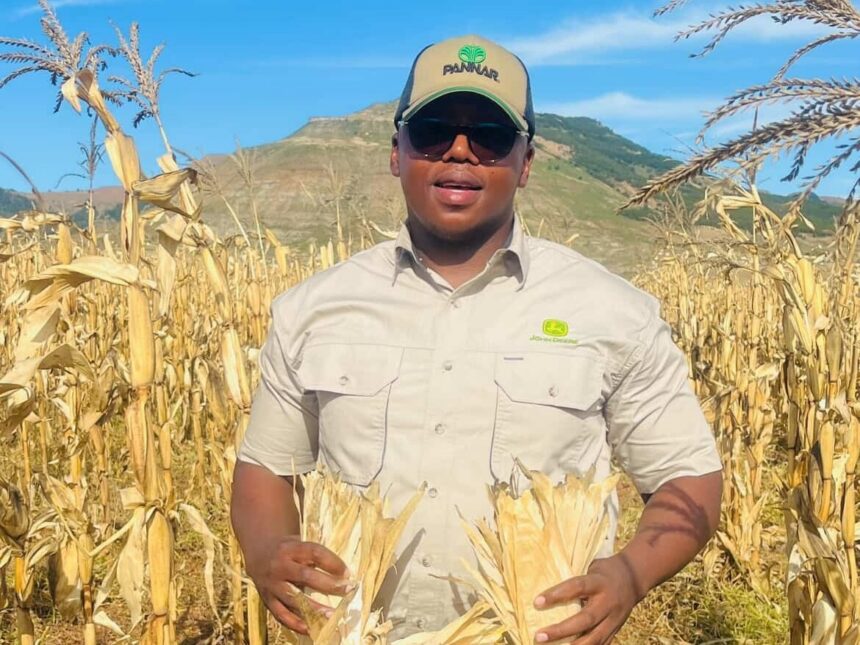
Yondela Gqoli, farmer and founder of AgriHlubi, has built a strong agricultural enterprise in Mount Frere in the Eastern Cape through disciplined farming, crop diversification and a clear focus on community impact. On a 10-hectare farm, Gqoli has developed a production system that combines vegetables and grain crops to generate steady income while also supporting local food supply chains. His approach shows how small-scale land can still produce commercial results when managed with planning, soil care and market access strategies. Beyond profit, his farming model is driven by a commitment to rural development and job creation. This balance between business growth and social responsibility defines his work in agriculture.
The farm produces a range of crops including cabbage, spinach, potatoes, butternut and grain, giving it both short-term cash flow and longer-term production stability. Gqoli currently employs 10 full-time workers and four temporary workers, showing how even a 10-hectare operation can create meaningful employment in rural areas. His produce reaches major retail and informal markets including Spar, Boxers and Checkers, as well as hawkers and direct buyers who collect produce from the farm. This diversified market strategy reduces risk and ensures that harvested crops are sold through multiple channels. It also strengthens local food distribution by making fresh produce accessible at different price points.
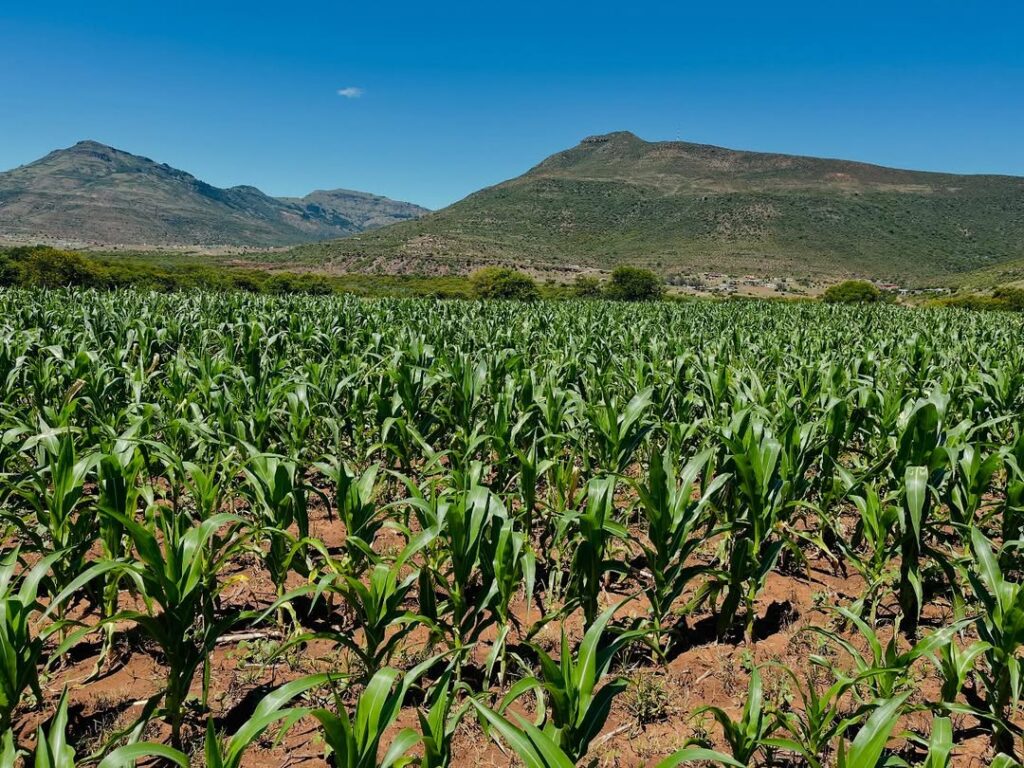
Potatoes and grain form the backbone of his long-term commercial vision, with five hectares dedicated to grain farming as part of his expansion plan. The remaining land is used strategically for high-demand vegetables such as butternut and leafy greens, which provide quicker returns. This crop rotation approach helps balance income cycles and reduces pressure on a single commodity. It also allows better land use planning across seasons, improving productivity per hectare.
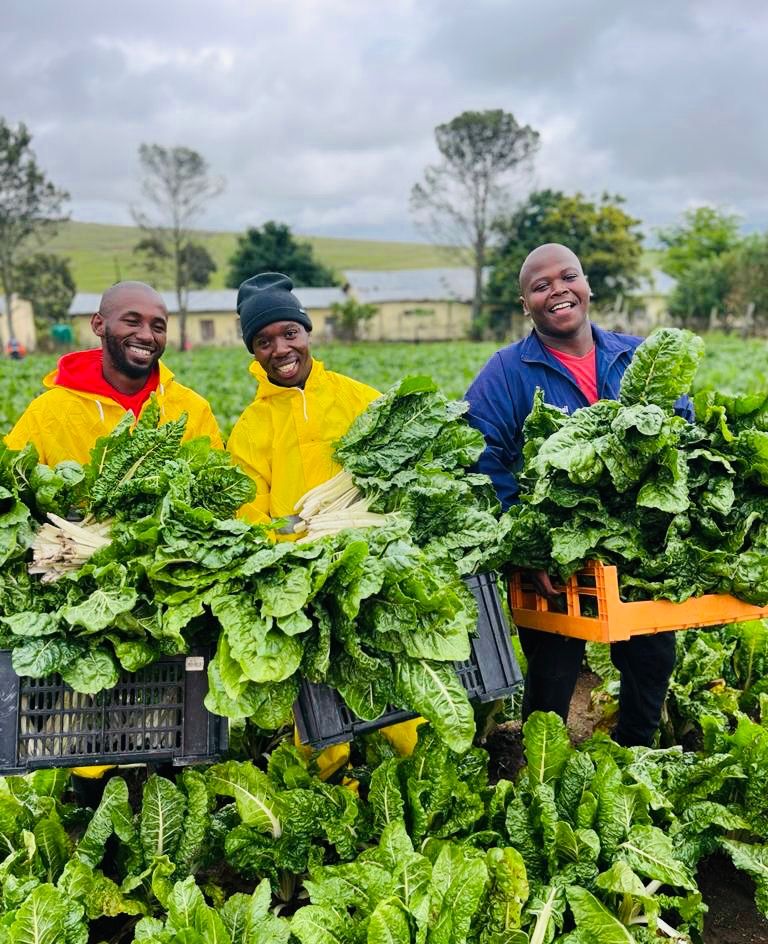
Soil management plays a central role in Gqoli’s farming system, especially because of the intensity of his crop production. He uses crop rotation and includes nitrogen-fixing crops to improve soil fertility and reduce dependency on chemical inputs. Regular soil sampling is conducted every season to monitor nutrient levels and guide fertiliser application decisions. This scientific approach to soil care helps maintain long-term productivity on limited land. It also reduces production risks linked to soil degradation, which is a common challenge for intensive vegetable farming systems.
The business model behind AgriHlubi is strongly linked to rural development and youth empowerment in agriculture. Gqoli’s long-term goal is to build a farming enterprise that not only produces food but also develops emerging farmers in his community. He actively collaborates with industry stakeholders such as Potatoes South Africa, Grain South Africa, Frimax, Simba Chips South Africa, Ukhanyo Farmers Development and Hello Choice. These partnerships help improve market access, technical knowledge and value chain integration. By working within established agricultural networks, he is positioning his farm for commercial expansion beyond local markets.
Gqoli’s journey into farming is rooted in his upbringing in rural Mount Frere, where he worked alongside his grandparents in household gardens. This early exposure to agriculture shaped his understanding of food production and community survival. He later formalised his knowledge by studying agriculture, completing a diploma in crop production at Fort Cox College and a degree in agricultural management at Nelson Mandela University. He officially started farming in 2020 and quickly realised that success in agriculture requires continuous learning and adaptation. His academic background now supports his practical decision-making on the farm.
Despite his progress, Gqoli remains open about the challenges of farming and the importance of resilience in agricultural business. He explains that farming requires constant research, consultation and collaboration with other farmers to overcome production risks. He also maintains relationships with farmers in other provinces, including KwaZulu-Natal, to exchange knowledge and farming techniques. This network-based learning approach helps him stay informed about new methods and market trends. It also reduces isolation, which is often a challenge for small-scale farmers operating independently.
One of the key lessons Gqoli emphasizes is the importance of embracing innovation in agriculture. He believes many young farmers struggle due to hesitation in adopting new technologies and improved production systems. On his farm, he has introduced mechanisation tools such as a planter for seedlings and a top-dresser fertiliser applicator to improve efficiency. These tools reduce reliance on manual labour and improve accuracy in planting and fertiliser application. The result is better productivity, lower labour strain and more consistent crop performance across seasons.
Gqoli also encourages new farmers to start with what they can afford rather than waiting for ideal conditions. His view is that gradual growth builds stronger and more sustainable farming businesses over time. He stresses that expansion should follow experience, not ambition alone, to avoid financial strain and operational failure. This practical mindset has helped him build a stable farming foundation while planning for future commercial expansion. His approach reflects a realistic understanding of agricultural business development in rural South Africa.
Looking ahead, Gqoli envisions expanding AgriHlubi beyond production into full retail and value chain control. His long-term goal is to own fruit and vegetable shops where he can sell directly to consumers. This would allow him to move from primary production into packaging, distribution and retail operations. By controlling more stages of the value chain, he aims to increase profitability and strengthen business sustainability. This ambition reflects a growing trend among emerging farmers who seek to integrate farming with agribusiness entrepreneurship.
Yondela Gqoli’s journey demonstrates how small-scale farming can evolve into a structured and profitable enterprise when guided by discipline, soil management and market strategy. His work in Mount Frere shows that agriculture can create jobs, support communities and build sustainable livelihoods even on limited land. Through AgriHlubi, he continues to balance commercial farming with social impact, ensuring that his success contributes to broader rural development. His commitment to soil health, innovation and youth empowerment positions him as part of a new generation of farmers shaping the future of agriculture in the Eastern Cape.
Join 'Farmers Mag' WhatsApp Channel
Get the latest Farming news and tips delivered straight to your WhatsApp
CLICK HERE TO JOIN