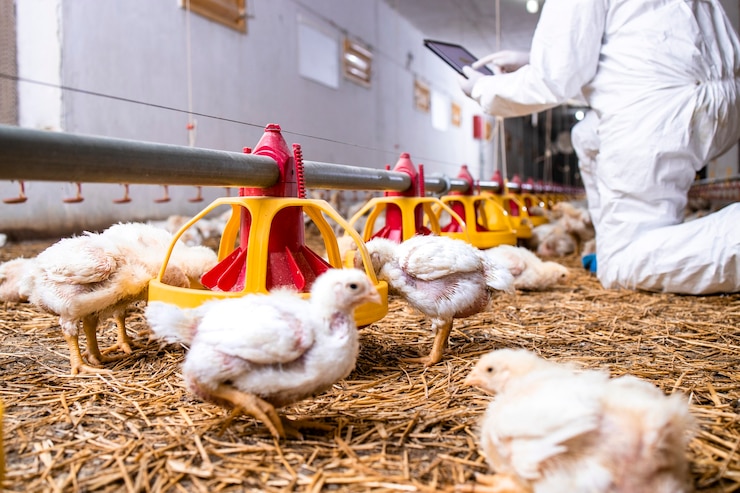
The South African poultry industry is set for a major transformation following a decisive intervention by the Minister of Agriculture, John Steenhuisen. In a move aimed at strengthening the country’s response to highly pathogenic avian influenza (HPAI), commonly known as bird flu, the minister has amended the Animal Diseases Regulations (R.2026 of 1986) to allow the introduction of HPAI vaccinations in South Africa. The policy shift marks a significant departure from previous disease control measures and is intended to provide poultry producers with a more sustainable and practical solution to managing outbreaks. The decision comes after years of concern from industry stakeholders who argued that existing regulations were inadequate and financially damaging. By opening the door to vaccination, the government hopes to protect poultry farms, preserve jobs, stabilize food supplies, and reduce the economic impact of future outbreaks.
The regulatory amendment follows a formal objection lodged by the South African Poultry Association (SAPA) under Section 23 of the Animal Diseases Act, 1984. SAPA raised concerns about what it described as a prolonged failure within the Department of Agriculture’s Directorate: Animal Health to provide practical and affordable solutions for controlling bird flu. According to the association, poultry producers were trapped within an outdated disease management framework that relied heavily on mass culling whenever outbreaks occurred. Farmers argued that they were denied access to modern disease prevention tools that are already being used in various parts of the world. The industry’s concerns intensified following the severe impact of recent outbreaks, which resulted in substantial financial losses and disruptions to poultry production.
Minister Steenhuisen reviewed the findings and recommendations of the Section 23 Investigation Committee before making his decision. The committee’s report highlighted the need for urgent reform and presented an opportunity to break what had become an administrative deadlock. The minister concluded that the traditional “stamping-out” approach was no longer sufficient as the primary method for combating HPAI. Under the old system, both infected and healthy birds could be destroyed as part of disease containment efforts, often leading to significant economic losses for producers. The minister believes that a state-regulated vaccination strategy offers a more balanced and effective approach to disease eradication while reducing unnecessary destruction of poultry stocks.
Steenhuisen emphasized that poultry farmers require direct support and practical tools to safeguard their businesses. He noted that the previous regulations forced producers into situations where large numbers of birds had to be culled, even when alternative disease management options existed. This process not only affected agricultural businesses but also contributed to higher food prices for consumers. By permitting vaccination, the government is providing poultry farmers with a legal mechanism to protect their flocks using scientifically verified methods. The minister also stressed that the policy change is intended to strengthen agricultural sustainability while ensuring food security for South African households.
One of the most important aspects of the new policy is the establishment of a formal HPAI Vaccination Framework under the Animal Diseases Act. This framework will fundamentally change how poultry operations respond to disease threats. Instead of relying solely on culling, farmers will be encouraged to adopt an integrated approach that combines vaccination, biosecurity measures, and regular disease testing. This strategy is expected to significantly reduce financial losses associated with bird flu outbreaks while improving disease control outcomes. The new framework also reflects international trends toward more comprehensive and science-based disease management systems.
The Department of Agriculture will now work to amend the Animal Diseases Regulations or introduce a formal Section 9 control measure that clearly outlines how poultry farms should respond when HPAI is detected. This legal framework aims to eliminate inconsistencies and confusion that previously existed regarding enforcement and outbreak management. Clear regulations will help ensure that poultry producers understand their responsibilities and can act quickly when outbreaks occur. The government believes that standardizing procedures across the sector will improve disease control efforts and reduce delays in responding to emerging threats. Consistent enforcement will also strengthen confidence among industry stakeholders.
A key objective of the policy shift is to ensure that disease control measures are fair and effective for all poultry producers, regardless of size. The new regulations are expected to accommodate both large commercial operations and smaller farming enterprises. This balanced approach recognizes that different types of producers face different challenges when managing disease outbreaks. Smallholder farmers, who often operate with limited resources, stand to benefit from greater flexibility and access to disease prevention tools. At the same time, large-scale commercial producers will have a clearer framework for maintaining productivity while complying with national disease control requirements.
The Department of Agriculture’s responsibilities will also evolve under the new system. Rather than focusing primarily on outbreak response through culling, the department will play a central role in coordinating national surveillance programs, laboratory testing, and regulatory oversight. Continuous monitoring of bird flu activity across the country will help authorities detect outbreaks earlier and respond more effectively. Laboratory testing will remain a critical component of disease management, ensuring that infections are accurately identified and tracked. The department will also be responsible for ensuring that poultry producers comply with the new regulations and vaccination requirements.
International trade considerations remain an important part of the government’s strategy. South Africa’s poultry industry relies on access to export markets, making disease control standards a matter of economic significance. The department will continue to prioritize compliance with international animal health requirements to protect market access for local producers. Effective vaccination and surveillance programs can help demonstrate that South Africa maintains robust disease management systems. This is particularly important as trading partners increasingly evaluate disease control measures when determining import conditions. Maintaining confidence in South Africa’s poultry sector will be essential for long-term growth and competitiveness.
To ensure a smooth transition, Minister Steenhuisen has instructed the department to implement interim control measures while the formal regulatory changes are being finalized. These temporary measures are intended to provide immediate support to the poultry industry and prevent uncertainty during the implementation process. The minister has also set a deadline for the publication of the necessary government gazette, signaling the urgency attached to the reforms. Industry stakeholders are expected to work closely with government officials as the new framework is rolled out. This collaborative approach aims to ensure that the transition is both orderly and effective.
The introduction of HPAI vaccinations represents one of the most significant changes to South Africa’s poultry disease management strategy in decades. By moving away from a system that relied heavily on mass culling and embracing vaccination as part of a broader disease control framework, the government is responding directly to the concerns of poultry producers. The policy has the potential to reduce economic losses, protect agricultural jobs, improve food security, and strengthen the resilience of the poultry industry against future outbreaks. While challenges will remain in implementing and monitoring the new framework, the decision signals a commitment to modern, science-based solutions. For poultry farmers, consumers, and the broader agricultural sector, the shift offers a more sustainable path forward in the fight against bird flu.
Join 'Farmers Mag' WhatsApp Channel
Get the latest Farming news and tips delivered straight to your WhatsApp
CLICK HERE TO JOIN