Commercial farming in South Africa is becoming more competitive and more structured as farmers move from subsistence or small scale production into fully commercial operations. This transition is not only about increasing farm size but also about building a business that is profitable, scalable and resilient. Many farmers begin with limited resources and gradually expand through improved production methods, better market access and stronger financial planning. The shift to commercial farming requires careful decision making because costs, risks and responsibilities increase significantly. Understanding how to transition properly can determine long term success or failure in the agricultural sector.
The first step in transitioning to commercial farming is developing a clear business plan that outlines production goals, financial requirements and market strategies. A commercial farm operates as a structured business, which means every input and output must be carefully managed. Farmers need to identify what they will produce, how much they can realistically produce and who will buy their products. Without a strong plan, expansion often leads to financial strain and operational inefficiency. A proper business plan also helps farmers secure funding from banks, government programmes or private investors who require detailed operational projections.
Access to land is another critical factor in the transition to commercial farming. Many emerging farmers start on small plots and must gradually expand through leasing or purchasing additional land. However, land selection must consider soil quality, water availability, infrastructure and proximity to markets. Poor land choices can limit productivity and increase operating costs over time. In some cases, farmers may choose to intensify production on existing land using advanced techniques rather than expanding horizontally. Both approaches can support commercial growth depending on available resources and long term goals.
Financial management plays a central role in successful commercial farming. Farmers must be able to manage cash flow, track expenses and plan for seasonal income fluctuations. Input costs such as seed, fertiliser, fuel and labour can increase quickly as operations expand. Access to credit becomes important, but borrowing must be carefully managed to avoid long term debt pressure. Many commercial farmers in South Africa rely on a combination of reinvested profits, agricultural loans and support programmes to fund growth. Strong financial discipline ensures that expansion remains sustainable rather than risky.
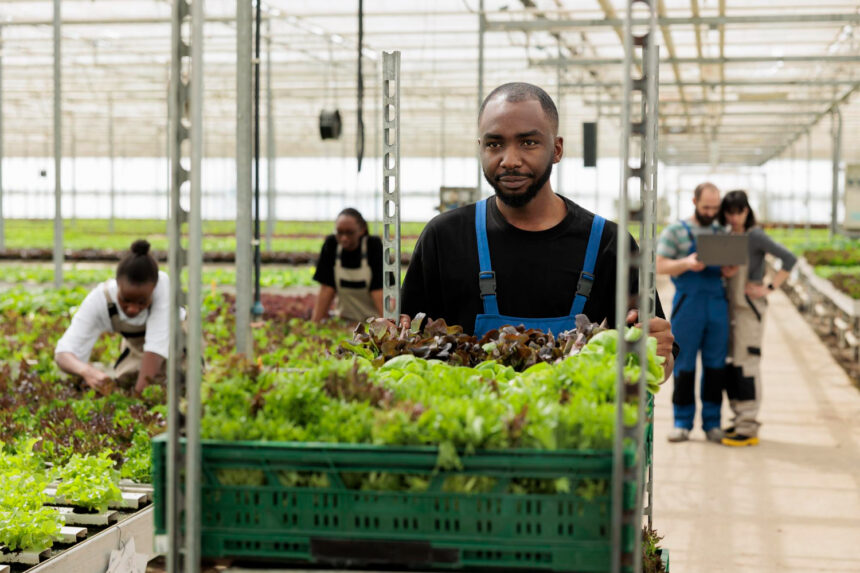
Technology adoption is one of the most effective ways to support a smooth transition into commercial farming. Precision agriculture tools such as soil sensors, GPS guided equipment and farm management software help improve productivity and reduce waste. Controlled environment systems such as hydroponics and irrigation automation also allow farmers to produce more efficiently with limited resources. These technologies enable farmers to scale operations without a proportional increase in labour or input costs. As agriculture becomes more data driven, farmers who adopt technology early are better positioned to compete in commercial markets.
Market access and value chain integration are essential for long term success in commercial farming. Farmers must move beyond production and focus on securing reliable buyers, contracts and distribution channels. This may involve supplying retailers, agro processors or export markets depending on the type of product. Adding value through packaging, processing or branding can significantly increase profitability. Without strong market connections, even high production levels may not translate into stable income. Commercial farming requires consistent demand planning to match production cycles with buyer requirements.
Risk management is another important part of the transition process. Farming is exposed to unpredictable factors such as weather changes, pests, disease outbreaks and market fluctuations. Commercial farmers often use insurance products, diversification and contingency planning to reduce these risks. Diversifying crops or combining livestock and crop production helps stabilise income during difficult seasons. Irrigation systems and climate smart practices also reduce dependence on rainfall. Managing risk effectively protects both production and financial stability.
Skills development and labour management become more important as farms grow. Commercial farming requires skilled workers who understand machinery, irrigation systems, livestock care and production planning. Training employees improves efficiency and reduces operational mistakes that can affect yields. Farmers must also learn how to manage teams, schedules and workplace compliance requirements. Labour becomes a key asset in commercial farming, and investing in people often leads to higher productivity and better long term outcomes.
The transition to commercial farming in South Africa requires a combination of planning, investment, technology and strong management skills. Farmers who succeed in this process treat farming as a structured business rather than an informal activity. Growth must be gradual, controlled and supported by reliable financial and market systems. While challenges such as rising input costs and climate variability continue to affect the sector, opportunities remain strong for well prepared farmers. With the right approach, emerging producers can build sustainable commercial operations that contribute to food security, rural development and economic growth across the country.
Join 'Farmers Mag' WhatsApp Channel
Get the latest Farming news and tips delivered straight to your WhatsApp
CLICK HERE TO JOIN