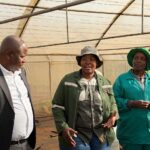
A powerful farming story is unfolding in rural KwaZulu-Natal where Bethel Estate has become a symbol of resilience, growth and generational purpose. On this farm in Inhlamvini, two women have built a thriving agricultural enterprise from scratch, turning unused land into a productive business that now supports hundreds of livelihoods. The farm is led by 58-year-old Gugu Dlamini and her daughter Lungi Ndelu, aged 30, who together manage production, operations and market access. Their journey began without formal farming experience, yet today they supply major retail markets and support a growing network of emerging farmers. What makes their story stand out is not only their success in agriculture, but how they have used farming as a tool for empowerment and community development. Their experience reflects how modern agriculture can create opportunity even in rural areas when vision and persistence come together.
The foundation of Bethel Estate began in 2016 when Gugu Dlamini purchased the land with no background in agriculture but a strong belief in its potential. She left a corporate career and committed herself fully to learning how to farm, a decision that required patience, risk-taking and long-term thinking. By 2019, after years of preparation, the first five hectares of lettuce were planted, marking the start of commercial production. The breakthrough came when early buyers visited the farm and purchased the entire crop, confirming that the operation had real market potential. This early success gave the family confidence to expand production and invest further in farming infrastructure. It also marked the beginning of a structured approach to agriculture based on planning, quality control and consistent supply.
Today, Bethel Estate supplies fresh produce to Shoprite Group through its Freshmark division, a key player in the retail fresh produce supply chain across Africa. This partnership has provided the farm with access to formal markets that require strict quality standards and consistent production schedules. Freshmark supports farmers with demand planning, grading systems and structured procurement processes that help ensure stability in supply chains. For Bethel Estate, this relationship has reduced market uncertainty and allowed better financial planning and crop management. The farm now delivers produce to distribution centres that supply major retail outlets such as Shoprite, Checkers and Usave across the region. This level of market integration has helped the farm scale production while maintaining consistent quality standards required by large retailers.
A key outcome of this partnership has been the ability to build long-term sustainability through structured farming systems. With guaranteed buyers and clear production requirements, Bethel Estate has been able to plan planting cycles more effectively and reduce financial risk. This has also allowed reinvestment into infrastructure, improving irrigation systems, soil management and crop yields over time. The farm’s growth demonstrates how access to formal markets can transform small agricultural operations into scalable businesses. It also highlights the importance of collaboration between farmers and retail partners in strengthening food supply chains. Through this system, Bethel Estate has moved from experimental farming into a structured agribusiness model that continues to expand.
Beyond production, the farm has established the Tshala Nathi farmer support programme, designed to assist emerging vegetable farmers in entering formal markets. This initiative focuses on mentorship, skills development and practical guidance for small-scale producers who often struggle to meet retail standards. Through this programme, farmers receive support in areas such as crop planning, quality control and market preparation. The goal is to help them transition from informal farming into structured supply chains where their produce can reach larger buyers. The programme also works closely with local government structures to strengthen agricultural participation in rural communities. By creating pathways into formal markets, Bethel Estate is helping other farmers build sustainable businesses.
Lungi Ndelu plays a central role in expanding this support network, working with around 100 farmers, many of whom are women. These farmers are supported through a system that aggregates produce and connects them to larger buyers they could not access individually. This collective model improves efficiency, reduces transport challenges and strengthens bargaining power within the agricultural value chain. It also ensures that smaller producers can benefit from stable demand and structured pricing systems. According to Lungi, access to guaranteed markets is one of the most important factors in helping farmers grow with confidence. This approach has turned Bethel Estate into more than a farm, but a platform for rural agricultural development.
Despite its success, the journey has not been without setbacks. In 2024, the farm experienced severe looting that caused significant damage to infrastructure and disrupted operations. Essential equipment and materials were destroyed or stolen, forcing the family to rebuild from a difficult position. However, both Gugu and Lungi chose to continue operations rather than abandon the farm. Their response to the crisis demonstrated strong resilience and commitment to long-term farming goals. The rebuilding process also reinforced the importance of risk management and adaptability in agriculture, especially in rural farming environments.
The relationship between mother and daughter remains at the core of Bethel Estate’s success. Gugu focuses on long-term strategy and vision, while Lungi manages execution and day-to-day operations. This balance has allowed the farm to grow efficiently while maintaining strong leadership and shared purpose. Their bond has also strengthened through personal challenges, including family health emergencies that required Lungi to step into full-time farm management temporarily. That experience became a turning point that solidified her commitment to agriculture and community development. Today, the farm is not only a business but a shared legacy built on trust, cooperation and generational continuity.
Bethel Estate now stands as a multi-million-rand agricultural operation with a growing footprint in South Africa’s fresh produce sector. It represents how rural farming can evolve into a structured, market-connected enterprise when supported by vision, partnerships and persistence. The farm continues to expand its impact through job creation, farmer development and sustainable production practices. It also demonstrates how agriculture can serve as both an economic driver and a social transformation tool in rural communities. As Lungi’s young daughter represents the next generation, the farm’s future reflects continuity and long-term agricultural growth. Bethel Estate shows that farming success is built not only on land and crops, but on purpose, resilience and shared legacy.
Join 'Farmers Mag' WhatsApp Channel
Get the latest Farming news and tips delivered straight to your WhatsApp
CLICK HERE TO JOIN