

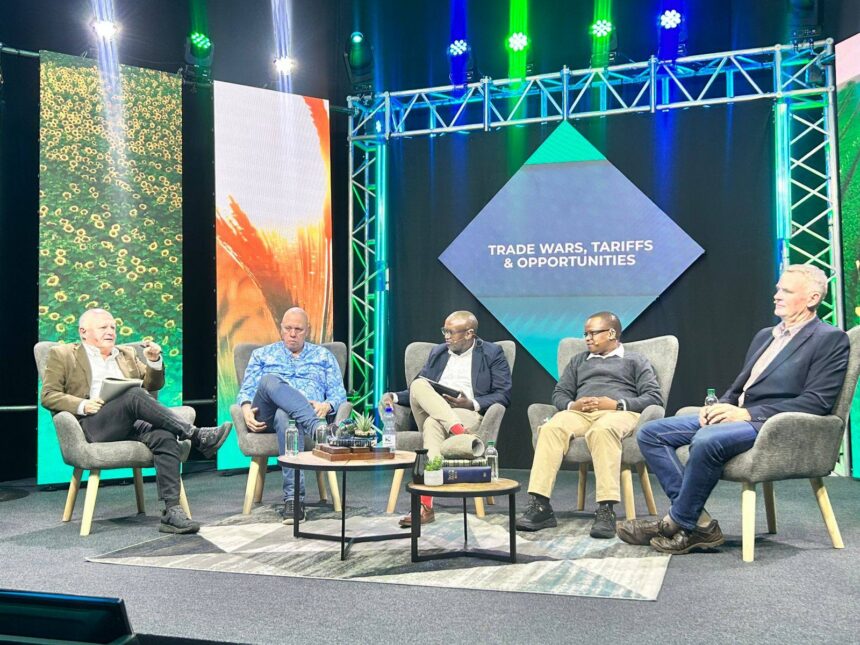
Strategic discussions at the Nampo Agricultural Show have placed South African agriculture at the centre of global trade debates, with a strong focus on trade wars, tariffs, and emerging market opportunities. The conversations highlighted how agriculture no longer operates in isolation, but instead competes directly within a highly interconnected global system. Industry leaders, policymakers, and economists examined how shifting trade policies across major economies are reshaping export conditions for South African producers. The discussions also raised critical questions about whether South Africa is positioning itself effectively in the right markets. The central theme focused on competitiveness and the need for the sector to adapt quickly to global economic changes.
The dialogue emphasised that agricultural competitiveness is becoming increasingly important as new markets continue to emerge across Asia, the Middle East, and Africa. Participants noted that global trade tensions and tariff adjustments can significantly influence export volumes, pricing structures, and market access. South African agriculture, while strong in production capacity, must ensure that it aligns with changing international demand patterns. The discussions highlighted that success in global markets depends not only on production efficiency but also on strategic trade positioning. This includes understanding consumer trends, regulatory requirements, and long term trade relationships.
A key point raised during the session was the role of the World Trade Organisation in maintaining order within global trade systems. The organisation was recognised for providing a framework that governs trade rules and helps reduce uncertainty in international markets. However, participants also noted that geopolitical tensions and trade disputes continue to challenge the effectiveness of global agreements. These challenges require countries like South Africa to strengthen diplomatic engagement and diversify export destinations. The conversation reinforced the idea that relying on a limited number of markets can expose the agricultural sector to unnecessary risk.
One of the notable contributors to the panel was Wandile Sihlobo, who provided insights into land reform, agricultural competitiveness, and trade positioning. His participation added an economic perspective to the discussions, particularly around how South Africa can better integrate into global agricultural value chains. He emphasised the importance of data driven decision making when selecting export markets and developing long term trade strategies. The panel also explored how domestic policy decisions influence international competitiveness. This includes infrastructure development, logistics efficiency, and regulatory alignment with global standards.
The discussions at Nampo reinforced the reality that South African agriculture has strong potential, but must be more deliberate in its global positioning. While the country already exports a wide range of agricultural products, including citrus, grains, and wine, competition in global markets continues to intensify. Producers are being encouraged to identify high growth markets and invest in compliance systems that meet international requirements. The session concluded with a strong message that future growth will depend on strategic planning, trade awareness, and the ability to respond quickly to global market shifts. As agriculture continues to evolve, the ability to compete internationally will remain a defining factor in the sector’s long term success.
Join 'Farmers Mag' WhatsApp Channel
Get the latest Farming news and tips delivered straight to your WhatsApp
CLICK HERE TO JOIN




