South Africa has officially classified the ongoing foot and mouth disease outbreak as a national disaster in terms of Section 23 of the Disaster Management Act, Act No. 57 of 2002. The declaration was made by Dr Elias Sithole, Head of the National Disaster Management Centre. The decision follows detailed reports assessing the scale and impact of the outbreak across multiple provinces. The affected provinces include the Eastern Cape, Free State, Gauteng, KwaZulu Natal, Limpopo, Mpumalanga, North West and the Western Cape. The classification signals the seriousness of the outbreak and sets in motion coordinated national interventions.
Foot and mouth disease is a highly contagious viral disease that affects cloven hoofed animals such as cattle, sheep, goats and pigs. The disease spreads rapidly through direct contact between animals, contaminated equipment and even through the air over short distances. South Africa’s livestock industry contributes billions of rand to the economy each year and supports thousands of commercial and emerging farmers. An uncontrolled outbreak threatens food security, export markets and rural livelihoods. The national disaster classification allows government to strengthen response measures before the situation escalates further.
In terms of Section 23(1)(b) of the Disaster Management Act, the Head of the National Disaster Management Centre may classify a disaster when existing provincial efforts are insufficient to manage its impact. Dr Elias Sithole confirmed that the magnitude and potential consequences of the outbreak meet this threshold. In line with Section 23(6) of the Act, the outbreak is now formally regarded as a national disaster. This means the National Executive carries the primary responsibility to coordinate and manage the response under Section 26, read with Section 23 of the Act. All interventions must align with existing legislation and contingency arrangements.
The declaration places clear obligations on organs of state across all three spheres of government. In terms of Section 15(2)(aA), read with Section 23(8), all departments must strengthen support to existing response structures. They must ensure that contingency plans are fully implemented and adequately resourced. Departments involved include agriculture, trade, transport, police services and local government. Effective coordination is critical to limit further spread and stabilise affected areas.
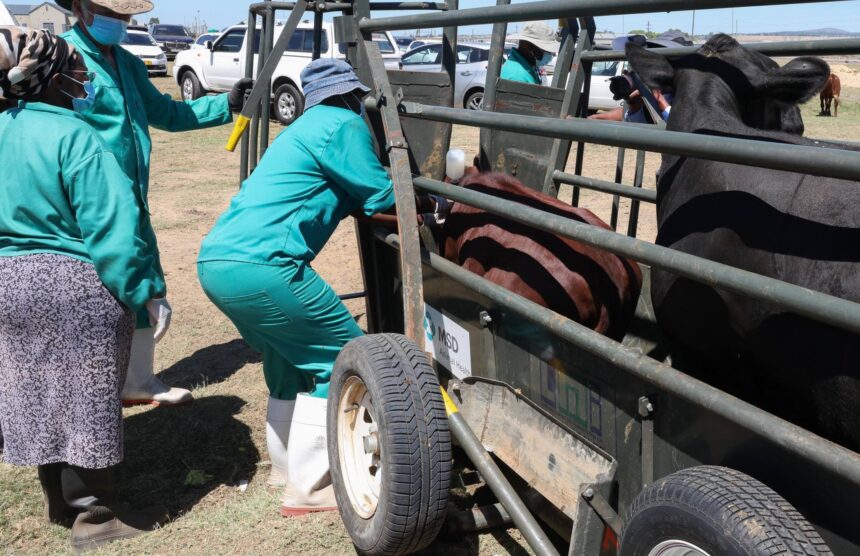
Under Section 22(a), read with Section 20(2) of the Act, organs of state, the private sector, communities and individuals are encouraged to improve targeted disease management practices. Farmers must enforce strict biosecurity measures. These include limiting animal movement, disinfecting vehicles and equipment and isolating infected herds. Livestock auctions and informal animal trading require strict compliance with veterinary controls. Any practice that increases the risk of spreading the virus must stop immediately.
The declaration also recommends a multisectoral prevention, mitigation, relief and rehabilitation plan. In terms of Sections 25(1)(c), 39(1)(c), 39(2)(k), 53(1)(c) and 53(2)(k) of the Act, national, provincial and municipal authorities must work together on an integrated response. This plan should address surveillance, vaccination where applicable, movement control and farmer support. Financial relief measures may be required for affected producers. Rehabilitation efforts must focus on restoring trade confidence and safeguarding export markets once the outbreak is contained.
Monitoring and accountability form a central part of the response. In line with Section 21(a)(ii), each organ of state must prepare and submit progress reports to the National Disaster Management Centre. These reports will track response initiatives undertaken by government departments, non governmental organisations and communities. Furthermore, Section 24(4) to 24(8) requires affected organs of state to submit detailed reports as directed. This ensures transparency and allows for continuous reassessment of the situation.
The Schedule attached to the classification outlines how the disaster may be managed and eventually revoked. The National Executive may respond using existing legislation without declaring a national state of disaster under Section 27(1). Alternatively, it may introduce additional regulations and directions following a declaration under Section 27(2). The classification will be revoked by the Head of the National Disaster Management Centre once reassessment confirms that the outbreak no longer qualifies as a disaster. It will also automatically lapse if a declared national state of disaster is terminated or expires under Section 27(5).
This national disaster classification underscores the economic and agricultural risk posed by foot and mouth disease in South Africa. You should expect stricter movement controls, enhanced inspections and stronger enforcement of biosecurity regulations in affected provinces. Farmers and industry stakeholders must act immediately to protect livestock and maintain compliance with veterinary directives. The speed and discipline of the collective response will determine how quickly South Africa can contain the outbreak and stabilise its livestock sector.
Join 'Farmers Mag' WhatsApp Channel
Get the latest Farming news and tips delivered straight to your WhatsApp
CLICK HERE TO JOIN