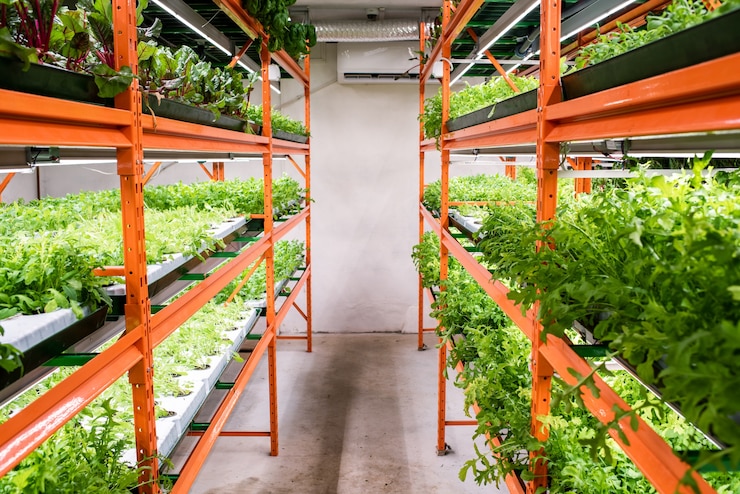
Vertical farming is emerging as a practical and efficient solution for small-scale farmers in South Africa who want to maximise productivity on limited land. By growing crops in stacked layers, vertical farming allows farmers to produce more food per square metre while reducing water use, energy costs, and reliance on large plots of land. This method is particularly valuable in urban or peri-urban areas where land is scarce, expensive, or less fertile, and it can support both commercial and household food production. With the right techniques, small-acreage farms can achieve higher yields, faster growth cycles, and more sustainable operations.
One of the most common vertical farming techniques suitable for small acreage is hydroponics, where plants are grown in nutrient-rich water rather than soil. Hydroponics systems can be installed in compact structures such as greenhouses, containers, or even vertical towers, making them ideal for small farms. This method allows precise control over nutrient levels, pH, and water delivery, which improves plant health and accelerates growth. Popular crops for hydroponic vertical farms include leafy greens, herbs, strawberries, and small fruiting plants, all of which have high market demand and fast turnover.
Another effective approach is aeroponics, which involves growing plants suspended in air with their roots misted with nutrient solutions. Aeroponic systems use minimal water and space while allowing rapid nutrient absorption, resulting in faster growth and higher yields compared to traditional soil farming. Small-scale aeroponic setups can be built indoors or in controlled outdoor environments, making them suitable for urban farms or areas with limited arable land. This technique is particularly efficient for leafy vegetables, herbs, and microgreens, which thrive in highly controlled conditions.
Stacked vertical planters and modular towers are also practical solutions for small-acreage farms. These structures allow farmers to grow multiple layers of crops in a compact footprint. Vertical towers can be made from PVC, recycled materials, or commercially available modular units, providing flexibility for different crops and farm sizes. Coupled with drip irrigation or simple nutrient delivery systems, these setups minimise water and fertiliser use while maximising output. They are especially useful for high-value crops like tomatoes, peppers, and cucumbers, where space efficiency directly increases profitability.
Light management and climate control are critical for vertical farming success. In small-acreage farms, farmers can use LED grow lights, reflective surfaces, or natural sunlight to optimise photosynthesis and extend growing hours. Temperature, humidity, and airflow should be monitored to prevent diseases and ensure consistent growth. Even simple techniques, such as orienting vertical structures to receive maximum sunlight or using shade nets during extreme heat, can significantly improve plant health and productivity.
Adopting vertical farming techniques offers multiple benefits for small-acreage farmers in South Africa. These include increased yield per square metre, efficient use of water and nutrients, reduced labour and operational costs, and the ability to grow year-round in controlled environments. With careful planning, investment in modular systems, and adherence to best practices in irrigation, lighting, and nutrient management, small-scale farmers can transform limited land into highly productive and sustainable vertical farms, contributing to food security and income generation in local communities.
Join 'Farmers Mag' WhatsApp Channel
Get the latest Farming news and tips delivered straight to your WhatsApp
CLICK HERE TO JOIN