

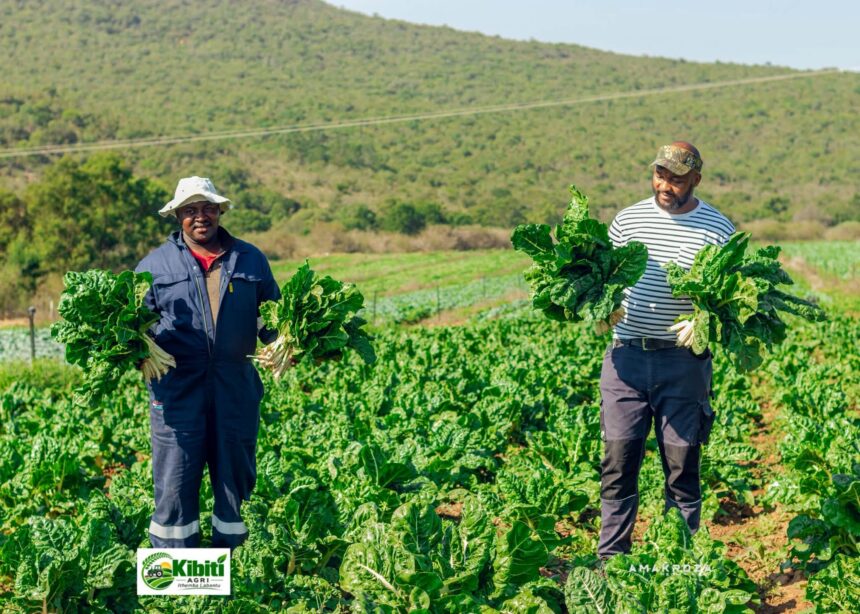
Many farmers aim to expand their businesses, increase their income and build more resilient farming operations. For some, mixed farming offers a practical way to achieve these goals by combining different agricultural activities on one farm. It allows farmers to produce a wider range of goods and reduce their reliance on a single source of income. The progress of Kibiti Farming in the Eastern Cape shows how this approach can support rural agricultural development. With support from the Eastern Cape Rural Development Agency (ECRDA), the farm is growing its operations and building a more diverse business.
Kibiti Farming is managed by Lamla Nokhubeka in Upper Gxulu, near Keiskammahoek. The farm produces cabbage and spinach while also raising cattle and pigs. This combination of crop production and livestock farming gives the business several agricultural activities to manage. It also creates opportunities to serve different markets and generate income from more than one source. The farm’s development reflects a growing ambition to build a sustainable and diversified rural farming business.
Nokhubeka explained that the decision to move into mixed farming came from a desire to grow the business and create additional sources of income. The farm also wanted to make better use of its available resources. Diversification was important because relying on one farming activity can expose a business to greater risk when production or market conditions change. By combining vegetable production with livestock farming, Kibiti Farming aims to spread that risk across different activities. This approach can help rural farmers build businesses with a broader production base and more opportunities for growth.
Financial support from ECRDA has played an important role in helping Kibiti Farming improve production and expand its operations. Access to funding can help farmers address some of the financial challenges that limit agricultural growth. It can support improvements to existing activities and create opportunities to develop additional parts of a farming business. For Kibiti Farming, this assistance has helped turn its plans for expansion into practical progress. Nokhubeka said the funding had helped the farm improve production and grow the business.
The results of this work are visible in the farm’s vegetable production. Lamla and the team are currently harvesting cabbage and spinach across 13 hectares of farmland. The fresh produce is supplied to the farm’s markets, giving the business an active role in the local agricultural supply chain. Harvesting across this area requires planning, consistent work and coordination to ensure that produce reaches buyers. The activity also demonstrates the importance of maintaining production while managing the farm’s wider livestock operations.
Mixed farming requires farmers to manage different production systems and understand the demands of each activity. Vegetable production involves planning planting and harvesting schedules, while cattle and pig farming require ongoing attention to animal care and management. These activities can place different demands on labour, finances and farm resources. Farmers must therefore make decisions that balance their available capacity with the needs of each enterprise. When managed effectively, diversification can provide a stronger foundation for business development.
The experience of Kibiti Farming also highlights the role of agricultural support organisations in rural development. Many rural entrepreneurs have the determination and ideas needed to grow their businesses but face financial barriers that make expansion difficult. Funding support can help bridge part of this gap by giving farmers greater capacity to improve production and develop their operations. However, financial assistance works alongside the commitment and effort of the people managing the farm. Nokhubeka and the Kibiti Farming team demonstrate how support, hard work and a clear business purpose can contribute to agricultural progress.
For the ECRDA, Kibiti Farming’s development is an example of how rural farmers can benefit when financial support meets determination and practical action. The farm’s combination of cabbage and spinach production with cattle and pig farming shows how diversification can create new opportunities for agricultural businesses. Its progress also points to the wider contribution that growing rural enterprises can make to local economic activity. As farmers increase production and supply fresh goods to their markets, they strengthen their businesses and participate in the agricultural economy. Kibiti Farming’s journey shows that mixed farming can be an important route towards business growth, improved resource use and a more diverse income base for rural farmers in the Eastern Cape.
Join 'Farmers Mag' WhatsApp Channel
Get the latest Farming news and tips delivered straight to your WhatsApp
CLICK HERE TO JOIN


