

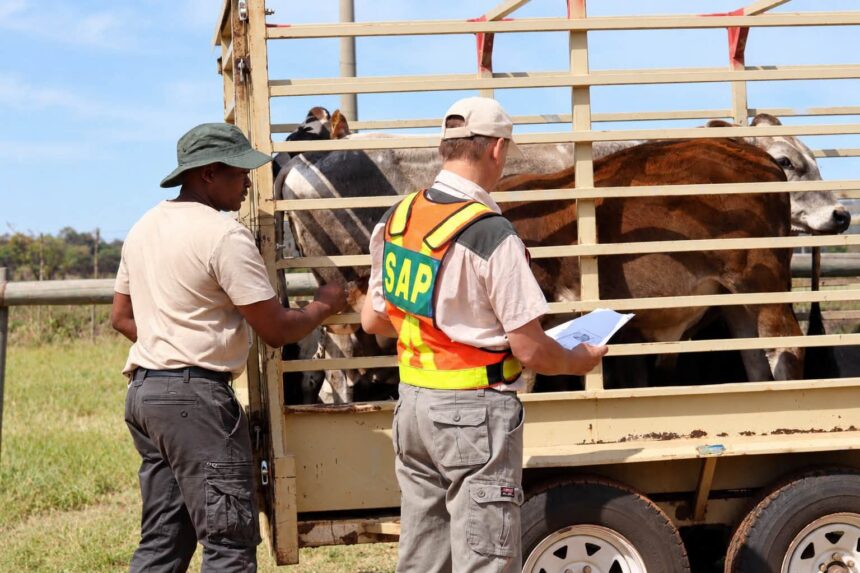
South Africa’s red meat industry has entered a new four-year statutory levy cycle, with a strong focus on livestock traceability, biosecurity and the control of animal diseases. The 2026–2030 cycle provides a funding mechanism to address challenges that affect livestock farmers and other participants across the red meat value chain. Administered by Red Meat Industry Services (RMIS), the levy will support initiatives aimed at protecting animal health, improving market access and strengthening the long-term sustainability of the industry. The new cycle builds on four years of work to establish systems and programmes that support farmers and encourage cooperation across the sector. For livestock producers, the priorities are important because disease outbreaks, poor traceability and limited market access can affect farm operations, production costs and business performance.
The new statutory levy measures were published in Government Gazette No. 55673 and took effect in November 2026. Approved by the Minister of Agriculture, they will remain in force until 4 November 2030. The measures cover statutory levies, records and returns, as well as registration requirements across the red meat industry. The Red Meat Primary Cluster (RMPC) applied for the continuation of the statutory measures on behalf of its constituents. RMIS NPC remains the appointed administrator of the levy and will oversee the funding allocated to industry priorities.
For the 2026/27 statutory year, the levy is R15.80 per head of cattle and R3.08 per head of small stock. Annual increases are provided for during the four-year cycle. The levy pools contributions from the industry to fund programmes that address shared challenges. These include animal disease control, livestock identification, traceability, research and market access. The intention is to invest in areas where coordinated action can deliver benefits across the industry rather than leaving individual farmers to deal with major challenges on their own.
RMIS chief executive officer Dewald Olivier said the levy gives the industry an opportunity to combine resources and address issues that affect the entire value chain. He noted that many challenges facing red meat producers cannot be resolved by individual farmers or organisations working in isolation. A coordinated approach allows the industry to direct funding towards common priorities while maintaining accountability for how the money is used. For farmers, this means that the value of the levy should be reflected in practical programmes that support production and improve the industry’s ability to respond to challenges. Olivier said the new cycle would build on the systems and programmes established during the previous four years.
RMIS was established as a non-profit company in 2022, when the previous 2022–2026 statutory levy period began. During that first cycle, the organisation appointed its board and became operational. It also aligned levy-funded projects with the priorities of the Red Meat Industry Strategy 2030. A major part of this work involved building the organisational structures, partnerships and systems needed to deliver industry programmes. These foundations have helped RMIS move from establishing its operations towards strengthening and expanding its interventions.
One of the key developments has been the establishment of an industry-driven national livestock traceability platform. More than 15 000 production units are registered, with 17 digital livestock management systems connected to the traceability ecosystem. This gives farmers different options for recording and managing livestock information instead of requiring the entire industry to use one digital system. The platform is designed to connect existing systems and encourage wider participation in livestock traceability. Greater participation can improve the availability of information about livestock and their movements, which becomes particularly important when disease outbreaks occur.
For livestock farmers, accurate identification and movement records are essential parts of responsible farm management. When a disease such as foot-and-mouth disease (FMD) spreads, reliable records can help identify where animals have moved and which farms may have been exposed. This information can assist disease investigations and support more targeted control measures. Traceability can also strengthen confidence in livestock production and the systems used to supply domestic and international markets. RMIS plans to expand participation in the national traceability ecosystem during the new levy cycle, making this an important area for producers to follow.
Foot-and-mouth disease has placed significant pressure on South Africa’s livestock industry, highlighting the need for effective biosecurity and a coordinated response. To help address the challenge, RMIS established a fully operational Disease Operations Centre in less than 90 days. The centre brings together veterinary capacity, authorised biosecurity marshals and live disease mapping. It also provides automated WhatsApp alerts and a dedicated FMD information hub. These tools support communication and coordination among industry participants during disease outbreaks.
RMIS has also supported government efforts to distribute FMD vaccines to farmers. The organisation appointed animal health technicians to assist with the vaccination rollout and distributed industry traceability tags to strengthen livestock record-keeping during the campaign. It also secured FMD vaccines for the industry at cost price, helping producers avoid additional mark-ups on the cost of vaccines obtained through this arrangement. These efforts are intended to support vaccination activities and improve the industry’s ability to manage disease risks. Farmers still need to follow applicable animal health requirements and work with the relevant authorities and animal health professionals when managing disease threats.
Biosecurity begins with everyday decisions on the farm. Livestock owners need to pay attention to animal movements, maintain appropriate records and take reasonable steps to limit the risk of disease entering or spreading through their herds. Good communication with veterinarians and animal health officials is also important when animals show signs of illness or a disease threat emerges. Industry-wide systems can strengthen these efforts by making information more accessible and improving coordination. The RMIS Disease Operations Centre and traceability platform are intended to support this wider response.
Research is another priority in the new levy cycle. During its first period of operation, RMIS introduced the Field to Future process to help identify and prioritise research and other industry interventions. The process brings farmers and participants from across the red meat value chain into discussions about the challenges requiring attention. This helps ensure that research priorities reflect practical problems experienced by producers and other industry role-players. It also creates an opportunity to direct funding towards relevant work that can support better decisions and improvements in production. The approach recognises that farmers should have a voice in determining which issues receive attention and investment.
For the 2026–2030 period, RMIS intends to build on its existing programmes and strengthen areas where collective investment can make a difference. Improving animal health and disease response capabilities will remain important, alongside wider participation in livestock traceability. The organisation also plans to support market access and invest in research that responds to industry needs. These priorities are closely linked because animal health, reliable livestock records and effective production systems all influence the competitiveness of South African red meat. Stronger systems can help the industry respond to changing conditions while supporting farmers across different production environments.
The levy also raises an important question for producers: how will the funding translate into practical benefits on their farms? Farmers need accessible information, effective disease response systems and traceability tools that suit their operations. They also need clear communication about the programmes supported by the levy and the progress made during the four-year period. Continued engagement between RMIS, farmer organisations and other industry participants will be important in identifying priorities and measuring results. Accountability will help maintain confidence in the statutory levy and ensure that the industry’s collective investment remains focused on meaningful outcomes.
The new RMIS statutory levy cycle provides South Africa’s red meat industry with an opportunity to strengthen the systems needed to protect livestock and support sustainable production. The previous cycle established a national traceability ecosystem, a Disease Operations Centre, support for FMD vaccination and a more inclusive approach to research priorities. The next four years will test how effectively these foundations can be expanded and translated into benefits for producers. With levy rates set at R15.80 per head of cattle and R3.08 per head of small stock for 2026/27, farmers have a direct interest in how the funds are managed and used. Stronger traceability, effective biosecurity and coordinated disease control will be essential to protecting livestock, supporting market access and building a more resilient South African red meat industry.
Join 'Farmers Mag' WhatsApp Channel
Get the latest Farming news and tips delivered straight to your WhatsApp
CLICK HERE TO JOIN


