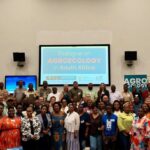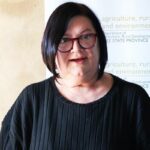

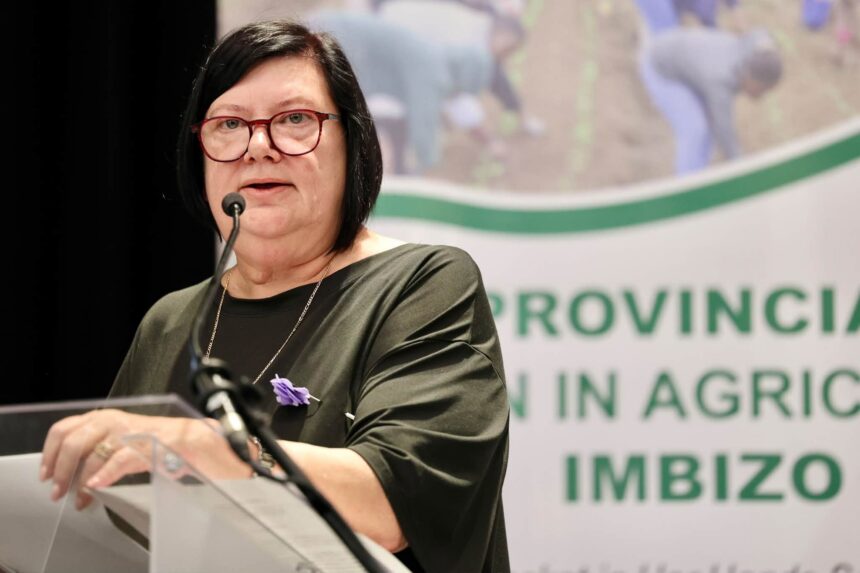
MEC for Agriculture, Rural Development and Environmental Affairs Elzabe Rockman delivered a strong message of unity, collaboration and economic empowerment during the first of the two-day Free State Women in Agriculture Imbizo held at Mangaung City Hall on Tuesday, 13 October 2026. The gathering brought together women farmers from districts across the Free State to share experiences, exchange knowledge and explore ways to strengthen their role in the agricultural sector. Rockman emphasised that women in agriculture must work together to overcome challenges, create opportunities and build a stronger foundation for sustainable success. She was joined by MEC for Health Monyatso Mahlatsi and departmental head Tshepo Mabilo, who attended the event as women farmers came together to discuss their experiences and aspirations. The imbizo provided an opportunity to highlight the importance of solidarity among women, particularly in a sector where cooperation and shared knowledge can support agricultural development and economic growth.
Addressing the women farmers, Rockman stressed that individual efforts alone would not be enough to help women achieve lasting prosperity. She called for stronger relationships among women in agriculture and encouraged them to build networks that support collective progress rather than competition and division. According to the MEC, women’s agricultural structures should serve as platforms where farmers can exchange ideas, identify common challenges and advocate for their shared interests. She urged participants to recognise one another’s achievements and use their collective strengths to create more opportunities for women across the province. Her message placed unity at the centre of efforts to advance gender equality, improve economic participation and strengthen the position of women in agriculture.
“Our women in agriculture structures must be a sisterhood of power and empowerment, representing the voices and interests of all women in agriculture. Let us celebrate each other’s achievements. Working and leading in silos, and protecting our territories, only serves to undermine and weaken our drive towards achieving real gender equality and economic empowerment,” said Rockman. Her remarks highlighted the need for inclusive agricultural organisations that represent women from different backgrounds, farming operations and districts. By encouraging cooperation, she called on women farmers to move beyond isolated efforts and develop relationships that could help them share knowledge, address common barriers and pursue opportunities together. The message also underscored the importance of recognising the achievements of other women rather than treating their progress as a threat. Such collaboration can help build a more supportive environment in which women farmers exchange practical experience and strengthen their participation in the agricultural economy.
The Free State Women in Agriculture Imbizo also highlighted the role of women-led organisations and women’s desks in addressing the challenges experienced by women in their respective communities and professional environments. Rockman paid tribute to these structures for their advocacy and developmental work, recognising their contribution to raising issues that affect women and supporting efforts to address them. She encouraged organisations to cooperate across their different areas of focus instead of working in isolation. Collaboration between agricultural structures and women’s organisations can create opportunities to share information, coordinate activities and draw attention to issues that require collective action. Her message recognised that meaningful empowerment depends not only on individual determination but also on supportive networks that allow women to organise, participate and pursue their interests.
“We equally celebrate the work of all women organizations and women’s desks with the specific advocacy and developmental role they play in their specific environments. We encourage and welcome cross-cooperation and collaboration. One thing is certain: women are more than capable of speaking for themselves and about themselves; loudly or quietly. We will not be apologetic if the voices of women cause discomfort or disrupts certain comfort zones,” she said. Through these remarks, Rockman reinforced the importance of giving women the space to define their own priorities and speak openly about the challenges they face. Her statement also stressed that women’s participation should not depend on whether their views are convenient for others. For women in agriculture, having a voice in discussions that affect their livelihoods can help bring practical concerns into the spaces where decisions and development priorities are shaped. The MEC’s call for cooperation therefore extended beyond building relationships, emphasising the need to recognise women as active participants in shaping their own economic and social progress.
For women farmers in the Free State, the opportunity to meet with peers from across the province can help strengthen connections between agricultural communities and encourage the exchange of practical knowledge. Farmers often work in different local conditions and manage different types of agricultural activities, making shared experiences valuable when identifying challenges and considering possible solutions. A collaborative approach can also help women build relationships with organisations that support agricultural development and women’s empowerment. While cooperation alone cannot resolve every challenge facing women farmers, stronger networks can provide a foundation for collective advocacy, information sharing and the pursuit of common goals. The imbizo’s focus on unity therefore highlighted the value of creating spaces where women can learn from one another and identify areas for further cooperation.
The emphasis on gender equality and economic empowerment also placed women’s participation at the centre of discussions about the future of agriculture in the province. Women farmers need opportunities to contribute their knowledge, communicate their concerns and participate in structures that represent their interests. Organisations that support women can help create platforms for these discussions while encouraging cooperation between farmers, community groups and other stakeholders. Rockman’s remarks called for these structures to remain inclusive and focused on advancing the interests of women as a collective. Her message also made clear that recognising women’s achievements and respecting their voices are important parts of building stronger relationships within the agricultural sector.
As the first day of the two-day Free State Women in Agriculture Imbizo concluded, the central message was clear: women’s progress in agriculture requires unity, mutual support and meaningful collaboration. Rockman challenged women farmers and their organisations to move away from working in silos and instead build relationships that support shared advancement. She also recognised the important role of women-led organisations and women’s desks in advocating for women and addressing challenges within their communities. The gathering brought women from across the Free State together around a common purpose, creating an opportunity to exchange experiences and strengthen their collective voice. Ultimately, the call for a sisterhood of power and empowerment placed cooperation, inclusion and the recognition of women’s leadership at the heart of efforts to advance women in agriculture and promote economic empowerment across the province.
Join 'Farmers Mag' WhatsApp Channel
Get the latest Farming news and tips delivered straight to your WhatsApp
CLICK HERE TO JOIN