ARC VIMP recently hosted a Sweet Potato Harvesting Training, Breeding Evaluation Trial and Farmers’ Day at the University of Zululand’s KwaDlangezwa Campus. The activities brought together agricultural stakeholders around sweet potato production, breeding evaluation and knowledge sharing. The event formed part of ongoing efforts to strengthen collaboration and share practical agricultural knowledge with farmers and other participants. It also provided an opportunity to demonstrate how improved sweet potato breeding can support production in different environmental conditions. By combining field evaluation, harvesting training, farmer engagement and food product demonstrations, the event connected agricultural research with practical farming needs.
The activities were linked to a multi-environment trial assessing advanced sweet potato breeding clones. Multi-environment trials are important in crop improvement because a variety or breeding clone may perform differently depending on environmental conditions. Factors such as temperature, rainfall, soil conditions and other local production characteristics can influence crop performance. Testing breeding material across diverse environments helps researchers identify promising clones with characteristics that may make them suitable for specific production areas. In this case, the trial supports the identification and selection of sweet potato clones that are adaptable to the warm subtropical production areas of South Africa.
Sweet potato breeding plays an important role in developing planting material that can perform under particular agricultural conditions. Breeding programmes evaluate different genetic materials to identify characteristics that can benefit farmers and consumers. These characteristics can include adaptation to local environments, productivity and qualities that make the crop suitable for different uses. However, promising breeding material needs to be evaluated under actual production conditions before selections can be made with greater confidence. The multi-environment trial at the University of Zululand therefore provides an opportunity to assess advanced sweet potato breeding clones under conditions relevant to warm subtropical production.
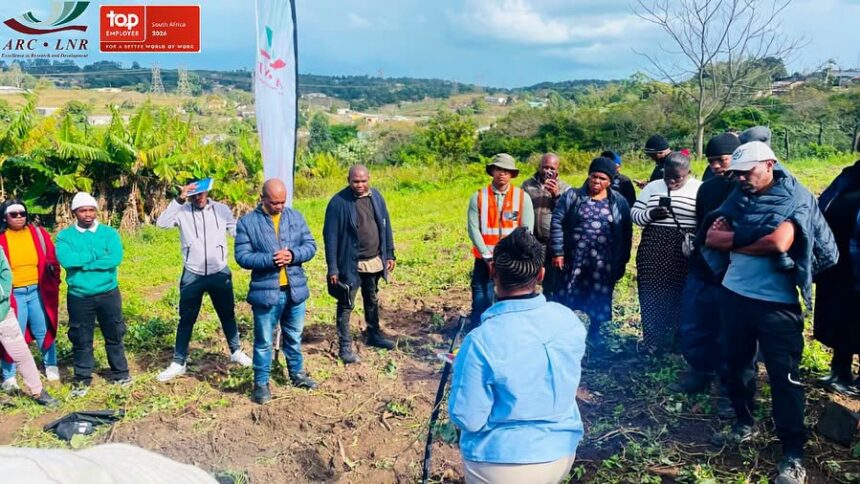
The harvesting training formed an important practical part of the event. Harvesting is a key stage in sweet potato production because the timing and handling of the crop can influence the quality of harvested roots. Training farmers and other participants in appropriate harvesting practices can help improve their understanding of how sweet potatoes should be removed from the soil and handled after harvesting. Practical demonstrations can also make technical information easier to understand because participants can observe the process directly in the field. By incorporating harvesting training into the Farmers’ Day, ARC VIMP created an opportunity for participants to connect research activities with practical crop production.
The breeding evaluation trial also provided a platform for observing the performance of advanced sweet potato clones. Rather than relying only on controlled research conditions, multi-environment trials allow breeding material to be assessed in different locations and environments. This is important when researchers seek clones that can adapt to a range of growing conditions. The information generated through such evaluations can contribute to decisions about which breeding materials should receive further attention. The trial at KwaDlangezwa therefore forms part of a broader effort to identify sweet potato breeding material with potential for warm subtropical areas of South Africa.
The University of Zululand’s KwaDlangezwa Campus provided the setting for the harvesting training, breeding evaluation and Farmers’ Day activities. Bringing these activities together at a university campus created an environment where agricultural research, practical training and farmer engagement could take place alongside one another. Universities can play an important role in agricultural knowledge sharing by connecting research activities with farmers and other agricultural stakeholders. Events such as Farmers’ Days also provide opportunities for participants to ask questions, observe agricultural practices and engage with crop improvement work. The KwaDlangezwa event therefore served as a practical meeting point between sweet potato research and agricultural knowledge exchange.
An important part of the event was the opportunity for participants to taste products made from orange-fleshed sweet potato. The products included juice, jam and steamed bread, demonstrating that orange-fleshed sweet potato can be used in different food applications beyond fresh consumption. Product development can broaden the ways farmers, households and food businesses can use sweet potato. It can also provide consumers with different options for incorporating the crop into meals and other food products. The tasting session added a practical food-use dimension to the field-based activities and demonstrated the versatility of orange-fleshed sweet potato.
Orange-fleshed sweet potato is particularly relevant to discussions about food use because its distinctive colour and characteristics allow it to be incorporated into a variety of products. Turning sweet potato into products such as juice, jam and steamed bread demonstrates how the crop can move beyond the traditional preparation of boiled, baked or roasted roots. These applications can create opportunities for experimentation with local food products and value-added processing. The tasting session at the Farmers’ Day allowed participants to experience some of these possibilities directly. It also showed how crop improvement and food utilisation can be connected within a broader agricultural development process.
The event reflects the importance of collaboration in agricultural research and development. Sweet potato improvement requires researchers to evaluate breeding material, while farmers can provide practical perspectives on production conditions and crop use. Training activities help transfer knowledge from research environments into practical agricultural settings. Farmers’ Days create opportunities for these different groups to interact and learn from one another. Continued collaboration can help ensure that agricultural research remains connected to the conditions and needs of farming communities.
The multi-environment approach used in the sweet potato trial is also relevant to the diversity of South Africa’s agricultural environments. A clone that performs well in one location may not necessarily show the same performance elsewhere. Testing advanced breeding clones across different environments helps provide a broader understanding of their adaptability. For warm subtropical production areas, identifying suitable clones can support future efforts to develop sweet potato varieties that are better matched to local growing conditions. The trial therefore contributes to the longer process of evaluating and selecting breeding material before potential agricultural applications.
The combination of breeding evaluation, harvesting training and farmer engagement gives the event a practical focus. Participants could learn about harvesting while also seeing how researchers evaluate advanced sweet potato breeding material. The Farmers’ Day created space for interaction around crop production and the potential uses of orange-fleshed sweet potato. The product tasting further demonstrated how harvested sweet potatoes can be transformed into different foods. Together, these activities showed how agricultural research can connect with production skills, food utilisation and knowledge sharing.
ARC VIMP’s Sweet Potato Harvesting Training, Breeding Evaluation Trial and Farmers’ Day at the University of Zululand’s KwaDlangezwa Campus highlights the role of collaborative agricultural activities in advancing sweet potato production knowledge. The multi-environment trial is assessing advanced breeding clones to support the identification of promising material for warm subtropical production areas of South Africa. The harvesting training adds practical knowledge, while the Farmers’ Day strengthens opportunities for engagement between agricultural stakeholders. The tasting of orange-fleshed sweet potato juice, jam and steamed bread also demonstrated the crop’s potential for different forms of consumption. By bringing research, practical training, farmer engagement and food innovation together, the event provided a useful platform for sharing knowledge and supporting continued work in sweet potato breeding and production.
Join 'Farmers Mag' WhatsApp Channel
Get the latest Farming news and tips delivered straight to your WhatsApp
CLICK HERE TO JOIN