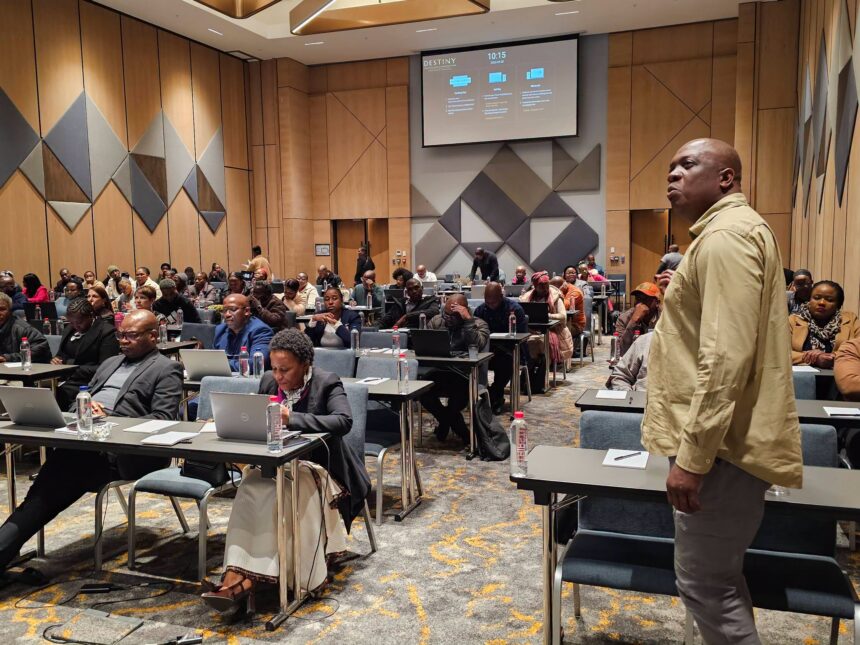
The National Department of Agriculture is concluding its Mpumalanga consultations on the National Food and Nutrition Security Plan 2025–2033, with stakeholders from Nkangala and Gert Sibande Districts meeting in Middelburg. The consultation provides an important platform for stakeholders to discuss the food and nutrition security challenges affecting communities across the province. It follows an earlier engagement in Ehlanzeni, ensuring that all three districts have an opportunity to contribute to the national planning process. Participants are sharing local priorities, challenges and practical solutions that can help strengthen food and nutrition security. These district-level discussions are important because communities across Mpumalanga face different circumstances that require responses suited to their local conditions.
The National Food and Nutrition Security Plan 2025–2033 provides a framework for addressing issues that affect people’s ability to access sufficient, safe and nutritious food. Food security is influenced by several factors, including household production, food availability, access to food and the resilience of livelihoods. Nutrition security also requires attention to the quality and safety of food and whether people can consistently access diets that support healthy lives. Consultations with stakeholders can help ensure that these issues are considered when priorities for the coming years are developed. The Mpumalanga engagement therefore gives local stakeholders an opportunity to contribute evidence and experiences that can inform the broader national response.
The National Food and Nutrition Security Survey provides important context for the consultations taking place in the province. According to the Household Hunger Scale findings provided for the engagement, 71.8% of sampled households in Mpumalanga experienced little to no hunger. The same findings indicate that 20.6% of sampled households experienced moderate hunger, while 7.7% experienced severe hunger. These figures provide an indication of the different levels of food insecurity experienced among the sampled households. They also demonstrate why local evidence and stakeholder input remain important when developing measures aimed at strengthening food and nutrition security.
The survey findings need to be considered within the context of the sampled population and the methodology used to collect the information. The figures describe the households included in the survey and should not automatically be treated as a direct measurement of every household in Mpumalanga. However, they provide useful evidence for understanding the food security challenges identified through the survey. When combined with information gathered directly from districts, the findings can help provide a broader picture of local conditions. This combination of survey evidence and community-level input can support more informed planning and help identify areas that require attention.
Stakeholders from Nkangala and Gert Sibande have an opportunity to bring district-specific experiences into the consultation process. Local stakeholders are often familiar with challenges that may not be fully reflected in province-wide figures or national data. Their contributions can help identify practical barriers affecting household food production, food access and livelihoods. They can also highlight opportunities that could strengthen local food systems and improve resilience within communities. Including these perspectives can help ensure that the National Food and Nutrition Security Plan takes account of differences between districts and communities.
Household food production is one of the areas identified as important in strengthening food and nutrition security. Supporting households to produce food can contribute to access to food while also providing opportunities for communities to participate more actively in local agricultural systems. However, household production depends on access to appropriate resources, knowledge, land and other factors that vary between communities. The consultation process provides an opportunity to discuss these local conditions and identify practical ways to strengthen household food production. Such discussions can help connect national priorities with the realities experienced by households and agricultural communities.
Improving access to safe and nutritious food is another important consideration in food and nutrition security planning. Having food available does not necessarily mean that households have consistent access to food that meets their nutritional needs. Food safety, affordability, availability and dietary quality all contribute to people’s ability to maintain adequate nutrition. The consultations can therefore help stakeholders consider food security from a broader perspective that includes both access and nutritional wellbeing. Addressing these issues requires attention to the different factors that shape how households obtain, produce and consume food.
Resilient livelihoods also form an important part of the broader food and nutrition security discussion. Households with stable and sustainable sources of income and food production may be better positioned to manage disruptions that affect their access to food. Building resilience requires consideration of local economic conditions, agricultural opportunities and the capacity of communities to respond to challenges. District-level consultations can help identify the pressures that affect livelihoods and the opportunities that could strengthen household resilience. These local contributions can then inform broader planning for a food system that is better equipped to respond to changing circumstances.
The consultation in Middelburg also follows the engagement held in Ehlanzeni, bringing together inputs from across Mpumalanga’s three districts. This provides a wider range of local perspectives for consideration as the province’s consultation process concludes. Ehlanzeni, Nkangala and Gert Sibande each have their own communities, economic conditions and agricultural circumstances, making district-level participation important. Bringing these perspectives together can help identify common food and nutrition security concerns while also recognising challenges that may be specific to individual districts. The combined input can contribute to a more comprehensive understanding of food and nutrition security across Mpumalanga.
As Mpumalanga concludes its consultations on the National Food and Nutrition Security Plan 2025–2033, the information gathered from stakeholders will contribute to the broader planning process. Inputs from Ehlanzeni, Nkangala and Gert Sibande provide local perspectives on food and nutrition security challenges, priorities and possible solutions. The survey findings add quantitative context, while stakeholder engagements provide practical insight into the conditions experienced by communities. Together, these forms of evidence can help inform priorities focused on household food production, access to safe and nutritious food, stronger local food systems and resilient livelihoods. The consultation process reflects the importance of connecting national food and nutrition security planning with local evidence and the experiences of communities across Mpumalanga.
Join 'Farmers Mag' WhatsApp Channel
Get the latest Farming news and tips delivered straight to your WhatsApp
CLICK HERE TO JOIN