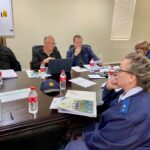
AgriSA and the Institute for Security Studies have formalised a partnership aimed at strengthening rural safety across South Africa through better crime data, research and practical cooperation. The organisations have signed a Memorandum of Understanding following a year of collaboration focused on understanding crime affecting agricultural and rural communities. The partnership brings together AgriSA’s network across organised agriculture and the ISS’s research and analysis capabilities in crime and justice. Its central focus is to collect, share and analyse reliable information about rural crime so that future safety responses can be based on verified evidence. The initiative seeks to support safer conditions for farmers, agricultural workers, businesses and residents in rural communities while improving the quality of information available to policymakers and law enforcement agencies.
Reliable crime data is important because rural safety discussions have often involved different statistics, competing interpretations and strong public reactions. Establishing a shared evidence base can help stakeholders develop a clearer understanding of where rural crime occurs, what forms it takes and which factors may contribute to it. AgriSA and the ISS intend to strengthen the systematic collection, reporting and analysis of rural crime information through their partnership. The objective is not simply to produce more statistics, but to use reliable information to examine patterns and identify areas requiring attention. Better evidence can also support more informed discussions between agricultural organisations, government and the South African Police Service.
The partnership is expected to examine the causes and patterns associated with rural violence and other forms of crime affecting agricultural communities. Understanding these factors can help stakeholders assess which prevention measures are producing useful results and where additional interventions may be required. Crime prevention can involve several elements, including effective policing, cooperation between communities and law enforcement, and locally appropriate safety initiatives. Research and data analysis can help distinguish between interventions that have measurable benefits and those that require further assessment. This evidence-based approach can support more targeted discussions about rural safety policy and implementation.
The role of organised agriculture is important because agricultural organisations have direct connections with producers and communities operating across rural areas. AgriSA’s rural safety work includes engagement with government, police and other partners on issues affecting farming communities. The organisation has also maintained a Rural Safety Centre of Excellence focused on strengthening rural safety systems and supporting the implementation of the National Rural Safety Strategy. This existing network provides access to practical information from people involved in agricultural operations and rural communities. Combining that experience with independent research can provide a broader basis for understanding rural crime and assessing possible responses.
The ISS brings research and analytical expertise in crime, justice and violence prevention to the partnership. Its work has emphasised the importance of reliable information when developing strategies to reduce violence and improve public safety. The organisation has also argued that crime should be understood within the broader patterns of violence affecting communities rather than viewed through isolated incidents alone. This perspective is relevant to rural safety because crime affecting farms and agricultural operations can occur within wider rural communities. Research that considers these broader conditions can help policymakers and other stakeholders examine rural crime within its social, economic and policing context.
A central element of the partnership is the recognition that farms do not exist separately from surrounding communities. Rural economies connect farmers, farm workers, agricultural businesses, service providers and residents in nearby towns and settlements. Crime affecting one part of this system can have consequences for other parts of the local economy and community. A community-centred approach therefore considers the safety of people living and working throughout rural areas rather than focusing only on individual farming properties. This broader perspective can support cooperation between farmers, residents, businesses, community structures and law enforcement agencies.
Effective local policing will remain an important part of any rural safety response. Rural communities can face challenges related to distance, policing resources, communication and coordination between different safety stakeholders. Strong relationships between communities and the police can help improve information sharing and support crime prevention efforts. Transparent and accountable partnerships can also help establish clearer responsibilities between public institutions, community organisations and other participants in local safety initiatives. The AgriSA and ISS partnership aims to generate evidence that can contribute to these broader discussions about policing and community safety.
The agreement also creates a basis for future engagement with government and the South African Police Service. The information collected through the partnership can be used to identify patterns and concerns that require attention and to inform discussions about possible responses. Evidence alone cannot eliminate crime, but it can provide a stronger foundation for deciding where resources and prevention efforts may be needed. It can also help stakeholders evaluate whether existing approaches are addressing identified problems effectively. Continued engagement between researchers, organised agriculture, government and communities will therefore be important as the initiative develops.
The partnership comes within a broader context in which South African agriculture continues to emphasise the importance of safe rural environments for farming and food production. Agriculture depends on functioning communities, secure production environments and reliable movement of people, goods and services. Crime can create additional risks for agricultural enterprises and the people who work within them. Addressing rural safety therefore has implications beyond individual incidents because safety conditions can affect livelihoods, economic activity and the functioning of rural communities. A coordinated approach that combines evidence, local knowledge and institutional cooperation can help stakeholders better understand these interconnected challenges.
The statements from AgriSA CEO Johann Kotzé and ISS representative Lizette Lancaster reflect the partnership’s emphasis on practical solutions and evidence-based policy. Kotzé highlighted the value of combining organised agriculture’s reach with the ISS’s research capabilities, while Lancaster stressed the importance of using reliable evidence to understand the drivers of violence and assess prevention measures. Their comments point to a shared focus on turning information and research into practical interventions. The partnership therefore aims to connect data collection with real-world safety planning rather than treating research as an end in itself. Its effectiveness will depend on the quality of the data collected, the consistency of analysis and the ability of relevant institutions to use the findings in practical ways.
The AgriSA and ISS Memorandum of Understanding establishes a framework for continued cooperation on rural safety and crime prevention in South Africa. By combining agricultural networks with independent research and analysis, the organisations aim to develop a stronger evidence base on crime affecting rural communities. The initiative places emphasis on verified information, community-centred safety and engagement with government and law enforcement. It also recognises that lasting rural safety requires attention to the wider communities in which farms and agricultural businesses operate. As the partnership develops, its contribution will depend on how effectively evidence is collected, analysed and translated into practical measures that support safer rural communities across the country.
Join 'Farmers Mag' WhatsApp Channel
Get the latest Farming news and tips delivered straight to your WhatsApp
CLICK HERE TO JOIN