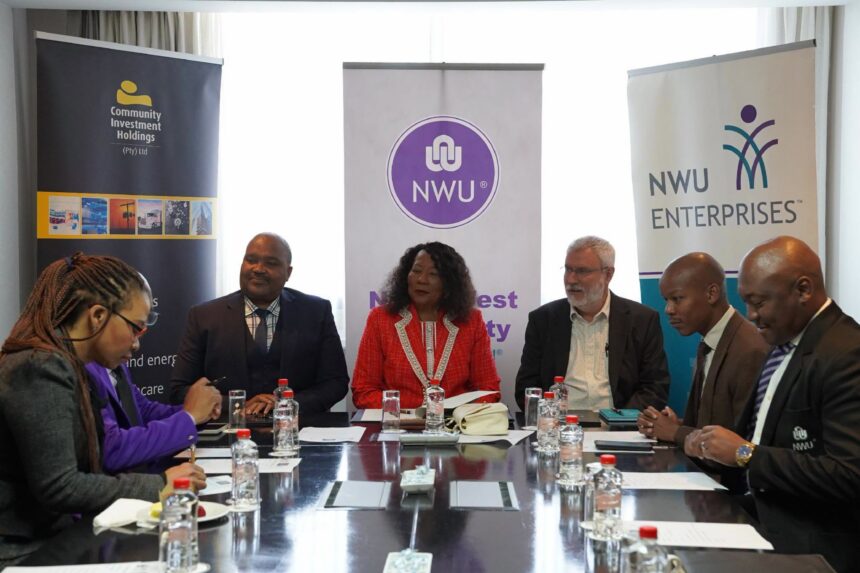
North-West University (NWU), Community Venture Capital (Pty) Ltd (CVC) and NWU Enterprises (Pty) Ltd (NWUE) have joined forces in a new partnership aimed at creating practical opportunities for farmers, rural enterprises and agricultural cooperatives. The organisations signed a memorandum of understanding (MoU) on Friday, 7 August, establishing a framework for collaboration in agricultural finance, market access, logistics, business development and skills training. The partnership comes as many smallholder and emerging farmers continue to face challenges accessing affordable finance, reliable markets, appropriate infrastructure and specialised technical support. By bringing together university expertise, private investment and commercial project management, the partners aim to address some of these barriers across South Africa and the wider African region. The initiative could provide farmers with stronger support to grow their businesses, improve production and participate more effectively in formal agricultural value chains.
Access to finance is one of the most important issues facing farmers who want to expand or improve their operations. Smallholder farmers may need funding for livestock, machinery, irrigation systems, infrastructure, production inputs and other essential investments, but conventional finance can be difficult to secure. The new partnership aims to develop more accessible financing solutions and mobilise investment through blended finance models, public-private partnerships and institutional funding. These approaches could help combine different sources of capital to support agricultural businesses at various stages of development. If implemented effectively, better access to finance could allow more farmers to invest in their operations, increase production and build businesses capable of generating sustainable income.
The partnership’s focus on market access is equally important because farmers need reliable buyers if increased production is going to translate into higher incomes. Many smallholder farmers struggle to enter mainstream supply chains because they cannot consistently meet requirements around volumes, quality, certification, packaging and delivery. The MoU aims to help community-based producers and cooperatives overcome some of these barriers through product aggregation, certification and quality assurance. Aggregating products can allow smaller producers to combine their output and potentially supply larger buyers more consistently. Better access to formal retail and export markets could create stronger commercial opportunities for farmers while encouraging investment in improved production and quality standards.
For farmers, reaching a market can be just as important as producing a quality product. A farmer may have good livestock, crops or other agricultural products but still struggle to generate sufficient income if transportation, storage or market connections are unreliable. The partnership will therefore explore logistics and supply chain solutions aimed at improving the movement of agricultural products from farms to markets. Warehousing and cold-chain infrastructure could be particularly valuable for producers dealing with perishable products, as poor storage and transport conditions can result in spoilage and financial losses. Better logistics could reduce unnecessary costs, improve product quality and help farmers deliver their goods to buyers more reliably.
The proposed investment in rural and agricultural logistics infrastructure could also benefit farming communities beyond individual producers. Rural areas often face infrastructure constraints that make it more expensive and difficult to transport agricultural products. Better roads, storage facilities, distribution systems and cold-chain infrastructure can improve connections between farms, processing facilities and major markets. Co-investment in agricultural hubs could help create shared infrastructure that smaller producers may not be able to afford individually. This could strengthen rural value chains while creating additional opportunities for processing, distribution and agricultural enterprise development.
Skills development is another important part of the partnership, particularly for young people, women and rural agricultural entrepreneurs. Producing food successfully requires technical farming knowledge, but running a profitable agricultural business also requires skills in financial management, marketing, planning, procurement and customer relations. The MoU aims to support enterprise and supplier development programmes that combine technical training with business mentorship and skills transfer. These programmes could help farmers understand how to manage their enterprises more effectively and prepare them to supply larger and more demanding markets. Stronger business skills can help farmers make better investment decisions and improve their ability to manage the risks associated with agricultural production.
The role of NWU is particularly significant because the university can connect farmers with research, technical expertise and students who need practical experience. Agriculture is changing rapidly as farmers respond to climate pressures, water shortages, rising production costs, changing markets and new technologies. Research can help identify practical ways to improve productivity, reduce resource use and make farming systems more resilient. The partnership creates an opportunity to move some of this research closer to farms where it can be tested and applied in real production environments. Farmers could benefit from greater exposure to research and innovation while students and researchers gain a better understanding of the challenges producers face.
NWU principal and vice-chancellor Prof Bismark Tyobeka highlighted the potential for farms to become practical learning environments for students. Undergraduate students could gain hands-on experience while postgraduate researchers investigate ways to improve crop resilience, increase yields and develop smart, water-efficient farming methods. This could be particularly valuable as South African farmers face increasing pressure to produce more efficiently while managing limited water and other resources. Research into drought resilience, irrigation efficiency, soil management and improved production practices could help farmers adapt to changing conditions. Giving students practical exposure to agriculture could also help develop a new generation of professionals who understand the realities of farming.
The partnership could also help strengthen agricultural innovation by connecting farmers with researchers, technology providers and commercial partners. Farmers often identify practical problems that require new approaches, but there can be a gap between identifying those problems and finding institutions capable of developing solutions. A closer relationship between farmers and academia can help research teams focus on issues that have a direct impact on agricultural production. It can also create opportunities for technologies developed through research to be tested, improved and eventually commercialised. This type of cooperation can help ensure that agricultural innovation responds to actual farming needs rather than remaining limited to academic environments.
Dr Anna Mokgokong, NWU chancellor and founder and group chairperson of Community Investment Holdings, emphasised that universities should play an active role in the communities they serve. Her comments reflect a broader view of universities as partners in economic and social development. For farmers and rural communities, this can mean greater access to knowledge, training, research and potential commercial partnerships. Universities can contribute expertise while businesses and investors can help turn viable ideas into operating projects. The combination could create stronger support systems for farmers and rural entrepreneurs who often need several forms of assistance to grow.
Phenyo Mogamisi, CEO of CIH Venture Capital, said the partnership was established partly to align funding, research and commercialisation in order to strengthen food security and economic participation. Under the proposed model, NWU will contribute research, skills development and quality assurance, while NWU Enterprises will support project preparation, management and market access. CIH will help mobilise private-sector funding while supporting logistics and agro-processing capacity. This division of responsibilities could make it easier to develop agricultural projects that have both technical and commercial foundations. For farmers, the potential benefit is a more coordinated system where finance, expertise, market access and infrastructure support can be brought together around viable agricultural projects.
Agro-processing is another area that could create opportunities for farmers if the partnership develops projects that connect producers to local processing businesses. Selling raw agricultural products can limit the amount of value that remains within farming communities, while processing can create additional income opportunities and jobs. Farmers could potentially supply processors with crops, livestock products or other agricultural commodities that meet the required quality standards. Developing processing capacity closer to production areas can also reduce transportation requirements and support rural economic development. Stronger links between farmers, processors and markets can therefore help build value chains that retain more economic activity within agricultural communities.
The partnership’s wider focus extends beyond agriculture into sectors such as water and sanitation, energy, healthcare, housing, digitisation, logistics, mining, engineering and tourism. These areas are relevant to farmers because rural development depends on more than agricultural production alone. Reliable water infrastructure, electricity, roads, digital connectivity and healthcare can influence the ability of rural businesses and farming communities to operate and grow. Improved logistics and digital systems can also make it easier for farmers to access markets, services and information. By addressing several areas of the rural economy, the partnership could contribute to conditions that support stronger agricultural communities.
The presence of financial and development institutions such as Sanlam, ABSA and the Industrial Development Corporation, along with the Gauteng Growth and Development Agency and Gauteng Enterprise Propeller, highlights the importance of connecting agricultural projects with broader funding and development networks. Farmers and rural entrepreneurs often need support from several institutions as they move from small-scale operations towards more established businesses. Financial institutions can provide funding, development agencies can support enterprise growth and universities can provide research and technical expertise. Bringing these capabilities into a coordinated partnership could make it easier to identify viable projects and connect them with the appropriate resources. The effectiveness of this approach will depend on ensuring that farmers and rural businesses can access these opportunities in practical and transparent ways.
The MoU also has the potential to create opportunities for young people who want to build careers in agriculture. Students can gain practical experience on farms while learning from researchers, farmers and industry professionals. At the same time, agricultural entrepreneurs can access training and mentorship that can help them establish businesses within farming and related industries. Encouraging young people to view agriculture as a business and career opportunity can help address unemployment while supporting the renewal of the agricultural workforce. Greater participation by young people could also bring new skills, technology and ideas into farming communities.
Women are another important group targeted by the partnership’s enterprise and supplier development initiatives. Women already contribute significantly to agriculture and rural economies, but they can face barriers to finance, markets, land, training and business development. Targeted support can help women-owned agricultural businesses strengthen their operations and participate in formal supply chains. Training and mentorship can also help entrepreneurs build the skills needed to manage larger contracts and meet buyer requirements. Expanding opportunities for women can strengthen household incomes while contributing to broader economic participation in rural communities.
For smallholder farmers and cooperatives, the real value of the agreement will depend on how quickly its objectives are converted into accessible programmes and projects. Farmers need clear information about available finance, training, market opportunities and technical support. They also need programmes that recognise the different stages of development within the farming sector, from small producers and new entrants to established commercial operations. Practical implementation will therefore require continued engagement with farmers and rural organisations. The partnership’s success should ultimately be measured by the number of farmers who gain access to new opportunities, improve their businesses and participate more successfully in agricultural value chains.
Food security remains one of the most important potential outcomes of the collaboration. Stronger farmers, better logistics, improved market access and increased investment can all contribute to a more resilient food system. Research can help producers improve yields and manage water more efficiently, while financing can support investment in productive assets. Better storage, transport and processing can reduce losses and improve the movement of food from farms to consumers. By addressing several parts of the agricultural value chain at the same time, the partnership has the potential to contribute to stronger production and more sustainable rural economies.
The agreement between NWU, CVC and NWU Enterprises represents an opportunity to connect farmers with resources that can help them build stronger and more sustainable agricultural businesses. Its focus on finance, markets, logistics, research, skills development and commercialisation addresses many of the practical barriers faced by smallholder farmers and emerging agribusinesses. The partnership also creates opportunities for students and researchers to gain practical experience while helping develop solutions for real agricultural challenges. Its success will depend on implementation, continued engagement with farmers and the ability to turn research and investment into projects that deliver measurable results. If the partners can achieve these goals, the initiative could help more farmers access finance and markets, strengthen rural enterprises, create jobs and contribute to a more secure and resilient agricultural sector in South Africa and across the African region.
Join 'Farmers Mag' WhatsApp Channel
Get the latest Farming news and tips delivered straight to your WhatsApp
CLICK HERE TO JOIN