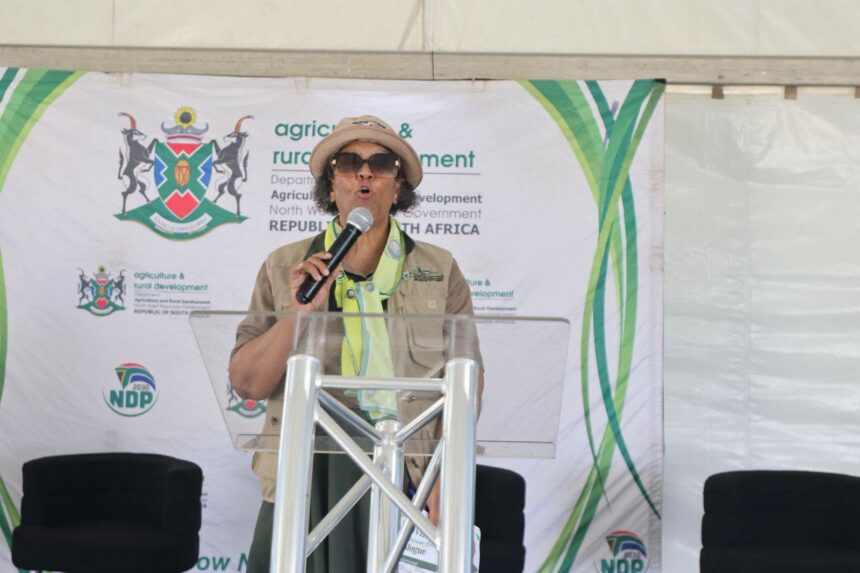
The North West Women Farmers Dialogue is underway in Klerksdorp, bringing women farmers, government representatives, agricultural stakeholders and development partners together to address challenges affecting women-owned agricultural projects. The gathering provides an important platform for women in agriculture to share their experiences and discuss the barriers that continue to affect the growth of their farming enterprises. It also creates an opportunity for government and other stakeholders to hear directly from farmers about the support they need to improve production and build sustainable businesses. Agriculture remains an important source of livelihoods and economic activity in rural communities, making the success of women-owned farms significant for households and local economies. Through open engagement and collaboration, the dialogue aims to move beyond identifying challenges and focus on practical solutions that can create meaningful opportunities for women farmers.
The participation of women farmers is particularly important because they are active across many areas of agricultural production and agribusiness. Women operate crop farms, livestock enterprises, food processing businesses and other agricultural ventures that contribute to local food supply and economic activity. However, many women-owned agricultural projects face challenges that can prevent them from moving from small-scale production to sustainable commercial enterprises. These challenges can include limited access to finance, markets, infrastructure, agricultural inputs, land and technical support. Bringing farmers and support organisations together in one forum creates an opportunity to examine these issues collectively and identify interventions that respond to the realities experienced by women on the ground.
Access to finance is one of the issues that can have a significant impact on agricultural growth. Farmers require funding to purchase seed, fertiliser, livestock, equipment and other inputs, while larger operations may need capital for irrigation systems, storage facilities, machinery and transport. Small farming enterprises can struggle to secure financing because they may not have sufficient collateral, established financial records or the resources required to meet funding conditions. When farmers cannot access suitable finance, they may be unable to increase production even when there is demand for their products. The dialogue can help connect women farmers with relevant institutions and explore ways to improve access to financial opportunities that can support business expansion.
Market access is another important issue for women-owned agricultural enterprises seeking to become commercially sustainable. Producing agricultural products is only one part of running a successful farm because farmers also need reliable buyers and fair prices. Women farmers can benefit from stronger connections with retailers, restaurants, processors, wholesalers, institutions and other potential markets. Stable market relationships can help farmers plan production with greater confidence and make informed decisions about investment. Strengthening market access can therefore help transform agricultural projects into businesses that generate consistent income and contribute to local economic development.
Land and infrastructure also play an important role in determining the ability of farmers to increase production. Access to suitable agricultural land provides the foundation for farming, but farmers also require infrastructure that allows them to use that land productively. Depending on the type of enterprise, this can include irrigation systems, fencing, storage facilities, electricity, roads, machinery and processing equipment. Infrastructure shortages can increase production costs and limit the amount of produce farmers can bring to market. Addressing these challenges requires coordination between government, private sector partners and agricultural organisations so that women farmers receive support that responds to the specific needs of their operations.
Technical knowledge and skills development are equally important for the growth of agricultural enterprises. Modern farmers need knowledge of production techniques as well as business management, record keeping, marketing and financial planning. Extension officers and other agricultural specialists can provide practical guidance that helps farmers improve productivity and respond to production challenges. Training can also help farmers adopt more efficient methods and make better use of available resources. Strengthening access to skills development can therefore help women farmers become more confident and capable managers of their agricultural businesses.
The dialogue also creates an opportunity to strengthen relationships between women farmers and government departments. Government programmes can provide various forms of agricultural support, but farmers need clear information about how to access these opportunities and whether they meet the relevant requirements. Direct engagement can help identify gaps between available programmes and the needs of farming communities. It can also give government representatives a better understanding of the practical difficulties farmers experience when applying for support. Stronger communication between farmers and government can improve the effectiveness of agricultural interventions and ensure that resources are directed towards areas where they can have the greatest impact.
Collaboration with private sector stakeholders and development partners can further expand opportunities for women farmers. Businesses can potentially provide access to markets, finance, technology, equipment and expertise, while development organisations can support training and enterprise development initiatives. Partnerships can help farmers overcome challenges that cannot be addressed by government alone. They can also create opportunities for women-owned agricultural enterprises to become more integrated into formal value chains. Building these connections through platforms such as the Women Farmers Dialogue can help create practical pathways for farmers who want to grow their businesses.
The focus on practical solutions is an important part of ensuring that the dialogue produces meaningful outcomes. Farmers need more than discussions about the challenges they face, as they also require clear actions and support mechanisms that can improve their operations. Identifying specific challenges allows stakeholders to consider who is best placed to respond and what resources may be required. Continued engagement after the event will be important to monitor progress and ensure that commitments are followed through. A successful dialogue should ultimately strengthen connections between women farmers and the institutions that can help them overcome barriers to growth.
Supporting women farmers can also have wider benefits for households and rural communities. Growing agricultural enterprises can create employment opportunities for farm workers while generating demand for suppliers, transport services and other local businesses. Increased production can contribute to local food availability and create additional income for farming households. When women build profitable agricultural businesses, they can strengthen their economic position and contribute to the financial resilience of their families. The development of women-owned farms can therefore contribute to broader rural economic activity rather than benefiting only individual farmers.
The dialogue also highlights the importance of creating an agricultural environment in which women can participate fully and compete effectively. Women farmers need access to the same fundamental resources required by successful agricultural enterprises, including land, finance, technology, skills and markets. Creating stronger support systems can help reduce barriers that prevent promising farming businesses from reaching their full potential. It can also encourage more women to view agriculture as a viable career and business opportunity. Recognising women as producers, entrepreneurs and decision-makers strengthens the overall agricultural sector by making better use of the skills and potential available within farming communities.
Sustainability must also remain part of discussions about agricultural growth. Farmers need to increase productivity while protecting the land, water and other natural resources on which future production depends. Sustainable practices can help farms manage environmental risks and maintain productive capacity over the long term. Training, technical advice and access to appropriate technologies can support farmers in adopting practices that improve resource efficiency. Women-owned enterprises that combine commercial growth with responsible resource management can contribute to a more resilient agricultural sector in the North West.
The North West Women Farmers Dialogue in Klerksdorp represents an important opportunity to bring the experiences and priorities of women farmers into direct discussions with government, stakeholders and partners. By focusing on collaboration, the gathering can help identify practical solutions to challenges involving finance, land, infrastructure, skills, markets and agricultural support. Stronger partnerships can give women farmers better opportunities to increase production, improve profitability and build enterprises that remain sustainable over time. The benefits can extend beyond individual farms through job creation, increased local economic activity and stronger food production. Continued engagement and action following the dialogue will be essential to ensuring that the ideas discussed become practical interventions that help women farmers build thriving agricultural enterprises and contribute more strongly to the future of agriculture in the North West.
Join 'Farmers Mag' WhatsApp Channel
Get the latest Farming news and tips delivered straight to your WhatsApp
CLICK HERE TO JOIN