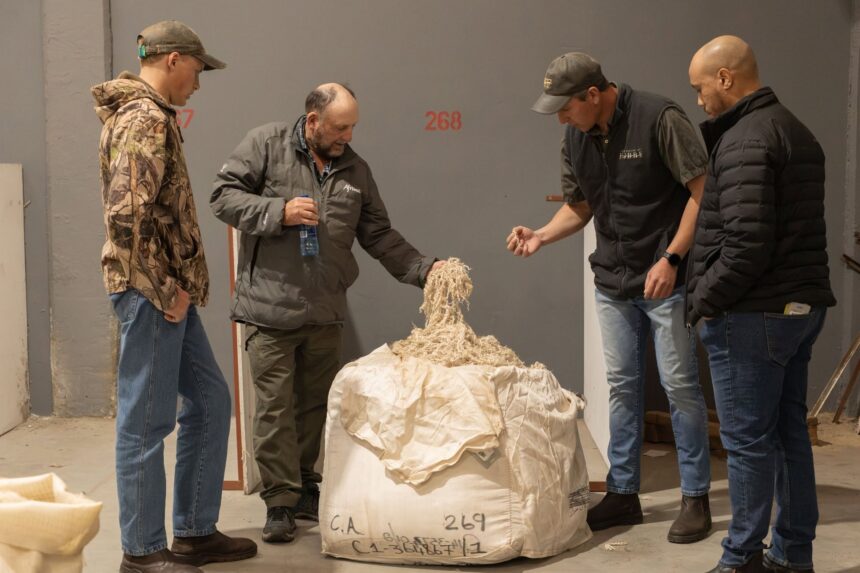
Mohair South Africa has given farmers a closer look at what happens to their fibre after it leaves the farm through an industry tour that followed mohair across the value chain. The tour provided farmers with an opportunity to see how raw mohair moves through different stages before becoming yarn and finished products. Participants visited brokers, the Wool Testing Bureau, buyers, processors, spinners and weavers to better understand the people, skills and systems involved in the industry. This practical experience helped connect the work farmers do on their farms with the processes that determine how their mohair reaches markets around the world. By bringing farmers closer to the full value chain, the tour reinforced the importance of collaboration, quality and shared responsibility within South Africa’s mohair industry.
For mohair farmers, the journey begins long before the fibre reaches a broker or processor. Careful farming practices, animal management and harvesting all influence the quality of the fibre that eventually enters the market. Once the mohair leaves the farm, however, farmers may have limited visibility of the steps that follow. The industry tour helped close that gap by allowing farmers to see how their fibre is handled, assessed and transformed at different stages. Understanding what happens after the farm can give producers a stronger appreciation of how their production decisions contribute to the final product.
The first stages of the tour focused on the role of brokers within the mohair value chain. Brokers play an important role in connecting producers with buyers and facilitating the movement of fibre through the market. Their work involves handling, presenting and marketing mohair while helping ensure that the product reaches appropriate buyers. For farmers, seeing this process firsthand provided insight into how their bales move from farm production into a commercial marketplace. It also demonstrated why consistency and quality remain important when farmers want their fibre to perform well in a competitive industry.
The Wool Testing Bureau was another important stop during the tour because testing and classification help establish the characteristics and quality of mohair. Fibre testing provides information that can be used by industry participants when buying, processing and manufacturing the product. For farmers, understanding this stage can provide useful insight into why characteristics such as fibre quality and consistency matter throughout the value chain. The testing process forms part of the systems that help buyers and processors make informed decisions about the fibre they purchase. It also reinforces the connection between production practices on the farm and the commercial value of the resulting mohair.
The tour then introduced farmers to buyers and processors who work with the fibre after it enters the market. These businesses play a key role in determining how raw mohair is prepared for further manufacturing and how it is used in different applications. Processing requires specialised knowledge and equipment to prepare the fibre for subsequent stages of production. Seeing these operations allowed farmers to understand that the raw material they produce requires significant expertise before it becomes suitable for use in consumer products. It also highlighted the importance of maintaining quality throughout each stage of handling and processing.
Spinners and weavers formed another important part of the journey, showing farmers how processed mohair is transformed into materials that can ultimately become finished products. Spinning converts prepared fibres into yarn, while weaving can turn yarn into fabrics and other materials. These processes require specialised skills and careful attention to factors such as fibre characteristics, yarn quality and production requirements. Seeing the transformation from raw fibre to yarn and fabric can help farmers appreciate the technical expertise involved in bringing mohair to consumers. It also provides a clearer understanding of how their work contributes to a much larger manufacturing and commercial system.
The journey demonstrates that every role player in the mohair value chain has a responsibility to protect the quality and reputation of the industry. Farmers produce the raw fibre, but brokers, testers, buyers, processors, spinners and weavers all contribute to its eventual market value. If quality is compromised at any stage, it can affect the final product and the reputation of South African mohair. Maintaining high standards therefore requires cooperation across the entire chain. The industry tour helped make this shared responsibility visible by allowing farmers to observe the different stages for themselves.
The experience also created opportunities for farmers and industry partners to connect directly. Face-to-face engagement can help people working in different parts of the value chain understand the challenges and priorities faced by others. Farmers can gain insight into what buyers and processors require, while industry partners can learn more about the realities of production at farm level. These conversations can contribute to stronger relationships and better communication throughout the sector. A well-connected value chain can respond more effectively to challenges and identify opportunities for improving the competitiveness of South African mohair.
The tour also highlighted the importance of skills within the mohair industry. Producing and processing high-quality mohair requires specialised knowledge at every stage, from animal husbandry and fibre production to testing, processing, spinning and weaving. Many of these skills are developed through experience and technical training. By exposing farmers to the wider industry, the tour helped demonstrate the range of expertise that supports South African mohair. It also showed that agriculture and fibre production can create opportunities across a broader value chain that includes manufacturing, technical services and international trade.
For farmers, understanding the full journey of mohair can also influence how they view their own role in the industry. The fibre produced on a farm does not simply become a finished product after leaving the farm. It passes through a network of people and businesses that rely on the quality of the original material. This means farmers remain an important part of a much larger production system, even when they are not directly involved in later stages. Recognising this connection can encourage greater attention to quality and strengthen farmers’ sense of participation in the broader mohair industry.
South African mohair has an established position in international markets, making the performance of the entire value chain important to the industry’s future. Maintaining buyer confidence requires reliable quality, strong relationships and effective processes from production through to manufacturing. Farmers and industry partners therefore have a shared interest in protecting the reputation of the fibre and ensuring that it continues to meet market expectations. Opportunities to see the complete value chain can help strengthen this understanding and encourage closer cooperation. The industry tour provided a practical way of building that connection while celebrating the work that goes into producing South African mohair.
Mohair South Africa’s industry tour offered farmers valuable insight into what happens to their fibre after it leaves the farm. From brokers and testing facilities to buyers, processors, spinners and weavers, participants were able to see how each stage contributes to transforming raw mohair into yarn and finished products. The experience reinforced the fact that the strength of the industry depends on the combined efforts of everyone involved in the value chain. Creating more opportunities for farmers and industry partners to connect, exchange knowledge and understand each other’s roles can help build stronger relationships and maintain high standards. By recognising the contribution of every role player and taking pride in the journey from farm to global market, South Africa’s mohair industry can continue building a resilient and competitive future.
Join 'Farmers Mag' WhatsApp Channel
Get the latest Farming news and tips delivered straight to your WhatsApp
CLICK HERE TO JOIN