The Mpumalanga Department of Agriculture, Rural Development, Land and Environmental Affairs (DARDLEA) has taken an important step towards strengthening agricultural development and food security by partnering with the University of Mpumalanga and a research unit from China to investigate the potential for rice production in the Nkangala District. The collaboration brings together local and international expertise with the shared goal of identifying suitable areas for rice cultivation and providing scientific insights that can benefit farmers across the province. As global demand for food continues to rise and climate challenges affect traditional farming practices, research-driven agricultural solutions have become increasingly important for ensuring sustainable food production.
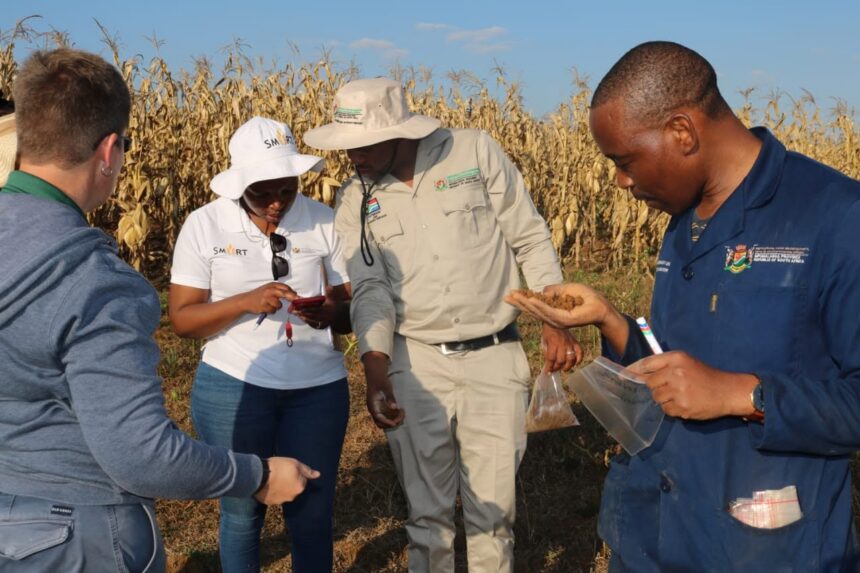
The joint research team has already begun extensive fieldwork across several municipalities in the Nkangala District. Researchers have visited a number of farms to gather valuable data that will help determine whether the region can support successful rice production. The team collected soil samples from various locations, including Roodepoort, Rietvalei, Syferfontein, Haartebeespruit, Boschkloof, Wonderhoek and Lefiso. These samples will undergo detailed analysis to assess critical factors such as soil composition, nutrient levels and overall suitability for rice cultivation. The information gathered will provide a scientific foundation for future agricultural planning and decision-making.
In addition to soil analysis, the research team is evaluating climate conditions and water availability across the selected sites. Rice farming requires specific environmental conditions to achieve optimal yields and maintain high crop quality. Researchers are therefore examining rainfall patterns, temperature ranges, water resources and irrigation potential in the region. Understanding these factors is essential because they directly influence the growth, productivity and sustainability of rice crops. The comprehensive assessment will help identify locations where rice farming can be introduced or expanded with the greatest chance of long-term success.
The partnership demonstrates the growing importance of international cooperation in agricultural research. By combining the expertise of the University of Mpumalanga with the technical knowledge and research experience of the Chinese research unit, the project benefits from a diverse range of scientific perspectives and methodologies. China has extensive experience in rice production and agricultural innovation, making its involvement particularly valuable for a project focused on exploring new farming opportunities. The collaboration also creates opportunities for knowledge sharing, capacity building and the development of innovative farming practices that can benefit local communities and farmers.
One of the primary objectives of the research project is to identify new opportunities for agricultural diversification within Mpumalanga. Expanding rice production could offer farmers an alternative crop that may contribute to increased income and improved resilience against market and environmental challenges. Diversification is often viewed as a key strategy for reducing agricultural risks because it allows farmers to spread production across different crops and income streams. The findings from the research could help determine whether rice farming can become a viable commercial activity in parts of the province. If successful, the initiative could open new economic opportunities for both emerging and established farmers.
The project also has significant implications for food security in South Africa. As populations grow and food demand increases, identifying new areas suitable for crop production becomes increasingly important. Rice is a staple food consumed by millions of people around the world and plays a major role in global food systems. Producing more rice locally could contribute to reducing reliance on imports while strengthening domestic food production capacity. Scientific research such as this helps ensure that agricultural expansion is based on evidence and sustainability rather than speculation, increasing the likelihood of successful outcomes for farmers and consumers alike.
The ongoing research in the Nkangala District represents a forward-looking approach to agricultural development in Mpumalanga. Through the partnership between DARDLEA, the University of Mpumalanga and the Chinese research unit, valuable scientific data is being gathered to determine the suitability of various sites for rice cultivation. The collection and analysis of soil, climate and water data will provide critical insights that can guide future farming decisions and agricultural investment. Beyond exploring rice farming opportunities, the project highlights the role of research, innovation and collaboration in addressing food security challenges and supporting sustainable agricultural growth. The results of this initiative could help shape the future of crop production in Mpumalanga while creating new opportunities for farmers and rural communities throughout the province.
Join 'Farmers Mag' WhatsApp Channel
Get the latest Farming news and tips delivered straight to your WhatsApp
CLICK HERE TO JOIN