

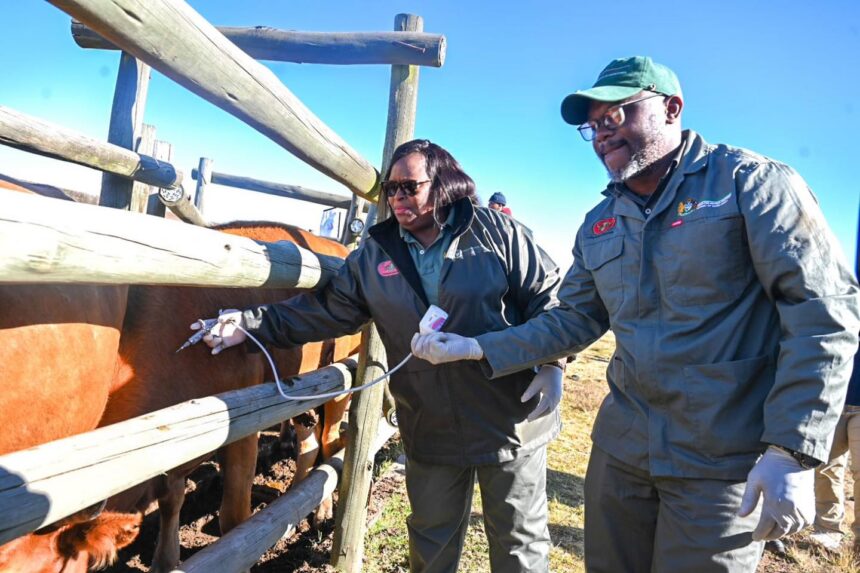
The KwaZulu-Natal Department of Agriculture and Rural Development has reached another important milestone in its province-wide Foot-and-Mouth Disease (FMD) mass vaccination campaign after successfully completing vaccination operations in the uThukela District. The achievement marks the seventh district to be fully covered since the campaign began on 26 February 2026, reflecting the province’s determination to protect its livestock industry from one of the most serious animal diseases affecting cattle. Veterinary services teams have continued working closely with livestock owners across KwaZulu-Natal to ensure that as many animals as possible receive the vaccine. The campaign has relied on coordinated planning, strong community participation and the dedication of veterinary professionals who have travelled across districts to reach farming communities. As vaccination efforts continue, the province is moving closer to achieving its target of protecting the majority of its cattle population against the disease.
During the vaccination campaign in uThukela District, veterinary teams successfully inoculated 204,000 cattle against Foot-and-Mouth Disease across 310 dip tanks. This figure exceeds the district’s official cattle census of 196,000 animals, highlighting the strong response and cooperation from livestock farmers throughout the district. The high vaccination turnout demonstrates growing awareness among cattle owners about the importance of disease prevention and protecting livestock health. Farmers played an essential role by presenting their animals for vaccination and working alongside veterinary teams to ensure smooth operations. Such participation is critical in reducing the spread of infectious livestock diseases and strengthening animal health across the province.
The vaccination figures show strong participation across all three local municipalities within uThukela District. A total of 50,000 cattle were vaccinated in the oKhahlamba Local Municipality, while iNkosi Langalibalele Local Municipality recorded 73,000 vaccinated animals. Alfred Duma Local Municipality accounted for the largest number, with 81,000 cattle receiving the vaccine during the campaign. These results reflect the collective efforts of veterinary personnel, local authorities and farming communities working together toward a common objective. Successfully reaching livestock across multiple municipalities required careful coordination, efficient logistics and continuous communication between officials and farmers.
Foot-and-Mouth Disease remains one of the most economically significant livestock diseases because of its ability to spread rapidly among cloven-hoofed animals such as cattle, sheep, goats and pigs. Although the disease does not generally pose a major public health risk, outbreaks can have severe consequences for livestock production, trade and rural economies. Infected animals often experience fever, mouth sores, lameness and reduced productivity, leading to financial losses for farmers. Restrictions on the movement of animals and livestock products during outbreaks can further disrupt agricultural businesses and limit market access. Preventing outbreaks through vaccination therefore remains one of the most effective strategies for protecting both livestock and the agricultural economy.
Mass vaccination campaigns form a vital component of disease control because they reduce the number of susceptible animals within the livestock population. As more cattle receive protection against Foot-and-Mouth Disease, the risk of widespread transmission decreases significantly. Vaccination also helps protect neighbouring farms by limiting opportunities for the virus to spread between herds. Combined with movement control measures, surveillance and ongoing veterinary monitoring, vaccination strengthens the province’s overall disease management strategy. These integrated efforts help safeguard livestock production while maintaining confidence in South Africa’s agricultural sector.
KwaZulu-Natal MEC for Agriculture and Rural Development, Mrs Thembeni kaMadlopha-Mthethwa, praised the veterinary services teams for their commitment throughout the campaign. She acknowledged the dedication shown by officials who have worked tirelessly since the campaign began and credited their efforts with the significant progress achieved so far. According to the MEC, the province is steadily moving toward its vaccination target of covering approximately 80 percent of KwaZulu-Natal’s cattle population. She expressed confidence that the campaign remains on schedule and that the remaining work will be completed within the planned six-month timeframe ending in August. Her remarks reflected optimism that the province is making meaningful progress in controlling Foot-and-Mouth Disease.
Since the campaign started, veterinary teams have completed vaccination operations in seven districts across KwaZulu-Natal. These include uGu, Harry Gwala, uMkhanyakude, Zululand, uMgungundlovu, eThekwini and now uThukela. Collectively, these efforts have resulted in just over 52 percent of the province’s cattle population being vaccinated against Foot-and-Mouth Disease. Reaching more than half of the provincial herd represents an important milestone in one of the largest livestock disease control initiatives undertaken in the province. Continued progress will depend on maintaining strong collaboration between government officials, veterinary teams and livestock owners.
Despite the significant progress already achieved, vaccination work continues as four districts remain to be covered before the campaign reaches completion. The remaining districts include King Cetshwayo, iLembe, uMzinyathi and Amajuba. Veterinary services teams are expected to resume vaccination operations simultaneously in King Cetshwayo and iLembe districts on 22 July 2026. Conducting vaccinations in multiple districts at the same time will help maintain the campaign’s momentum while ensuring that the province remains on track to meet its vaccination targets. Careful planning and continued farmer participation will be essential as the campaign enters its final stages.
The success of the vaccination campaign also highlights the importance of strong partnerships between government veterinary services and livestock farmers. Disease control programs achieve the greatest impact when farmers actively participate by presenting their animals for vaccination and complying with animal health regulations. Extension officers, veterinary professionals and local agricultural officials continue to play an important role in educating producers about disease prevention and responsible livestock management. Their combined efforts help improve biosecurity while strengthening the resilience of the livestock sector against future disease threats. Ongoing communication and trust between farming communities and veterinary authorities remain essential for sustaining long-term animal health.
The completion of vaccination operations in uThukela District marks another significant achievement in KwaZulu-Natal’s fight against Foot-and-Mouth Disease. Vaccinating more than 204,000 cattle and exceeding the district’s cattle census demonstrates the strong commitment shown by farmers and veterinary services alike. With seven districts now fully covered and more than half of the province’s cattle vaccinated, the campaign continues to make substantial progress toward its overall target. As vaccination teams prepare to continue operations in the remaining districts, their work will remain critical in protecting livestock, supporting rural livelihoods and safeguarding the agricultural economy. The continued cooperation between government, veterinary professionals and farmers provides a strong foundation for successfully completing the campaign and strengthening animal health across KwaZulu-Natal.
Join 'Farmers Mag' WhatsApp Channel
Get the latest Farming news and tips delivered straight to your WhatsApp
CLICK HERE TO JOIN




