Groundnut farming in South Africa plays an important role in food production, income generation, and soil health improvement for many farming communities. Groundnuts, also known as peanuts, are a high value crop used for oil extraction, direct consumption, and animal feed production. Farmers across dryland and semi-arid regions grow groundnuts because the crop performs well under warm conditions with moderate rainfall. Demand for groundnuts remains strong in both local and export markets, which makes it a reliable cash crop when managed correctly. Successful production depends on good planning, proper soil preparation, and consistent crop management practices throughout the season. Farmers who follow recommended guidelines can achieve stable yields and reduce production risks. This guide explains the key steps needed to grow groundnuts successfully in South Africa.
Groundnuts grow best in warm climates with well distributed rainfall during the growing season. In South Africa, ideal regions include parts of Limpopo, North West, Mpumalanga, and the Free State where temperatures are consistently warm. The crop prefers sandy loam soils that drain well and allow pods to develop underground without obstruction. Heavy clay soils should be avoided because they restrict pod formation and increase disease risk. Soil pH should ideally range between 5.5 and 6.5 to support healthy root development and nutrient uptake. Groundnuts are sensitive to waterlogging, so fields must have good drainage to prevent root rot and yield loss. A frost free growing period of at least 120 to 150 days is required for most varieties to reach maturity.
Land preparation is a critical step in groundnut farming because it determines seed germination and early plant development. Farmers should plough the land deeply to break compacted soil layers and improve root penetration. A fine seedbed is important because groundnut seeds require good soil contact for uniform germination. Crop rotation is strongly recommended to reduce disease buildup and improve soil fertility. Common rotations include maize, sorghum, and small grains. Certified seed should always be used to ensure good germination rates and disease free plants. Popular varieties in South Africa include Sellie, JL 24, and local adapted cultivars that perform well under dryland conditions. Seed quality directly affects yield potential, so farmers should avoid using damaged or untreated seed.
Planting groundnuts at the right time improves establishment and yield outcomes. The best planting period in South Africa is usually from October to December depending on rainfall onset. Seeds should be planted at a depth of about 5 to 7 centimetres to ensure proper moisture access and germination stability. Spacing between rows typically ranges from 45 to 75 centimetres while plant spacing within rows ranges from 10 to 15 centimetres. Proper spacing reduces competition for nutrients, light, and water. Farmers should aim for a plant population that balances yield potential and field conditions. Light rainfall or irrigation is needed immediately after planting to support germination. Weed control should begin early to prevent competition during the critical establishment stage.
Crop management during the growing season determines final yield and quality. Groundnuts require consistent weed control, especially during the first six weeks after emergence. Farmers can use mechanical weeding or approved herbicides depending on production systems. Nutrient management should focus on phosphorus and calcium because these elements support pod formation and kernel development. Excessive nitrogen should be avoided because it encourages leaf growth at the expense of pod production. Common pests include aphids, leaf miners, and termites, which can reduce plant vigor if not controlled early. Diseases such as leaf spot and rust can affect yield and should be managed using resistant varieties and timely fungicide applications. Regular field monitoring helps farmers identify problems before they become severe.
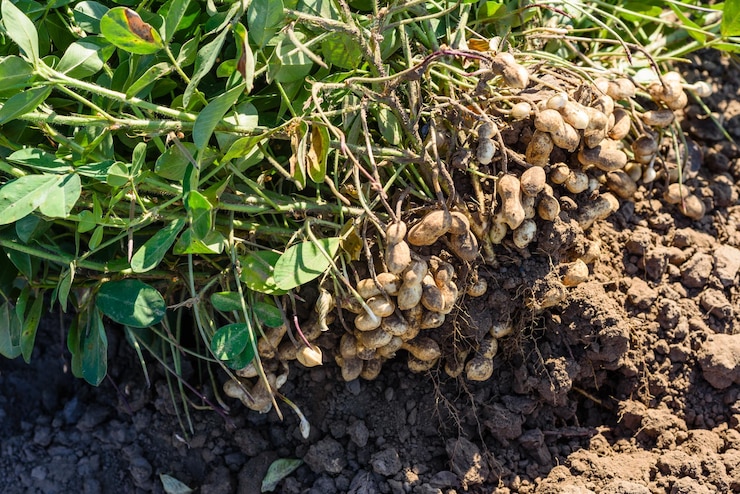
Harvesting groundnuts at the correct time is essential for quality and market value. The crop is usually ready for harvest when leaves begin to yellow and pods reach full maturity. Harvesting too early reduces yield while late harvesting increases pod losses in the soil. Plants are typically lifted manually or mechanically and then dried in windrows before shelling. Proper drying is important to reduce moisture content and prevent fungal contamination. Aflatoxin contamination is a major concern in groundnut production and occurs when crops are exposed to high moisture and poor storage conditions. Farmers should ensure pods are dried to safe moisture levels before storage. Clean storage facilities with good ventilation help maintain quality and extend shelf life.
Groundnut farming offers strong economic potential when managed with care and attention to detail. The crop supports both small scale and commercial farmers by providing income and improving soil fertility through nitrogen fixation. Average yields in South Africa vary widely but can range from 1 to 3 tons per hectare under good management practices. Market opportunities include direct sales to processors, local markets, and oil extraction industries. Farmers who focus on soil health, pest control, and proper harvesting techniques can achieve consistent production results. Groundnuts also contribute to food security by providing a protein rich food source for households. With proper planning and disciplined farming practices, groundnut production can become a stable and profitable agricultural enterprise in South Africa.
Join 'Farmers Mag' WhatsApp Channel
Get the latest Farming news and tips delivered straight to your WhatsApp
CLICK HERE TO JOIN