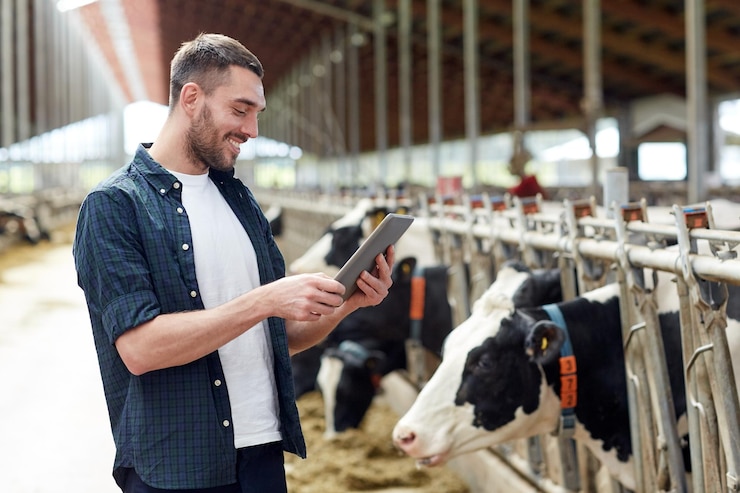
The agricultural sector in South Africa is undergoing significant transformation as technology becomes increasingly important in improving productivity, sustainability, and profitability. One of the most promising developments in modern agriculture is Precision Livestock Farming, a management approach that uses technology and data to monitor, manage, and optimize livestock production. As farmers face growing challenges related to climate change, rising input costs, animal health concerns, and market demands, precision livestock farming offers practical solutions that support informed decision-making. By collecting and analyzing real-time information about animals and farm operations, producers can improve efficiency while maintaining high standards of animal welfare. This innovative approach is gradually becoming an important part of the future of livestock farming in South Africa.
Precision Livestock Farming, often referred to as PLF, involves the use of advanced technologies such as sensors, automated monitoring systems, data analytics, artificial intelligence, and digital record-keeping tools. These technologies help farmers track various aspects of animal performance, including feeding patterns, growth rates, health status, reproduction, and movement. Instead of relying solely on visual observation, farmers can access accurate data that provides a deeper understanding of the condition of individual animals and entire herds. This allows problems to be identified earlier and addressed before they become serious. As a result, farmers can improve productivity while reducing losses caused by disease, poor nutrition, or management inefficiencies.
Animal health management is one of the key areas where precision livestock farming delivers significant benefits. Wearable sensors, electronic identification tags, and automated monitoring systems can detect changes in behaviour that may indicate illness or stress. These technologies can alert farmers when an animal is eating less, moving differently, or showing signs of potential health problems. Early detection allows for quicker intervention, reducing treatment costs and improving recovery outcomes. In large livestock operations, where monitoring every animal individually can be difficult, these systems provide valuable support for farm managers and veterinary professionals. Improved health monitoring also contributes to better animal welfare, which is becoming increasingly important to consumers and international markets.
Precision livestock farming also plays a major role in improving feed management and production efficiency. Feed represents one of the largest expenses in livestock farming, making efficient feeding strategies essential for profitability. Modern feeding systems can measure feed intake, monitor growth performance, and adjust feeding programs based on the specific needs of individual animals or groups. This helps reduce waste while ensuring animals receive optimal nutrition. Better feed efficiency not only lowers production costs but also contributes to environmental sustainability by reducing the resources required to produce livestock products. In South Africa, where feed costs can fluctuate significantly due to droughts and market conditions, such efficiencies can provide a valuable competitive advantage.
Reproductive management is another area where precision technologies are making a difference. Advanced monitoring systems can identify signs of heat, track breeding cycles, and provide data that supports better reproductive planning. This helps farmers improve conception rates and reduce the time required to identify breeding opportunities. More efficient reproduction leads to improved herd performance and increased productivity over time. Accurate reproductive records also support long-term genetic improvement programs by helping farmers make informed breeding decisions. For commercial livestock operations, these improvements can have a significant impact on profitability and sustainability.
South Africa’s livestock industry is diverse, including cattle, sheep, goats, pigs, and poultry production across different climatic regions. Precision livestock farming technologies can be adapted to suit various production systems, from intensive commercial farms to certain semi-intensive operations. While the initial investment in technology can be a challenge for some farmers, the long-term benefits often outweigh the costs through improved productivity, reduced losses, and better resource management. As technology becomes more accessible and affordable, adoption rates are expected to increase across the agricultural sector. Government support, industry partnerships, and agricultural training programs can also play an important role in encouraging wider implementation.
Data management is a critical component of precision livestock farming. The information collected through sensors and monitoring devices must be organized, analyzed, and used effectively to support decision-making. Farmers who embrace data-driven management gain a clearer understanding of their operations and can identify trends that might otherwise go unnoticed. This allows for more accurate planning, better risk management, and improved financial performance. The ability to make decisions based on real-time information rather than assumptions gives producers a stronger foundation for long-term success. As digital agriculture continues to expand, data literacy will become an increasingly valuable skill for livestock farmers.
Precision livestock farming represents a significant opportunity for the future of South African agriculture. By combining technology with traditional farming knowledge, producers can improve animal health, increase efficiency, reduce costs, and strengthen sustainability. The approach enables farmers to respond more effectively to modern challenges while meeting the growing demand for high-quality livestock products. Although adoption may require investment and training, the potential benefits are substantial for farms of various sizes and production systems. As technology continues to evolve and become more accessible, precision livestock farming is likely to play an increasingly important role in shaping a productive and resilient livestock sector in South Africa.
Join 'Farmers Mag' WhatsApp Channel
Get the latest Farming news and tips delivered straight to your WhatsApp
CLICK HERE TO JOIN