

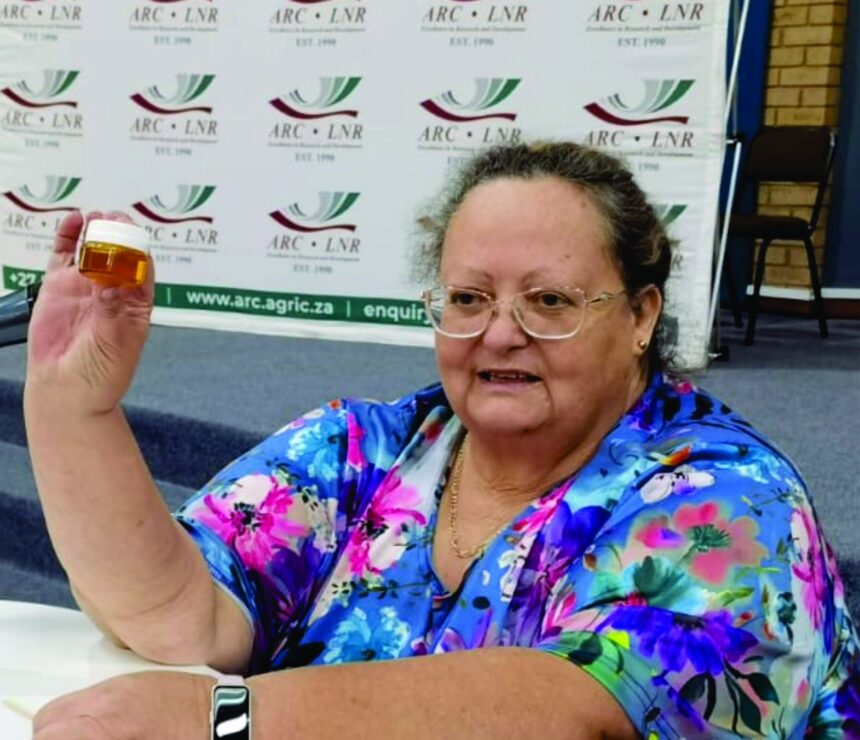
Today, the Gauteng Department of Agriculture and Rural Development, known as GDARD, joined forces with the national Department of Agriculture and the Agricultural Research Council to host a virtual World Bee Day webinar focused on the future of pollinators in agriculture. The event highlighted the growing importance of bees in food production, environmental balance, and rural economic development. It brought together scientists, commercial agro-processors, educators, and small scale beekeepers to share knowledge and practical solutions. The discussions were framed under the global theme “Bee Together for People and Planet – A Partnership that Sustains Us All.” This theme reinforced the idea that pollinator protection is not optional, but essential for long term food security and biodiversity.
The webinar was guided by Programme Director Ms Lorato Matthews, Director of Research and Technology Development Services at GDARD, who ensured smooth engagement between speakers and participants. A key moment came during the opening address delivered by GDARD’s Head of Department, Ms Andiswa Jass, who used the platform to outline strategic priorities for the province’s beekeeping development efforts. She emphasized the importance of protecting pollinator habitats in Gauteng and strengthening systems that support sustainable agricultural growth. Her message focused on building a stronger green economy that includes both large scale producers and emerging beekeepers. She also highlighted the role of beekeeping in job creation, environmental protection, and rural development. The department’s leadership message placed bees at the centre of agricultural sustainability planning.
Technical and policy discussions formed a major part of the programme, with contributions from multiple experts across government, research, and industry. Mr Kgabo Matlala from the national Department of Agriculture outlined regulatory frameworks that guide beekeeping in South Africa and explained how these policies protect both producers and ecosystems. From a research perspective, Ms Elize Lundall-Magnuson of the Agricultural Research Council shared scientific insights into bee behaviour, colony health, and conservation challenges facing pollinators. Her presentation highlighted how research supports better hive management and improves survival rates in changing environmental conditions. These scientific and regulatory perspectives helped participants understand how policy and research work together to sustain the sector. The discussions showed that strong coordination between institutions is key to protecting pollinator populations.
Practical guidance was also a central focus, aimed at helping beekeepers and farmers apply knowledge directly in the field. Mr Charles Vester, a horticulturalist and beekeeper, provided advice on selecting bee friendly plants suitable for Gauteng’s climate, helping participants understand how vegetation choices impact hive productivity. Ms Ofentse Sehloho, representing The Buzzing Brood, focused on youth education and explained how early learning about bees can build long term environmental awareness. Commercial beekeeper and agro processor Mr Kai Hichert shared practical experience on honey extraction, bottling, and preparing products for competitive markets. These sessions gave participants a full view of the value chain, from hive management to market readiness. The combination of science, education, and entrepreneurship made the event highly practical for both new and experienced beekeepers.
The webinar concluded with an interactive question and answer session that allowed participants to engage directly with experts and clarify technical and business challenges. Mr Motlatjo Makaepea, Chief Director of Agro processing Research and Economic Services at GDARD, delivered the official vote of thanks and emphasized the importance of continued collaboration. The event demonstrated how government, research institutions, and industry can work together to strengthen the beekeeping sector. It also reinforced the role of bees in supporting food production, biodiversity, and rural livelihoods across South Africa. Through coordinated action and shared knowledge, GDARD and its partners continue to promote a more sustainable agricultural future where pollinators remain central to ecosystem health and economic growth.
Join 'Farmers Mag' WhatsApp Channel
Get the latest Farming news and tips delivered straight to your WhatsApp
CLICK HERE TO JOIN




