

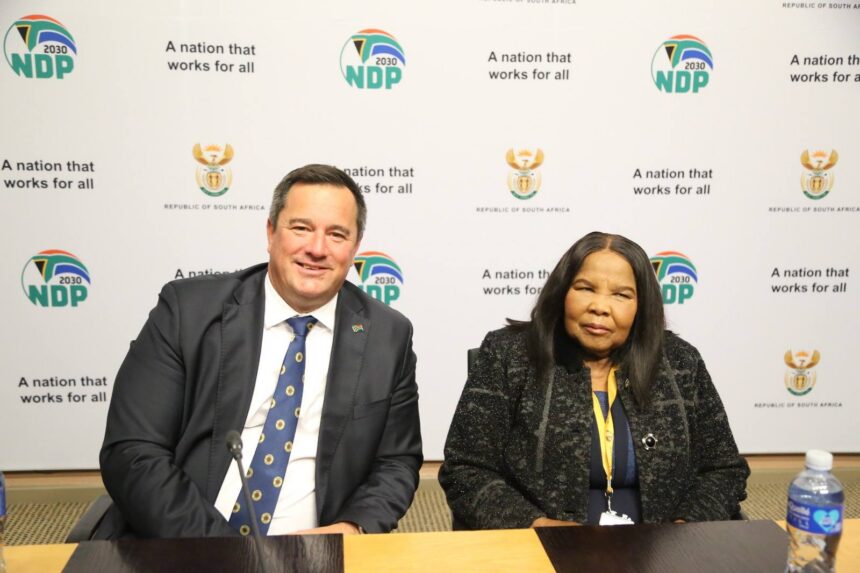
The 2026/27 Budget Vote for the Department of Agriculture, delivered by Minister John Steenhuisen in the National Assembly of the Parliament of the Republic of South Africa, presents a decisive roadmap for strengthening the country’s agricultural sector. The speech highlights a sector that is no longer standing at the margins of the economy but increasingly positioned at the centre of national growth, food security, and export expansion. It reflects both progress achieved and the structural challenges that still require urgent attention. Agriculture in South Africa continues to demonstrate resilience despite global market volatility, climate pressures, and cost constraints affecting farmers. The budget speech sets a clear tone of transformation, focusing on inclusion, industrialisation, and long-term sustainability.
A key highlight of the address is the strong performance of South Africa’s agricultural exports, which reached R268.7 billion in the fourth quarter of 2025. This represents year-on-year growth of approximately 9 percent and a trade surplus of R24.6 billion in the same period, supporting nearly 950,000 jobs across the value chain. While primary agriculture contributes about 2.8 percent to GDP, the broader agro-processing and value chain sector accounts for roughly 14 percent of economic activity. This multiplier effect underscores the importance of agriculture as a driver of employment and economic stability. The Minister emphasized that the sector must now focus on ensuring that growth translates into meaningful benefits for farmers, farm workers, and rural communities.
The speech also highlights South Africa’s expanding global market presence, particularly in citrus exports. Through improved trade protocols, especially with the People’s Republic of China, the country has strengthened its export capacity. A significant milestone was achieved when South Africa surpassed Spain to become the world’s largest citrus exporter by volume, reaching 2.9 million tons in 2025. This achievement reflects both improved production systems and stronger international market access strategies. However, the Minister stressed that the real challenge lies in ensuring that export gains benefit the entire value chain, including smallholder farmers and emerging producers who often remain excluded from high-value markets.
Central to the government’s agricultural transformation strategy is the Agriculture and Agro-processing Master Plan (AAMP), which aims to coordinate government, industry, and labour around shared development goals. The plan is already showing measurable progress, with black participation in commercial agricultural value chains increasing from 11 percent to 13 percent. Growth has been most visible in horticulture, where structured support systems and coordinated interventions have enabled greater inclusion. However, the speech acknowledges that progress remains uneven across different commodities, particularly in staple crop production. The National Agricultural Marketing Council has also noted that value chain integration improves significantly where coordinated support systems are in place.
Access to finance remains one of the most important challenges facing the agricultural sector. The Minister highlighted the success of the Blended Finance Scheme, which has approved approximately R9.8 billion in funding since its establishment. This includes both grant and loan components that have supported 627 black commercial producers across multiple agricultural value chains. Partnerships with institutions such as the Industrial Development Corporation and the Land Bank have created thousands of jobs and expanded access to production capital. These financial interventions are designed to remove barriers that prevent emerging farmers from scaling their operations and entering competitive markets.
Food security and farmer support services remain the largest budget priority, with Programme Three receiving R3.2 billion. This funding supports extension services, training, and direct farmer assistance aimed at improving productivity and rural livelihoods. The Minister highlighted the importance of improving access to agricultural information, particularly for smallholder farmers who often lack timely data on weather, pests, and market conditions. To address this, the Department is exploring a hybrid extension model that combines traditional field services with digital platforms. This approach is intended to modernise service delivery while ensuring that farmers receive real-time, practical support.
Biosecurity, research, and natural resource management have also been prioritised under Programme Two, which receives R2.5 billion. A significant portion of this allocation is directed towards disease control, particularly Foot and Mouth Disease vaccination programmes. The Agricultural Research Council plays a key role in strengthening domestic vaccine production capacity, with new systems already producing large volumes of doses. Expansion efforts, including new fermentation infrastructure, will further increase production capacity and reduce reliance on external supply chains. These developments are critical for protecting the national herd and ensuring long-term livestock industry stability.
The speech also addresses climate risks, particularly the potential impact of an El Niño event forecast for mid-2026. Such conditions could negatively affect summer crop production and food security if not managed effectively. The Department is therefore strengthening early warning systems and promoting climate-resilient farming practices. These include improved irrigation management, drought-resistant crops, and better soil conservation methods. The emphasis on science-based planning reflects the growing need for agriculture to adapt to changing environmental conditions.
Industrial development through agriculture is another major focus area, particularly through the promotion of biofuels. The Minister noted that a 2 percent blending target could create approximately 25,000 jobs, mostly in rural areas. Biofuels are presented as a mechanism to absorb surplus grain production, stabilize prices, and support agro-processing growth. International examples from Brazil and India were referenced to highlight the importance of balancing energy production with food security considerations. South Africa’s approach will therefore require careful policy design to ensure both economic and food system stability.
Institutional reform and governance are also central to the agricultural transformation agenda. The Minister emphasized the need for strong oversight, independent boards, and accountability within agricultural state entities. These institutions are expected to play a critical role in delivering agricultural development programmes effectively. At the same time, the Department itself is undergoing structural transformation to become more efficient and better aligned with sector needs. This institutional strengthening is seen as essential for achieving long-term policy objectives.
The 2026/27 Agriculture Budget Vote outlines a clear and ambitious strategy for transforming South Africa’s agricultural sector into a more inclusive, productive, and globally competitive industry. It builds on strong export performance while addressing structural challenges such as inequality, limited access to finance, and climate vulnerability. The focus on value chain development, biosecurity, and agro-processing signals a shift towards a more integrated agricultural economy. With clear targets for job creation and value addition, the budget reflects a commitment to making agriculture a central pillar of national development. The direction is firmly set toward growth that is not only economic but also inclusive, sustainable, and capable of supporting future generations.
Join 'Farmers Mag' WhatsApp Channel
Get the latest Farming news and tips delivered straight to your WhatsApp
CLICK HERE TO JOIN




