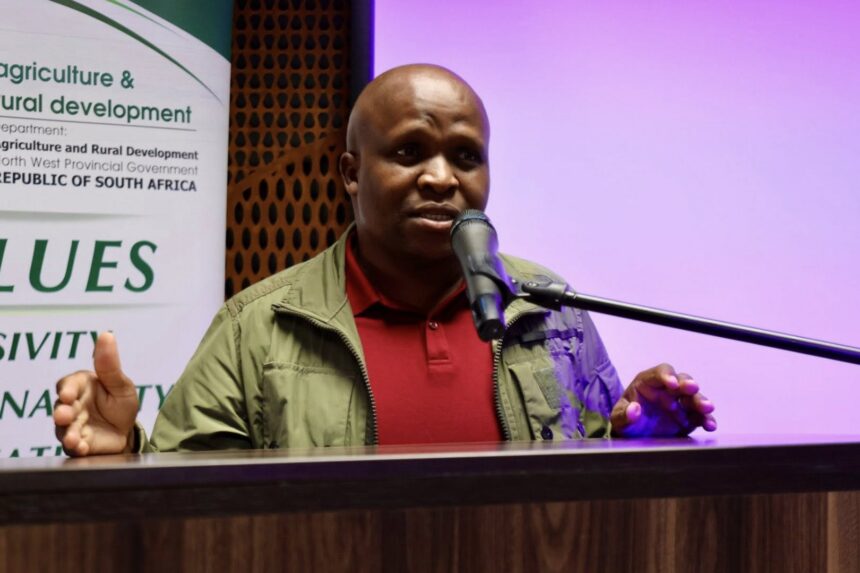
MEC Madoda Sambatha has taken a significant step toward strengthening agricultural development in the North West Province through a high level engagement with key stakeholders in the grain sector. The meeting, held at the NWK Training Centre in Lichtenburg, brought together NWK, Grain SA, Land Bank, Pannar, Grain PGP and grain farmers to discuss ways of improving coordination and enhancing farmer development programmes. The discussions focused on building a more integrated support system that ensures farmers receive consistent and effective assistance. This initiative comes at a time when the agricultural sector is under pressure to improve productivity, sustainability and inclusivity. The engagement highlighted the importance of collaboration in driving long term transformation within the grain industry.
A key focus of the meeting was the need to align existing farmer development programmes to avoid duplication and improve efficiency. Stakeholders agreed that fragmented efforts often reduce the impact of support initiatives and create gaps in service delivery. By coordinating programmes more effectively, resources can be used more efficiently and farmers can receive more structured support. The discussions emphasised the importance of designing practical solutions that respond directly to the needs of grain farmers. This includes training, input support, market access and financial assistance that are delivered in a more unified manner.
Participants also explored long term strategies to strengthen grain production in the North West Province and improve its competitiveness within South Africa’s agricultural landscape. The province is already recognised as part of the country’s maize triangle alongside the Free State and Mpumalanga, but stakeholders agreed that there is potential to expand its contribution further. Improving productivity, investing in infrastructure and supporting emerging farmers were identified as key priorities. The goal is to ensure that the province does not only maintain its current output but increases its role in national grain supply. This requires coordinated planning and sustained investment across the value chain.
Another important discussion point was the need to move beyond primary production and promote agro processing and value addition within the grain sector. Stakeholders noted that relying solely on raw grain production limits income opportunities and economic growth in rural areas. By developing local processing facilities, farmers can benefit from higher value markets and create additional employment opportunities. This approach also helps strengthen local economies by keeping more of the value chain within the province. The shift toward value addition is seen as a critical step in building a more resilient and competitive agricultural sector.
Grain SA provided important insights into the current state of farmer development in the country, highlighting that approximately 8.5 percent of black farmers are already operating at commercial production levels. This statistic reflects progress in transformation efforts but also underscores the need for continued support to ensure more farmers reach full commercial capacity. Stakeholders emphasised that many development projects fail to achieve their intended impact due to lack of follow through and insufficient integration. The focus must therefore shift toward ensuring that supported farmers operate productive and financially sustainable farming enterprises. This requires ongoing mentorship, access to markets and proper resource allocation.
The meeting also highlighted the importance of ensuring that farms supported through development programmes are fully utilised and not underperforming. Stakeholders noted that idle or partially productive farms reduce the effectiveness of agricultural investment and limit job creation potential. Strengthening extension services, improving access to inputs and providing technical support were identified as essential measures to improve farm performance. There was also agreement that monitoring and evaluation systems must be strengthened to track progress more effectively. This would ensure that development initiatives deliver measurable outcomes for farmers and rural communities.
In a significant development during the engagement, a Memorandum of Agreement was signed between Land Bank and Sibanye Stillwater to support farmer development initiatives. This partnership is expected to enhance access to financial support for farmers and promote sustainable agricultural growth within the sector. Land Bank’s role as a development finance institution, combined with private sector involvement from Sibanye Stillwater, creates new opportunities for investment in agriculture. The agreement reflects a growing recognition that public private partnerships are essential for driving agricultural transformation. It also strengthens efforts to support emerging farmers with the financial resources needed to expand their operations.
The collaboration between government, industry stakeholders and financial institutions represents a coordinated approach to addressing challenges in the grain sector. MEC Madoda Sambatha emphasised the importance of unity in ensuring that development programmes achieve meaningful impact. By working together, stakeholders can eliminate duplication, improve efficiency and deliver stronger outcomes for farmers. This approach is particularly important in rural areas where resources are often limited and support structures are fragmented. Strengthened partnerships are expected to improve both productivity and sustainability across the sector.
The engagement in Lichtenburg marks an important step in reshaping the future of grain farming in the North West Province. With a clear focus on coordination, commercialisation and value addition, stakeholders are working toward a more inclusive and competitive agricultural sector. The emphasis on supporting black farmers and ensuring full production capacity reflects broader national goals of transformation and economic growth. At the same time, the focus on agro processing highlights the need to move beyond traditional farming models. If successfully implemented, these initiatives could significantly strengthen the province’s role in South Africa’s grain industry and contribute to long term rural development.
Join 'Farmers Mag' WhatsApp Channel
Get the latest Farming news and tips delivered straight to your WhatsApp
CLICK HERE TO JOIN