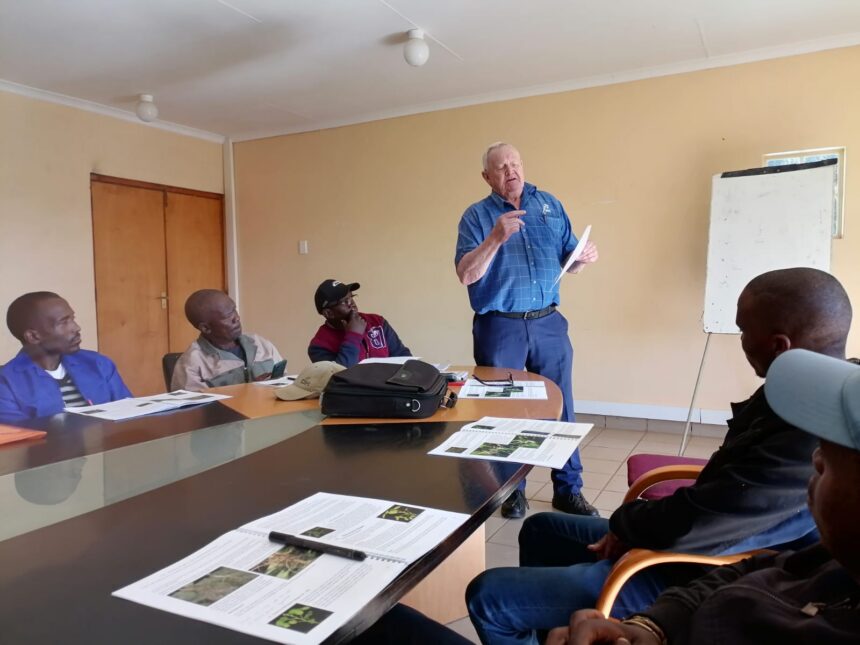
Across different regions, farmers are once again coming together through PGP Study Group meetings, creating structured spaces where knowledge sharing, practical training and peer learning take centre stage. These gatherings are helping farmers strengthen their technical and business skills in a way that directly supports long term agricultural sustainability. In many rural and farming communities, access to continuous training remains limited, which makes these study groups an important support system. Farmers use these meetings to ask questions, solve production challenges and improve their understanding of modern farming practices. The result is a growing network of informed producers who are better prepared to manage both risks and opportunities in agriculture.
The PGP Study Group sessions focus on practical, hands on topics that farmers can immediately apply in their daily operations. Key areas of training include boom sprayer calibration, safe chemical handling, soya production techniques, harvesting methods, storage practices and grading standards. Farmers also receive guidance on record keeping and budgeting, which are essential for running farming operations as businesses rather than informal activities. These topics are selected based on real challenges faced in the field, ensuring that each session delivers direct value to participants. By focusing on practical skills, the programme helps reduce production errors, improve yields and increase overall efficiency.
Boom sprayer calibration and safe chemical use are especially important because incorrect application can lead to crop damage, environmental harm and financial losses. Farmers are taught how to measure and adjust equipment correctly to ensure accurate application rates. This reduces waste and improves crop protection outcomes. Safe chemical handling practices also protect farmers, workers and surrounding communities from exposure risks. By reinforcing these skills, the study groups help create safer and more responsible farming environments. These lessons are particularly valuable for emerging farmers who may not have received formal agricultural training.
Soya production is another key focus area, as it remains an important crop for both local consumption and commercial markets. Farmers learn about soil preparation, planting density, fertiliser application and pest control specific to soya farming. Proper harvesting techniques are also discussed to reduce grain loss and maintain quality. Storage and grading practices are covered in detail to help farmers meet market standards and improve profitability. These sessions ensure that farmers understand the full production cycle from planting to post harvest handling. As a result, they are better positioned to meet buyer requirements and secure stable market access.
Record keeping and budgeting are critical components of the training because they help farmers treat agriculture as a structured business. Many farmers struggle to track input costs, labour expenses and income, which makes it difficult to measure profitability. Through PGP Study Group meetings, farmers are introduced to simple systems for recording farm activities and managing finances. This allows them to identify inefficiencies, plan better for future seasons and make informed investment decisions. Strong financial management also improves access to credit and funding opportunities. Over time, this builds more financially stable farming enterprises.
The importance of these meetings extends beyond technical training because they also strengthen collaboration and peer learning among farmers. Participants share experiences, discuss common challenges and exchange practical solutions that have worked in their own operations. This type of learning is especially valuable in farming communities where conditions can vary significantly from one region to another. Farmers benefit from hearing different perspectives and adapting ideas to suit their own circumstances. The group setting also encourages accountability and continuous improvement. It creates a support network that extends beyond formal training sessions.
Farming today requires far more than traditional planting and harvesting methods. It demands informed decision making, efficient production systems and strong business management skills to remain competitive. Climate variability, rising input costs and market fluctuations have increased the pressure on farmers to operate more strategically. The PGP Study Group approach addresses these challenges by equipping farmers with both technical knowledge and business understanding. This combination helps farmers reduce losses, improve productivity and build more resilient operations. It also supports long term sustainability in an increasingly complex agricultural environment.
Through continuous training and structured peer learning, PGP is contributing to the development of more skilled and confident farmers across different regions. The programme supports its broader strategic goal of empowering farmers with the knowledge, tools and support needed to build profitable and sustainable agricultural enterprises. As farmers continue to engage in these study groups, they gain not only technical expertise but also the confidence to apply modern farming practices effectively. This leads to stronger yields, better resource management and improved financial outcomes. The ongoing success of these meetings shows the value of consistent learning in driving agricultural transformation and long term sector growth.
Join 'Farmers Mag' WhatsApp Channel
Get the latest Farming news and tips delivered straight to your WhatsApp
CLICK HERE TO JOIN