The National Department of Agriculture recently hosted a two-day National Resource Management Working Group meeting in the North West Province, bringing together delegates from the national government and all nine provinces to focus on sustainable land management and agricultural innovation. The event was hosted under the LandCare Programme, with the North West Department of Agriculture and Rural Development, commonly known as DARD, serving as the provincial host. The gathering highlighted the importance of protecting grazing land, improving agricultural productivity and supporting farmers facing environmental challenges. One of the key focus areas during the visit was the growing threat of Bankrupt Bush, an invasive shrub that continues to reduce grazing capacity across many farming regions. Delegates had the opportunity to visit a farm in Derby where they observed firsthand the serious impact the plant has on grazing land and livestock farming operations. The meeting also showcased how government departments, research institutions and universities are working together to turn environmental challenges into economic opportunities for farmers and rural communities.
The visit to the Derby farm gave delegates a practical understanding of how invasive species such as Bankrupt Bush affect agricultural land and food production. Farmers in affected regions continue to struggle as the shrub spreads rapidly across grazing areas, limiting the availability of nutritious grass for livestock. The dense growth of Bankrupt Bush reduces carrying capacity, making it difficult for farmers to sustain healthy herds and maintain productivity. This issue has become a serious concern in parts of the North West Province where livestock farming remains an important source of income and food security. Delegates observed how the shrub competes with natural vegetation and contributes to land degradation if left unmanaged. The field visit formed an important part of the working group discussions because it allowed officials and stakeholders to connect policy discussions with the realities faced by farmers on the ground.
Through the LandCare Programme, DARD has been supporting farmers with de-bushing initiatives aimed at controlling and reducing the spread of Bankrupt Bush. These initiatives are designed to restore grazing land, improve veld conditions and support sustainable livestock farming. Mechanical clearing and land rehabilitation efforts have already started in several affected areas, helping farmers regain access to productive grazing spaces. The LandCare Programme continues to play an important role in promoting environmental conservation while supporting agricultural development in rural communities. Officials at the event highlighted that restoring degraded land is essential for long-term food production and economic stability in farming regions. The programme also creates temporary employment opportunities for local communities involved in clearing operations and land restoration projects.
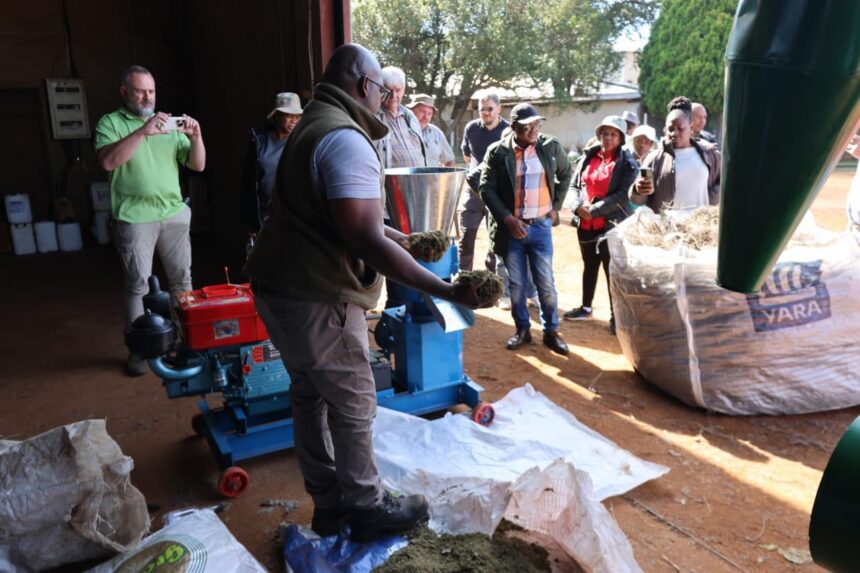
One of the most significant developments presented during the working group meeting was the partnership between DARD and the Agricultural Research Council, also known as ARC. Researchers are exploring innovative ways to process Bankrupt Bush into animal feed as part of ongoing scientific research. Instead of treating the shrub only as an environmental problem, researchers are now investigating its potential economic value within the agricultural sector. Early research efforts focus on determining how the plant can be safely processed and incorporated into livestock feed without compromising animal health. This approach could help farmers reduce feed costs while also contributing to invasive plant management efforts. By converting unwanted vegetation into a useful agricultural product, the initiative demonstrates how research and innovation can create practical solutions for farmers dealing with environmental challenges.
The collaboration between DARD and the Tshwane University of Technology, commonly known as TUT, has also attracted attention because of its focus on agro-processing and renewable energy solutions. The university is working with DARD to convert Bankrupt Bush into briquettes that can be used for braai and cooking purposes. This initiative introduces a new commercial opportunity that could benefit local entrepreneurs and farming communities. Briquettes made from invasive plants could provide an affordable alternative fuel source while helping reduce the environmental impact of uncontrolled shrub growth. The project also supports broader sustainability goals by encouraging the use of renewable biomass materials. Delegates at the event were shown how agricultural waste and invasive plants can be transformed into value-added products that support rural economic development.
Government officials attending the working group meeting stressed the importance of partnerships between government departments, universities, research councils and farming communities. Collaborative projects such as these demonstrate how innovation can support both environmental conservation and economic growth in the agricultural sector. The success of these initiatives depends on continued investment in research, farmer support programmes and practical land management solutions. Officials also highlighted the need for knowledge sharing between provinces so that successful strategies can be adapted and implemented in different regions facing similar challenges. The National Resource Management Working Group continues to provide an important platform for stakeholders to exchange ideas, review progress and identify opportunities for sustainable agricultural development. Events such as this also strengthen cooperation between provinces and national departments working toward common agricultural and environmental goals.
The North West Province meeting showcased how South Africa’s agricultural sector is increasingly focusing on sustainability, innovation and land restoration. The challenges caused by invasive species such as Bankrupt Bush remain serious, but ongoing partnerships and research initiatives are creating new opportunities for farmers and rural communities. The LandCare Programme continues to demonstrate the value of combining environmental management with practical agricultural support. By turning invasive plants into animal feed and renewable fuel products, DARD and its partners are helping create solutions that benefit both the environment and the economy. The two-day working group meeting highlighted the importance of collaboration, research and innovation in building a more sustainable future for agriculture in South Africa. As government departments and research institutions continue working together, projects like these may provide long-term solutions that strengthen food security, improve land productivity and create economic opportunities across rural communities.
Join 'Farmers Mag' WhatsApp Channel
Get the latest Farming news and tips delivered straight to your WhatsApp
CLICK HERE TO JOIN