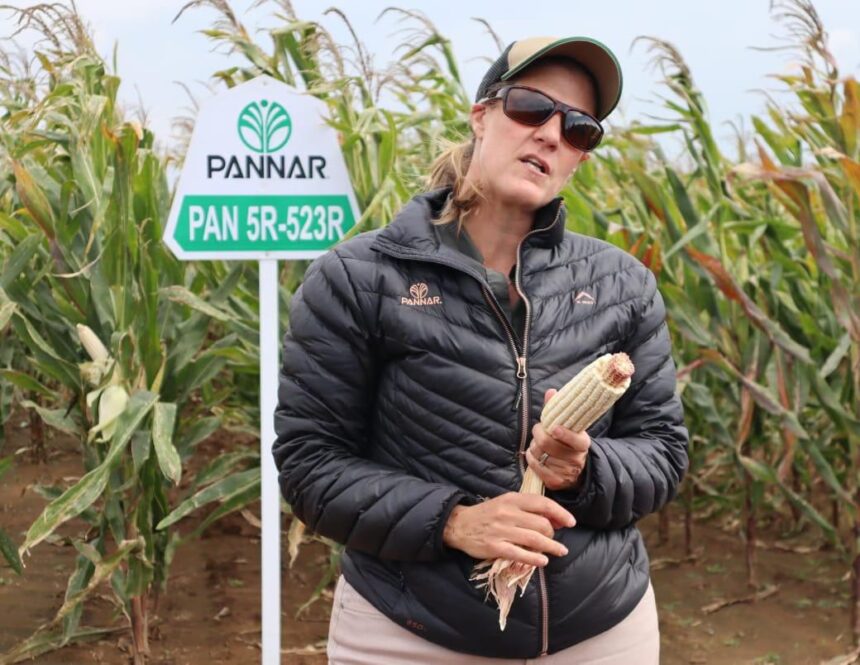
The push to strengthen commercial farming in South Africa continues to gain momentum through targeted partnerships and practical field training. A recent Farmers Day hosted by the Mpumalanga Department of Agriculture in collaboration with Pannar Seed brought together farmers, financial institutions, and agricultural experts to focus on improving maize productivity. The event took place at IThuba Farming Cooperative Farm, a commercial-scale farming operation that plays a growing role in regional food production. The theme centred on managing risks while maximising profit through smart hybrid selection and precise agronomic practices. This reflects a broader shift in agriculture toward data-driven decisions and improved resilience in the face of climate and market pressures.
IThuba Farming Cooperative operates as a structured commercial farming group with six members who manage both crop production and livestock. The cooperative has planted 470 hectares of maize and 200 hectares of soya, positioning it as a significant contributor to local agricultural output. These production levels require careful planning, especially in balancing input costs, weather risks, and market demand. The integration of livestock adds another layer of complexity and opportunity for income diversification. This mixed farming model highlights how cooperative structures can improve scale and efficiency in modern agriculture.
The Farmers Day was designed to equip farmers with practical tools to improve decision-making in crop production. A key focus was helping farmers select the right maize seed varieties to reduce risks such as drought stress and poor germination. Experts explained how hybrid selection directly affects yield potential, plant resilience, and overall profitability. Farmers were encouraged to match seed types with their specific soil conditions and climatic risks. This approach helps reduce uncertainty and improves consistency in production outcomes across seasons.
The event began with a guided field walk and live hybrid demonstrations that allowed farmers to observe different maize varieties under real conditions. Participants compared ultra-early and medium-maturity hybrids, assessing their performance in the field. Key indicators included plant strength, cob size, grain quality, and resistance to environmental stress. Farmers also evaluated how well each hybrid performed under dry conditions, which is a critical factor in many parts of South Africa. This hands-on learning approach made it easier for farmers to connect theory with practical results.
Technical experts from Pannar Seed provided detailed guidance on South Africa’s seed technology and agronomic best practices. They discussed the importance of plant population management and how spacing decisions can influence yield outcomes. Farmers were also advised on how to interpret soil conditions and align them with hybrid selection strategies. The training emphasised the need for planning throughout the production cycle, from planting to harvest. This level of precision farming helps reduce waste and increases the efficiency of input use.
The event also attracted participation from key financial and agricultural support institutions, including Land Bank of South Africa, FNB, Seed Capital, and representatives from the IThuba Cooperative itself. Their presence highlighted the importance of linking financial support with technical farming knowledge. Access to finance remains a critical factor for expanding commercial farming operations and adopting new technologies. By engaging directly with farmers, these institutions were able to better understand operational challenges and opportunities. This collaboration strengthens the ecosystem needed for sustainable agricultural growth.
The Farmers Day at IThuba Farming Cooperative demonstrates how knowledge sharing and partnership can directly improve agricultural performance. By focusing on hybrid selection, agronomic precision, and risk management, farmers gain practical tools to increase productivity and profitability. The involvement of both public and private sector stakeholders reinforces the importance of coordinated support in agriculture. As climate variability and market pressures continue to shape farming conditions, initiatives like this become increasingly important. The event highlights a clear pathway toward more resilient, informed, and commercially viable farming systems in Mpumalanga and beyond.
Join 'Farmers Mag' WhatsApp Channel
Get the latest Farming news and tips delivered straight to your WhatsApp
CLICK HERE TO JOIN