

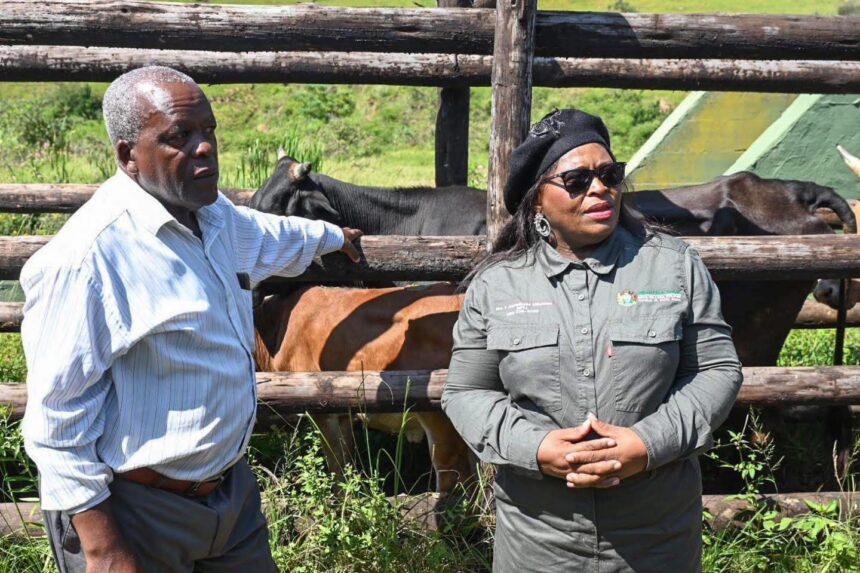
The fight against foot-and-mouth disease in KwaZulu-Natal continues to gain momentum as the province edges closer to a major vaccination milestone. The KwaZulu-Natal Department of Agriculture and Rural Development has confirmed that vaccination teams working across the Zululand District have successfully administered nearly 260 thousand vaccine doses to cattle. The programme, led by veterinary services and supported by local animal health teams, has remained on schedule despite difficult weather conditions and challenging terrain in several rural areas. MEC for Agriculture and Rural Development, Thembeni KaMadlopha-Mthethwa, praised the dedication of the vaccination teams for ensuring that livestock owners continue receiving critical support during the ongoing disease control campaign. The province’s aggressive response highlights the importance of protecting the agricultural sector, safeguarding food security and limiting the economic damage that foot-and-mouth disease can cause to farming communities.
Foot-and-mouth disease remains one of the most serious livestock diseases affecting cattle farming in South Africa and across the continent. The disease spreads rapidly among cloven-hoofed animals and can lead to severe restrictions on livestock movement and trade. For farmers, outbreaks can result in significant financial losses due to reduced production, quarantine measures and disrupted market access. KwaZulu-Natal authorities have therefore prioritised rapid vaccinations as part of a broader containment and prevention strategy. Veterinary teams have been moving from one municipality to another to ensure cattle are inoculated efficiently and within the planned schedule. The success of the current programme demonstrates how coordinated planning and field operations can help manage large-scale animal health emergencies in rural provinces.
According to MEC kaMadlopha-Mthethwa, the vaccination campaign faced several operational challenges during its rollout in Zululand District. Heavy rainfall affected accessibility in some areas, while rough and difficult terrain slowed movement between farming communities. Despite these setbacks, vaccination teams remained active and continued working to meet daily targets. The MEC commended veterinary services staff for maintaining discipline and commitment throughout the operation. She noted that the teams managed to keep the programme on track while ensuring that farmers in remote communities were not left behind. Their work has helped prevent delays that could have increased the risk of further disease spread among cattle populations.
The current mop-up phase in Nongoma has become a critical part of the campaign’s final operations in Zululand District. Authorities confirmed that nearly 60 thousand cattle have been vaccinated in Nongoma alone since May 13. The mop-up process focuses on identifying livestock that may have missed earlier vaccination rounds. Teams are visiting communities again to ensure broader coverage before moving operations to the next district. This approach is important because incomplete vaccination coverage can leave gaps that allow the disease to continue spreading. By conducting follow-up visits, veterinary officials aim to strengthen herd immunity and improve long-term disease control across affected farming regions.
The vaccination figures released by the department show the scale of the operation across different municipalities in Zululand District. AbaQulusi recorded the highest number of vaccinated cattle at 79 000 doses administered. Ulundi followed closely with 65 791 vaccinations, while Nongoma accounted for 63 344 vaccinated cattle. Pongola recorded 30 152 vaccinations and EDumbe reached 21 689 vaccinated cattle. Combined, these municipalities contributed to a total of 259 976 vaccinations in the district. These figures reflect a significant logistical achievement considering the distances involved and the conditions faced by field teams during the campaign.
The department has also confirmed that the vaccination programme will soon move into the uMgungundlovu District, where operations are scheduled to begin on Monday, May 25. This next phase will expand the province’s efforts to contain foot-and-mouth disease beyond Zululand. The MEC announced that 60 newly recruited Animal Health Technicians will join the campaign in uMgungundlovu. Their addition is expected to improve operational capacity and strengthen monitoring and vaccination activities in the district. The recruitment of new technicians also signals the department’s commitment to building long-term veterinary support systems within the province. Increased staffing will help improve response times, farmer engagement and disease surveillance in future outbreaks.
The involvement of newly trained Animal Health Technicians is expected to benefit rural livestock farmers significantly. These technicians play an essential role in animal disease prevention, vaccination monitoring and farmer education. They often serve as the first point of contact between veterinary services and farming communities. Their presence in the field can improve communication with livestock owners and help ensure faster reporting of suspected infections. In many rural areas, access to veterinary services remains limited, making the deployment of additional personnel especially important. The expanded workforce is therefore likely to strengthen both current vaccination efforts and future agricultural support initiatives.
KwaZulu-Natal’s overall vaccination numbers continue to rise as the province intensifies its disease management strategy. Authorities confirmed that nearly one million vaccinations have already been administered province-wide since the campaign began. This large-scale operation highlights the seriousness with which the provincial government is treating the threat of foot-and-mouth disease. The campaign also reflects growing cooperation between government departments, veterinary professionals and farming communities. Effective disease control depends heavily on farmer participation, timely reporting and adherence to movement regulations. The high vaccination figures suggest that many livestock owners are actively supporting the programme and recognising the importance of protecting their herds.
The progress made in Zululand District provides a strong indication that KwaZulu-Natal’s broader disease containment strategy is yielding positive results. While challenges such as weather conditions and inaccessible terrain remain ongoing concerns, the province has demonstrated its ability to adapt and continue delivering essential veterinary services. The successful administration of nearly 260 thousand vaccine doses in Zululand represents more than just a numerical milestone. It reflects the coordinated efforts of veterinary professionals, technicians and farming communities working together to protect the livestock industry. As the vaccination programme moves into uMgungundlovu District, authorities remain focused on sustaining momentum and reaching even more cattle across the province. With nearly one million vaccinations already completed, KwaZulu-Natal continues to strengthen its defence against foot-and-mouth disease while protecting the livelihoods of thousands of livestock farmers.
Join 'Farmers Mag' WhatsApp Channel
Get the latest Farming news and tips delivered straight to your WhatsApp
CLICK HERE TO JOIN




