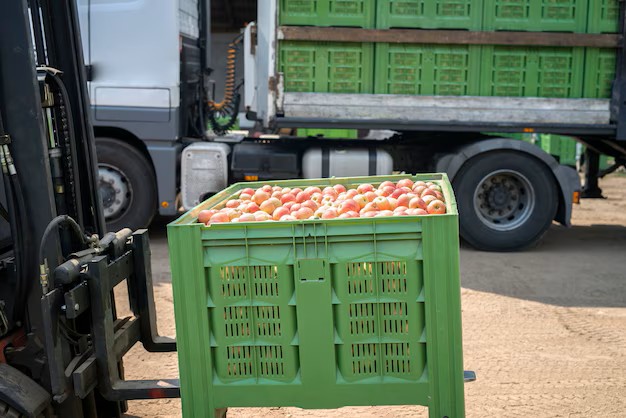
Farming success in South Africa depends on more than land and rainfall. It depends on strong infrastructure and efficient agricultural logistics that connect farms to markets, inputs, and services. Many farmers lose income not because they cannot produce, but because they cannot move or store their produce effectively. Roads, storage facilities, irrigation systems, and transport networks all play a direct role in farm productivity. When these systems are weak, even high yielding farms struggle to remain profitable and competitive.
Infrastructure on the farm starts with water, energy, and storage systems that support daily operations. Reliable irrigation systems help farmers manage drought conditions and reduce dependence on unpredictable rainfall. Boreholes, dams, and drip irrigation systems improve water efficiency and allow year round production. Storage facilities such as silos, cold rooms, and packhouses reduce post harvest losses that can reach up to 30 percent in some farming operations. Electricity supply, whether from the grid or solar systems, powers irrigation pumps, refrigeration, and processing equipment. Without these basic systems, farmers often face production delays and reduced product quality.
Transport infrastructure is equally important for connecting farms to buyers and markets. Poor rural roads increase transport costs and damage fresh produce during delivery. Farmers who rely on distant markets must invest in reliable vehicles and coordinated logistics planning to reduce losses. Efficient transport systems help ensure that crops reach markets while still fresh, which improves pricing and competitiveness. In many parts of South Africa, shared transport cooperatives are becoming a practical solution for small and emerging farmers. These systems allow multiple farmers to pool resources and reduce individual transport costs.
Agricultural logistics also includes planning how inputs and outputs move through the farming cycle. Input logistics involves timely delivery of seeds, fertilizers, and equipment before planting seasons begin. Output logistics focuses on harvesting schedules, storage management, and distribution to markets. When logistics systems are poorly managed, farmers face delays that reduce yields and income potential. Digital tools and mobile platforms are increasingly used to track deliveries, monitor prices, and coordinate supply chains. These tools help farmers make faster decisions and reduce waste in the production process.
Strong infrastructure and logistics systems improve farm resilience and long term sustainability. They reduce production risks, lower operational costs, and increase access to larger markets. Farmers who invest in storage, irrigation, and transport systems are better positioned to handle climate variability and market fluctuations. Government programmes and private sector partnerships continue to support rural infrastructure development across South Africa. As these systems improve, farmers gain stronger control over their production cycles and profitability. Building efficient infrastructure is not just a technical upgrade, it is a direct pathway to stronger agricultural growth and food security.
Join 'Farmers Mag' WhatsApp Channel
Get the latest Farming news and tips delivered straight to your WhatsApp
CLICK HERE TO JOIN